


The Bangladesh Nationalist Party (BNP) has claimed a landslide victory in the country’s first election since the 2024 student-led uprising, which resulted in the ouster of Sheikh Hasina.
Despite a ban on former prime minister Hasina’s Awami League, the election has been touted as Bangladesh’s first truly competitive vote in years, and garnered a voter turnout of just under 60 per cent.
BNP’s media unit on Friday said it had secured enough seats in parliament to govern on its own. Final results have not yet been announced by the Election Commission (EC), though several local media outlets also reported the party’s victory.
-waves-from-a-car-on-his-way-to-the-mos.jpeg)
The BNP alone crossed the 151-seat mark needed to secure a majority in parliament on Friday, a local TV station showed, with ballots still being counted in the pivotal vote to restore political stability in the troubled South Asian country.
Opinion polls had made the BNP favourites and the party lived up to the forecasts, with the coalition it dominates winning a combined total of 212 seats – enough for an overwhelming two-thirds majority among the 300 seats that are directly elected. Another 50 seats are allocated by proportional representation.
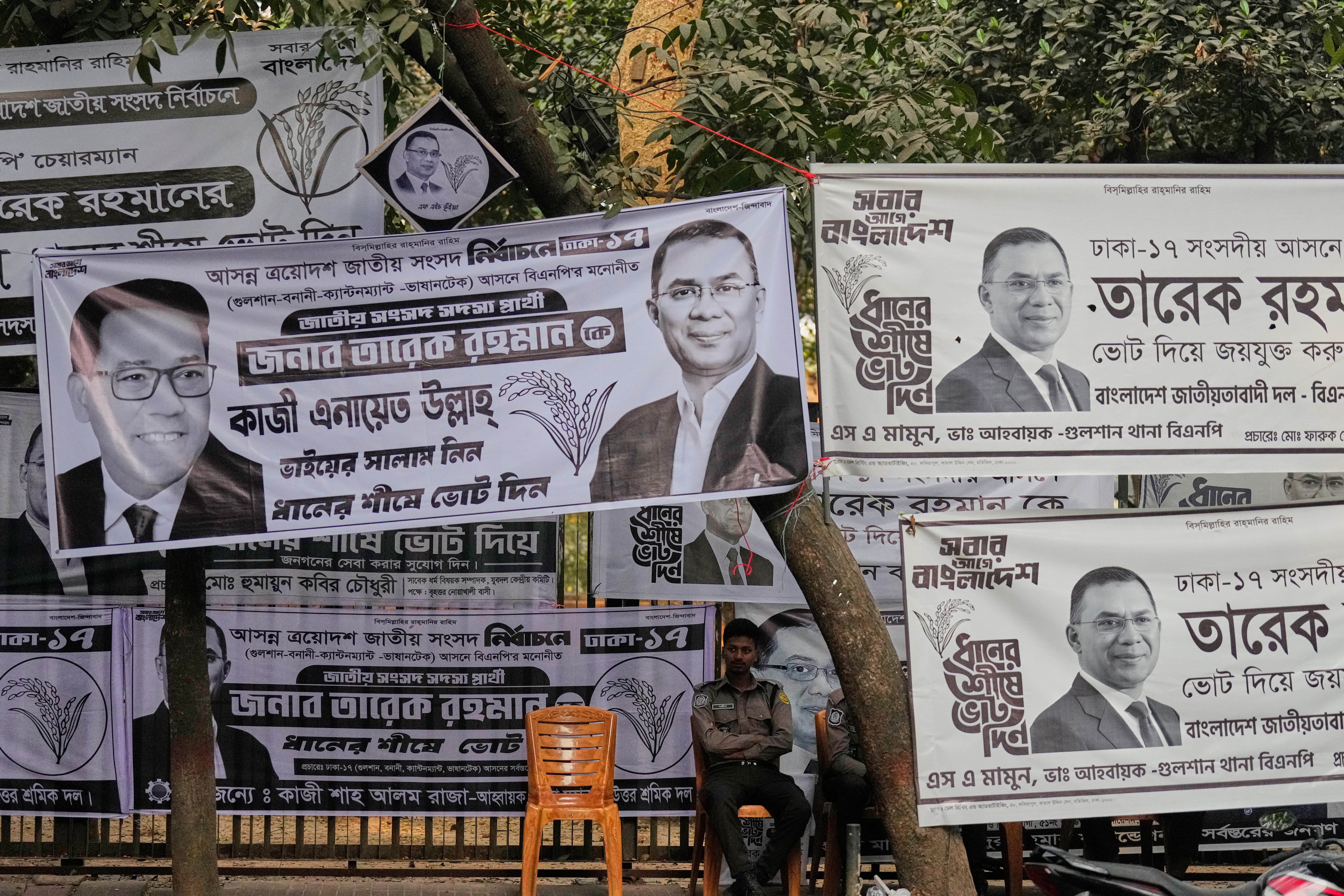
BNP leader Tarique Rahman, the son of former prime minister Khaleda Zia, is expected to take the oath to become prime minister on 17 February.
Mr Rahman, 60, returned to Bangladesh in December after 17 years in self-exile in London. He focused his campaign on promises of financial aid for poor families, a 10-year limit for any individual to serve as prime minister, and boosting the economy through measures such as foreign investments, and anti-corruption policies.
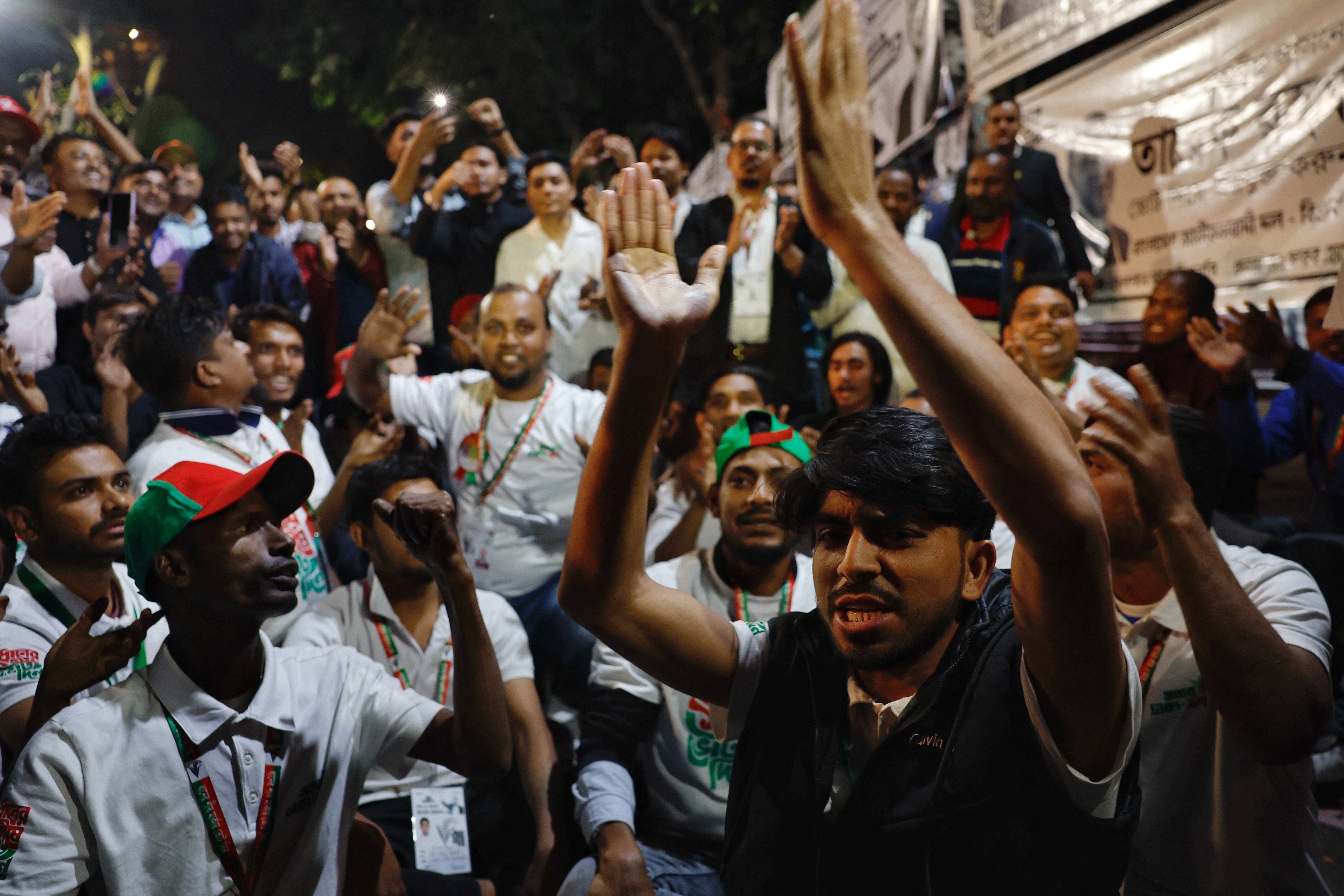
Celebrations erupted outside the EC office in the early hours of Friday as the BNP’s seat tally steadily increased. The party thanked voters for their support and urged special Friday prayers for the country’s welfare and its people.
“Despite winning the national parliamentary election by a large margin of votes, no celebratory procession or rally shall be organised by BNP,” the party said in a statement and urged people to pray at mosques, temples, churches, and pagodas across the country.
Narendra Modi, the prime minister of Bangladesh’s neighbour India where relations have been strained since Hasina’s ousting, said he spoke to Mr Rahman to congratulate him, calling his victory “remarkable”. “I conveyed my best wishes and support in his endeavour to fulfil the aspirations of the people of Bangladesh,” Mr Modi tweeted.
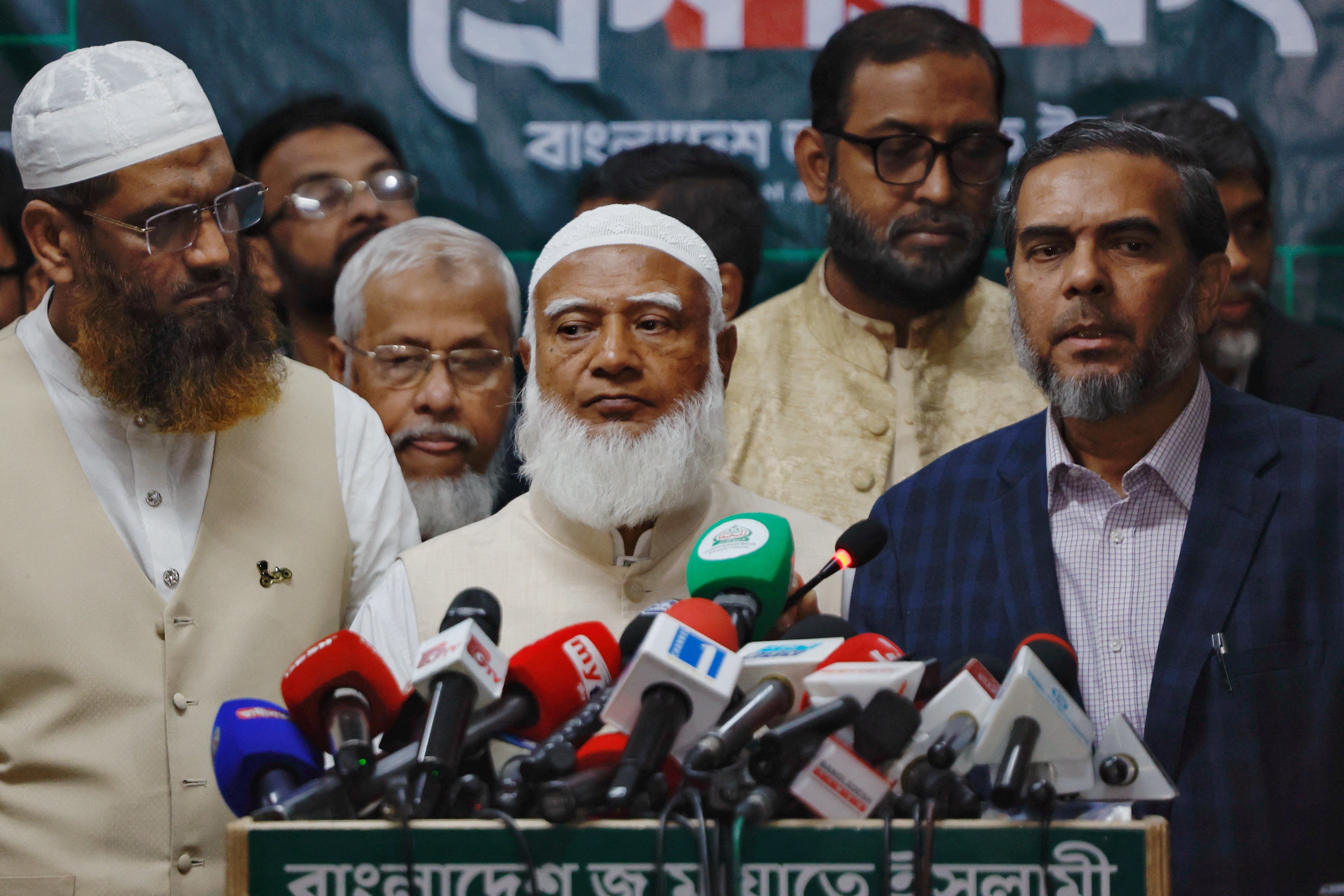
Shafiqur Rahman, head of the BNP’s main rival, the Islamist party Jamaat-e-Islami, conceded defeat, with his party-led alliance winning just 77 seats. He said Jamaat would not engage in the “politics of opposition” for the sake of it. “We will do positive politics,” he told reporters.
The National Citizen Party (NCP), led by youth activists who were instrumental in toppling Hasina and formerly a part of the Jamaat-led alliance, won just six of the 30 seats it contested.
The US embassy in Dhaka congratulated Mr Rahman and his party on the win, calling it a “historic victory”.
“The United States looks forward to working with you to achieve shared goals of prosperity and security for both our countries,” US ambassador to Bangladesh Brent T Christensen wrote on X/Twitter.
The vote was held on Thursday amid tight security and concerns of democratic backsliding, rising political violence and the fraying of the rule of law. Many viewed this election as a crucial test of Bangladesh’s ability to restore trust in democracy and to transform public protests into tangible political reform.
Millions of voters poured onto the streets of Bangladesh to the members of the parliament. Muhammad Yunus, who led the interim government since Hasina’s ouster, told reporters outside the polling station that: “It is like Eid. A big future is coming up. We are creating a new Bangladesh.”
For much of the past 15 years, the BNP languished in opposition, boycotting several elections and accusing Hasina’s government of systematic vote rigging and political repression. Mr Rahman himself spent years in self-imposed exile after the Awami League government pursued multiple corruption and criminal cases against him. He has denied the charges, saying they were politically motivated.
Those cases were dropped after Hasina’s government collapsed, paving the way for his return to Bangladesh. Now, Hasina is in self-imposed exile in long-term ally India, which has frayed ties between Dhaka and New Delhi and opened the window for China to expand its influence in Bangladesh.
In a statement sent after polling stations closed, Hasina denounced the election as a “carefully planned farce”, held without her party and without real voter participation. She said Awami League supporters had rejected the process.
“We demand the cancellation of this voterless, illegal and unconstitutional election … the removal of the suspension imposed on the activities of the Awami League, and the restoration of the people’s voting rights through the arrangement of a free, fair, and inclusive election under a neutral caretaker government,” she said.

