


Lisbon is not a city that reveals itself immediately. For many travelers, understanding Lisbon at first glance can feel confusing: hills in every direction, neighborhoods that change character within a few streets, and a river that seems both central and distant at the same time.
Many first-time visitors make the same mistake — they jump straight into details without first understanding the city as a whole. They walk a lot, see many places, but often finish their first days feeling tired rather than oriented.
This article is here to help you do the opposite: understand Lisbon first, so you can explore it with confidence afterwards.
Here’s our breakdown of how to understand Lisbon:
Explore Lisbon by Vintage Jeep (With Food & Drink Tastings)
Get oriented fast on a private, two-hour ride through Lisbon in a vintage convertible jeep, guided by a true local. See the city from above, connect the neighborhoods, and taste classic Portuguese flavors along the way:
Why this tour works
• Private, fully customizable route and pace
• Vintage convertible jeep with a local driver-guide
• Iconic landmarks and panoramic viewpoints
• Portuguese food and drink tastings included
• Pick-up and drop-off anywhere in Lisbon
• Easy, relaxed experience — perfect for a first day
👉 Book the Lisbon Daily Tour in a Vintage Jeep and start your trip with clarity (and great flavors).
How to Understand Lisbon: The City is Not Flat or Linear
Hills, neighborhoods, and the river shape Lisbon’s layout
Lisbon was built on hills, not on a grid. These hills were never accidental — they offered defense, visibility, and control over the territory. Even today, they define how the city moves, how neighborhoods connect, and why distances often feel longer than they look on a map.
The city also developed along the Tagus River, which was never a border, but an axis. Trade, exploration, and daily life were shaped by the river, and Lisbon grew by looking outward from it rather than away from it.
That is why Lisbon does not function in straight lines. It works in layers, slopes, and viewpoints. This physical structure explains why understanding Lisbon on a map alone is often misleading.
Related read: A Guide to Lisbon Neighborhoods
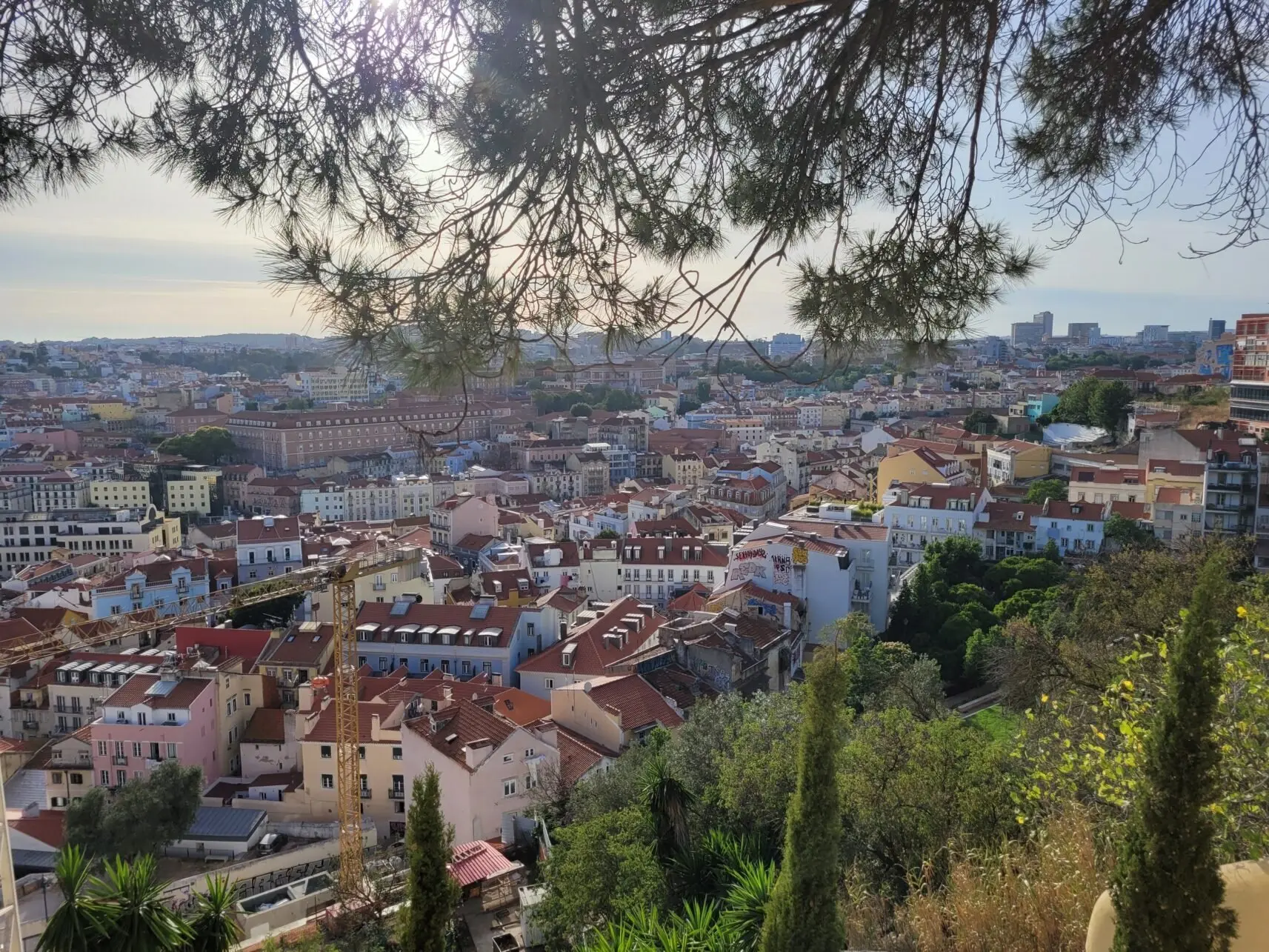
3,000 Years of History in One City
Why Lisbon feels layered, not organized
Lisbon is one of the oldest capitals in Europe, with more than 3,000 years of continuous occupation. Phoenicians, Romans, Moors, and Christians all left their marks — not as museum pieces, but as living structure.
Add to this the medieval city, the Age of Discoveries, the devastation of the 1755 earthquake, the reconstruction that followed, and the modern expansion of the 20th century, and you get a city that cannot be understood from a single neighborhood or time period.
This is why Lisbon often feels fragmented at first. It is not chaotic — it is layered.
For first-time visitors, this layered history explains why Lisbon feels complex — and why understanding its past helps make sense of its present.
The Most Common Mistake First-Time Visitors Make
Exploring details before understanding the whole
Many first-time visitors to Lisbon start their trip by ticking boxes:
- Alfama in the morning
- Belém in the afternoon
- Bairro Alto at night
Individually, these places are beautiful. But without context, they can feel disconnected.
The result is often unnecessary walking up and down hills, long travel times without understanding why, and a sense of having seen a lot but understood very little.
Lisbon rewards those who start with orientation, not exhaustion.

Start With Orientation, Not Exhaustion
Why seeing the city from above changes everything
Lisbon’s viewpoints are among the best tools for understanding the city’s geography and neighborhood connections.
From above, you can see how neighborhoods relate to each other, understand why certain areas developed the way they did, and recognize the role of the river, bridges, and surrounding territory.
Once you experience Lisbon from a broader perspective, everything else starts to make sense.
How Locals Experience Lisbon
Movement, timing, and atmosphere matter
Locals do not experience Lisbon by rushing from attraction to attraction. They pay attention to timing, light, movement, and atmosphere.
The city changes dramatically throughout the day. Late afternoon and early evening, when the light softens and the city slows down, is often when Lisbon feels most alive.
Understanding when to move — and when to stop — is just as important as knowing where to go.
Related read: How To Eat Like a Local in Lisbon
A Smarter Way to Experience Lisbon on Your First Day
Seeing the bigger picture before going deeper
Many travelers benefit from starting their trip with an experience that offers mobility across different parts of the city, access to viewpoints, local context, and flexibility to adapt to their interests and pace.
By understanding the structure of Lisbon first, every walk, neighborhood visit, or museum later becomes richer and easier. You stop guessing where to go next and start making confident choices.
Related read: Top Sights and Hidden Gems in Lisbon

What to Do After You Understand the City
Exploring neighborhoods with confidence
Once you are oriented, Lisbon opens up naturally.
Alfama becomes more than narrow streets — it reveals itself as the medieval heart of the city. Bairro Alto makes sense as part of Lisbon’s social rhythm. Belém connects clearly to the Age of Discoveries. Crossing the river to Almada offers a new perspective and confirms that Lisbon is a metropolitan city, not just one riverbank.
Understanding comes first. Exploration follows.
Final Tips for First-Time Visitors
- Wear comfortable shoes — Lisbon rewards curiosity but demands respect.
- Do not try to see everything in one go.
- Use viewpoints as reference points, not just photo stops.
- Leave room for spontaneity — some of Lisbon’s best moments are unplanned.
Understand the city first.
Then explore it deeply.

