


An Indian student has received a payout of more than $200,000 from an American university after complaints about the smell of his packed lunch spiralled into a civil rights suit and, ultimately, ended his academic career there.
Aditya Prakash, who was pursuing a doctorate in anthropology at the University of Colorado Boulder, finally received the settlement after a two-year ordeal that began when he was told by a staff member to stop using the department microwave because his Indian food smelled “pungent”. The university denies any liability as part of the settlement.
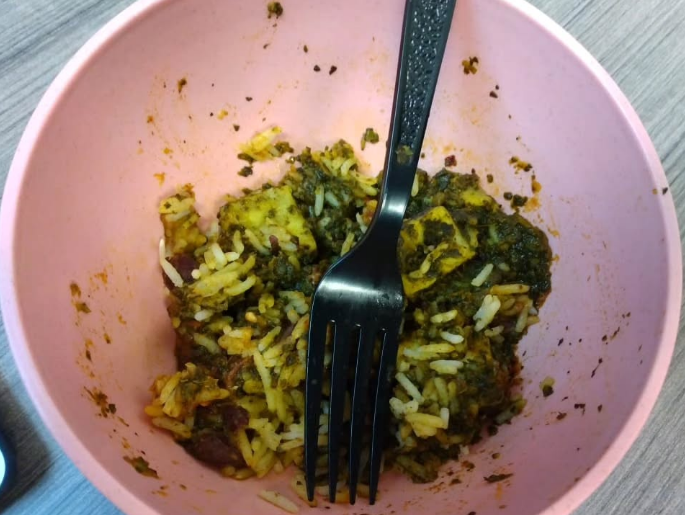
It was 5 September 2023 when Prakash, almost a year into his PhD in cultural anthropology at the University of Colorado Boulder, was heating palak paneer, a spinach and cottage cheese dish he had brought from home, in the microwave of the department’s kitchen.
According to a federal civil rights suit filed against the university and seen by The Independent, a staff member entered the room and immediately remarked that it smelled “pungent” and told Prakash there was a rule against microwaving food with a “strong odour”.
Prakash responded that it was just food and returned to his desk to eat, “feeling othered and saddened”.
What he understood as a racialised slight soon became an institutional dispute. Within months, he and his partner, Urmi Bhattacheryya, who had joined the same department as a doctoral student and teaching assistant days earlier, would lose their PhD supervisors and their funding, effectively bringing their doctoral work to a halt.
In September 2025, the couple filed the lawsuit alleging discrimination and retaliation. The university settled four months later for $200,000 while denying liability. It also gave Masters degrees to the couple but barred them from future enrolment or employment.
This month Prakash and Bhattacheryya finally left the US, with the circumstances of their departure meaning their story is now making waves among Indian communities online.
Prakash says the original staff member’s remark about his food echoed earlier experiences. “I’d seen this growing up, I knew exactly what it meant,” he told The Independent, explaining that he spent some of his childhood in Europe where the “smell” of his home-cooked Indian food routinely became a point of ridicule and exclusion.
“It wasn’t about that one lunch. It was about whether I had to change what I eat and where I eat it.”
Seeking to address the situation directly, Prakash spoke to the member of staff, explaining that her comment had hurt him. The issue, he said, was not simply personal dislike but that Indian food had been singled out in a shared space long open to everyone.
The faculty member called in another administrator, who told him she wanted to keep the office “smelling nice” before disposing of a trash bag in front of Prakash which contained only his empty container of palak paneer.
When Prakash asked the administrator which foods she considered acceptable, she replied “sandwiches” were fine while “curry” was not.
He responded that curry, as most people in the US understood it, was his entire cuisine and questioned why, if smell was the standard, beef chilli she herself had brought in the previous year hadn’t been treated the same way.
The administrator, according to the lawsuit, did not respond immediately.
Two days later, Prakash returned to the kitchen to heat Indian food with four fellow anthropology students – Bhattacheryya among them – in what they described as an “act of solidarity”.
As they were heating their lunches, Prakash claimed, another member of staff started “heckling” them and shut the kitchen door, a gesture he interpreted as conveying disgust.
According to the lawsuit, there was no formal policy at the time barring students from using the main office kitchen.

In subsequent communication, the department accused Bhattacheryya and the other students of “inciting a riot”, and referred the matter to the Office of Student Conduct. No formal findings were ultimately made.
Bhattacheryya, as a teaching assistant, invited her partner to speak during a class on ethnocentrism and cultural relativism.
South Asians have long spoken about how the “smell” of their food has been used as a way to exclude them in the West. The discrimination, they claim, is often couched as a concern for hygiene, comfort or shared norms.
Prakash spoke at the class in general terms about lived experience, connecting the microwave incident to broader anthropological concepts, and did not name any staff members.
A few days later, Bhattacheryya discovered she had been removed from her teaching role.
“I went to my laptop to access the class roster and suddenly I was locked out,” she said. “There was no warning. No conversation.”
This happened after the department circulated an email reinstating restrictions on the use of the main office kitchen and discouraging the preparation of food with “strong or lingering smells”.
Prakash and Bhattacheryya replied, marking the entire department, that the policy amounted to discrimination. Bhattacheryya also said she would not teach her class until something was done about their concerns.
From this point on, the couple claimed, the issue was no longer treated as a concern about racialised treatment but as a question of behaviour and professionalism.
Prakash was called into meetings with senior faculty and told that staff members felt threatened by him.
“The faculty told me that the staff had called me a physical threat. I was told I had to be chaperoned by one of my advisors if I existed in that general area. It was unacceptable,” he told The Independent.
In correspondence seen by The Independent, a university official later acknowledged the “pain, discrimination and racism” experienced by the couple.
In January 2024, the couple’s PhD advisory committees resigned without warning and the department reassigned them to advisers outside their fields of research, a decision they said stalled their doctoral projects.
The university made them ineligible for teaching roles and funding, putting their immigration status at risk.
Together, the couple said, these decisions dismantled the academic and financial structures required to continue their studies.

A university spokesperson, Deborah Méndez-Wilson, said in a statement to The Independent that it was committed to an “inclusive environment for all students, faculty and staff regardless of national origin, religion, culture”.
“When these allegations arose in 2023,” she added, “we took them seriously and adhered to established, robust processes to address them, as we do with all claims of discrimination and harassment. We reached an agreement with the students in September and deny any liability in this case.”
For Prakash and Bhattacheryya, the settlement closed the legal case but not the consequences.
Several years of academic work was left unfinished and professional plans put on hold. Bhattacheryya said the prolonged stress exacerbated her fibromyalgia, a chronic pain condition.
Prakash said he did not see what followed as merely an individual misfortune. “This is something that we as a people have been bearing for a long time,” he said. “If this is the path we have to walk, then so be it. Our people should see a better day.”

