


When a gym owner in a small Himalayan town faced off a Hindu mob targeting a Muslim shopkeeper earlier this year, he quickly turned into an unlikely national figure – and the inspiration for a series of small acts of kindness and solidarity that many would come to regard as a turning of the tide against sectarian hatred in India.
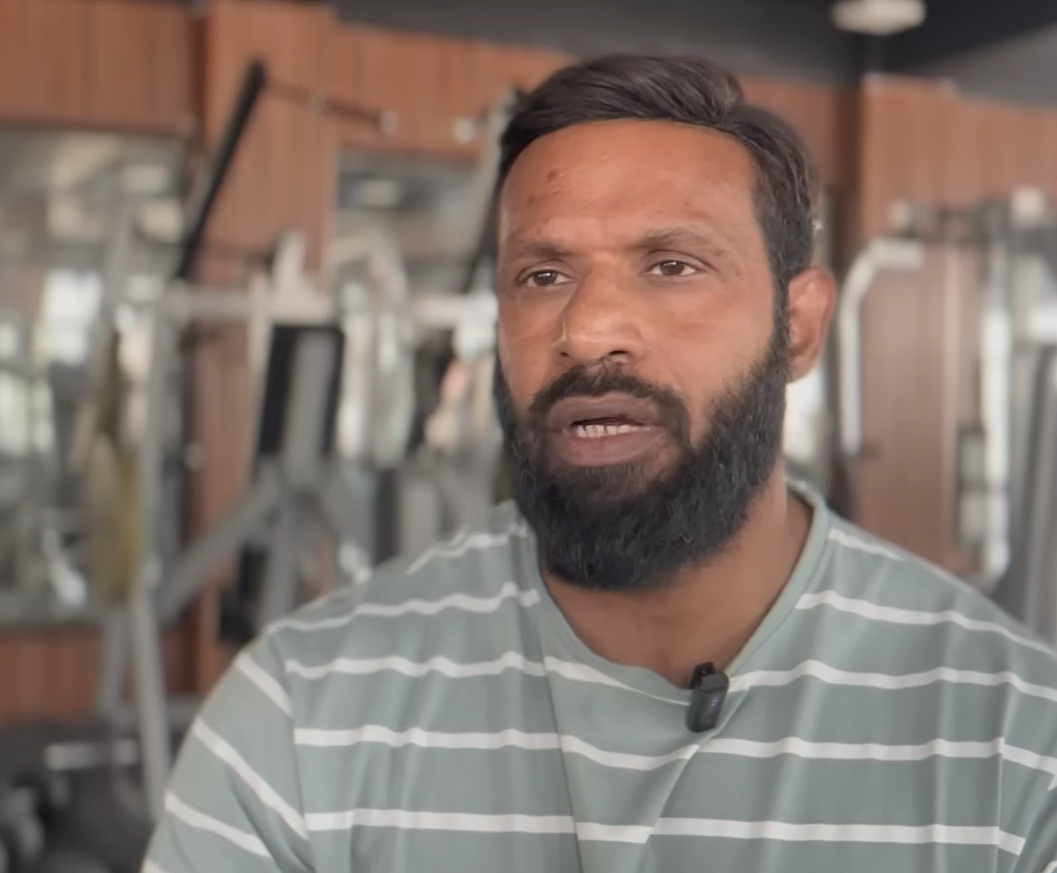
Deepak Kumar’s intervention in the confrontation between members of the Hindu nationalist group Bajrang Dal and the Muslim shopkeeper in Kotdwar, in the northern state of Uttarakhand, took place on 26 January.
The Bajrang Dal is one of the prominent groups in the Hindu nationalist network informally known as the Sangh Parivar. Prime minister Narendra Modi’s BJP party is part of the same ecosystem.
The Bajrang Dal mob had confronted Vakeel Ahmed, an elderly clothing shop owner, demanding that he remove the word “Baba” from the name of his store, Baba School Dress and Matching Centre.
They claimed that “Baba” referred to Siddhabali Baba, a local temple dedicated to the Hindu deity Hanuman, and that a Muslim should not use it.
Kumar stepped in after noticing a crowd gathering outside Ahmed’s shop.
“I did not like these young men talking so rudely with an elderly man. They were targeting him because of his religion. They were targeting Muslims,” he later told the BBC.
When the mob asked his name during the confrontation, he responded with what would soon become an internet phenomenon: Mohammad Deepak.
Mohammad is a Muslim name, Deepak typically Hindu.
“By identifying myself as Mohammad Deepak, I wanted to tell them that I’m an Indian,” he told the broadcaster. “That this is India and everyone has the right to stay here, regardless of their religion.”
Almost a month later, when a dispute over religious practice emerged in Lucknow, similar images of solidarity circulated on social media.
It was the early days of Ramadan, the Muslim fasting month, and students at Lucknow University had arrived to pray at the campus mosque, only to find it locked and police stationed nearby. The students said they were given no explanation or warning that the mosque was to be closed.
So, on 22 February, a group of students started an unusual protest right outside the mosque: a few Muslim students stood in prayer as their non-Muslim classmates formed a protective human chain around them. A video of the prayer-protest spread on social media and the incident came to be celebrated as the latest example of ordinary citizens defying sectarian fissures in India.
Many observers quickly traced this act of religious solidarity to the confrontation involving the gym owner in Uttarakhand.
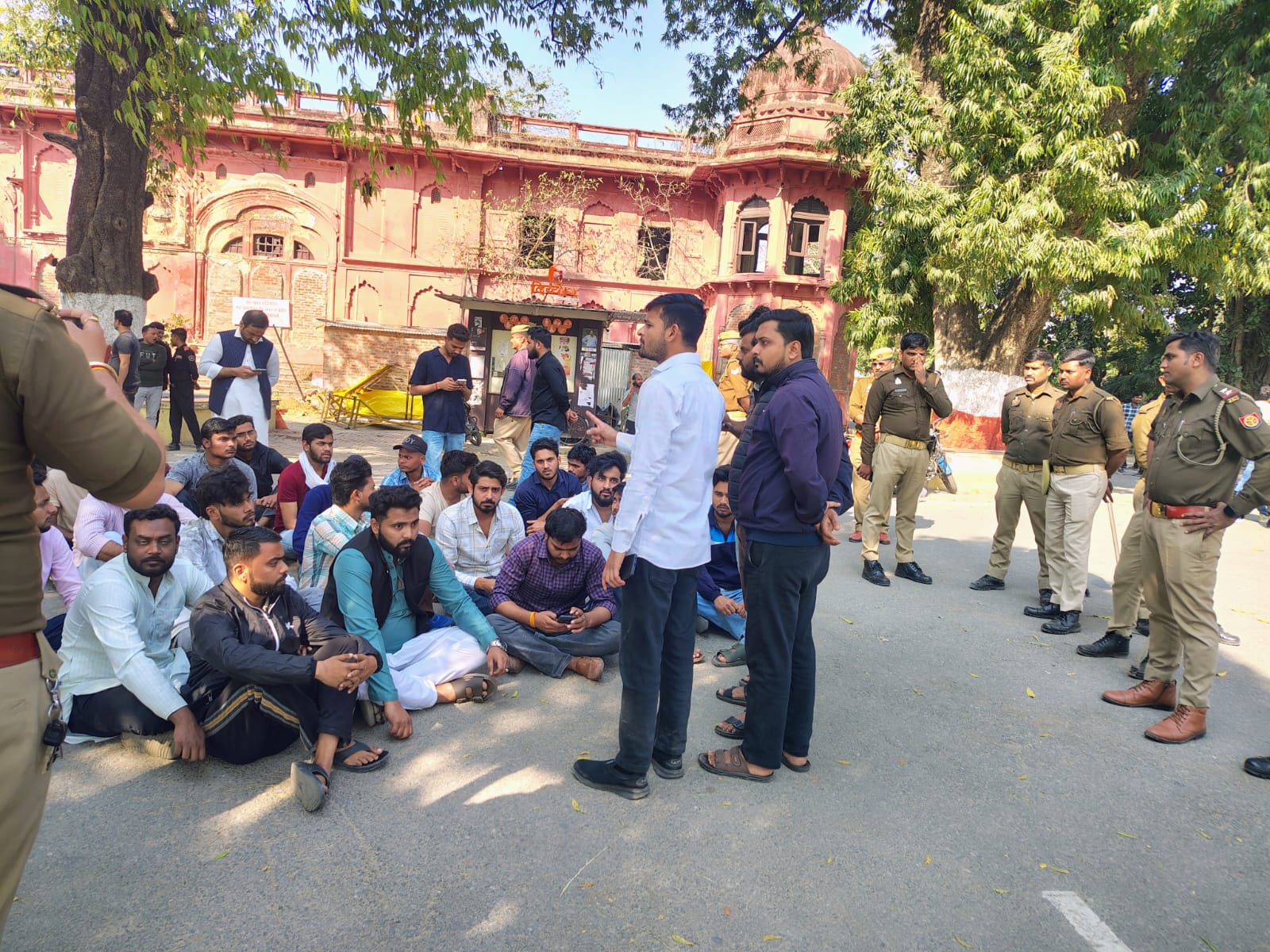
University officials said the Lal Baradari mosque was fenced off for safety reasons, the Indian Express reported. They claimed the medieval site was dilapidated and that fencing was installed to prevent people entering a potentially unsafe building.
However, students pointed out the mosque was fenced off soon after a visit to the university by Mohan Bhagwat, leader of the RSS, the mothership of the Sangh Parivar, and Pankaj Chaudhary, state president of the BJP.
“The building was sealed shut days after their visit without any executive order, illegally,” claims Shantam Nidhi, a master’s student. “This is totally ideological and RSS is targeting Muslims. The entire politics of RSS and BJP is hate politics.”
The Independent has reached out to the RSS, BJP and Bajrang Dal, as well as the university’s proctor, for comment.
“When I asked a professor why it had been sealed, he said he had no idea. By then police had come. I kept asking but no one told me anything. So I sat on a protest there. And I said if you have any notice to close it, then show it to me,” Taukeel Gazi, another student, says. “But the administration has so far not shown any such thing.”
Gazi had been praying at the mosque since 2020 and the practice predated him by decades. “I have completed my graduation and post-graduation from this university and, for about five years, I have been offering namaz here,” he says. “For about 100 years, people have been offering namaz here.”
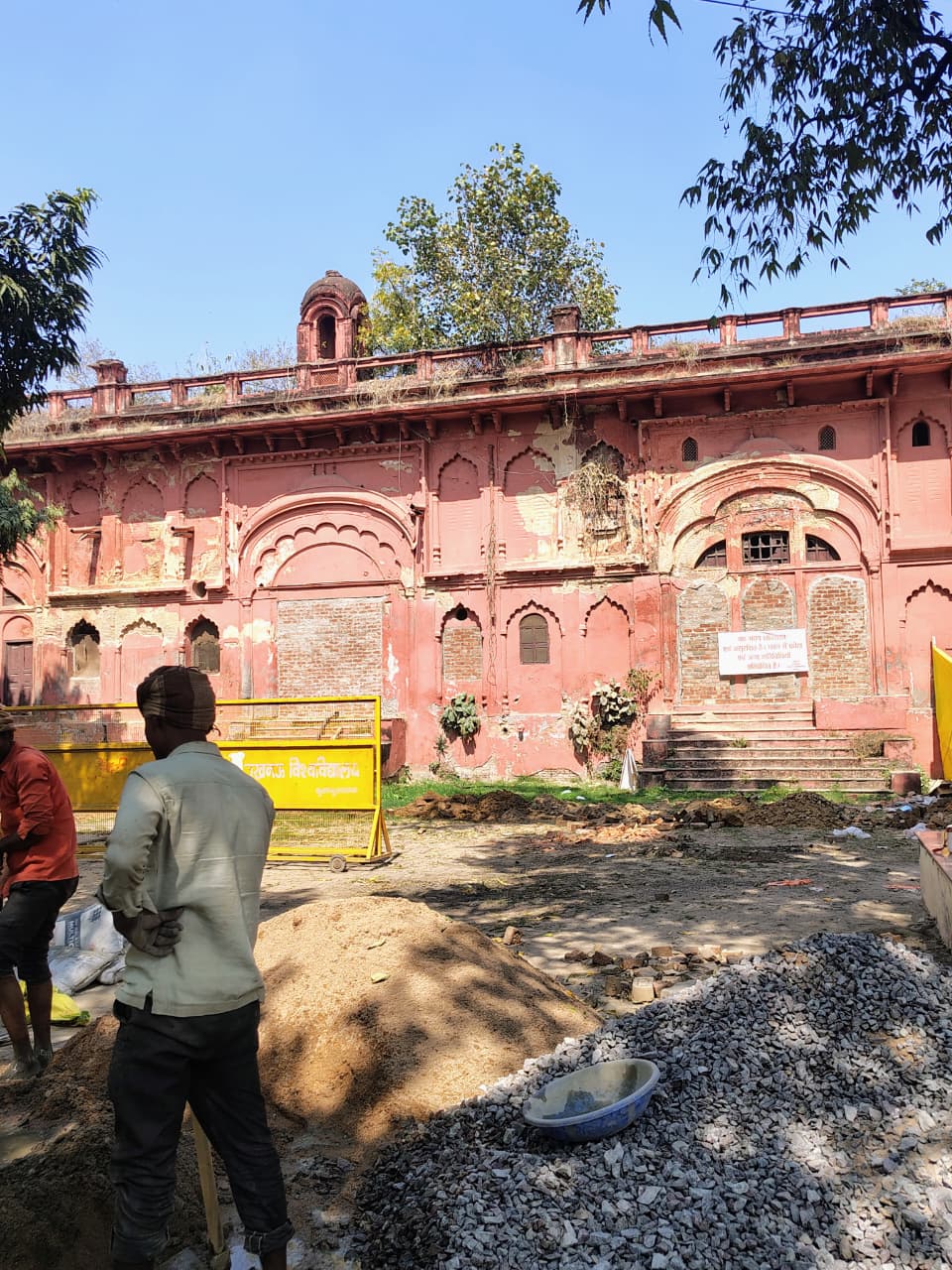
That evening, Muslim students gathered outside the mosque to offer prayers. “Out of a lack of options, I had to offer Namaz outside. And the Hindu friends formed a human chain,” Gazi says.
Among those present was former Lucknow University student Shubham Kumar. “The Lal Baradari mosque is under the Archaeological Survey of India and not the university. For several years, our Muslim friends had been offering namaz there,” Kumar, who is now the state secretary of the National Students Union of India, an affiliate of the main opposition Congress party, tells The Independent.
“We were concerned that if our brothers read namaz outside the mosque, then police might charge them with batons and the right-wing groups might also assault them. So we thought that if there was an attack, then at least it would be first on us – those forming the human chain – and hopefully our friends offering namaz would not be assaulted while in prayer.”
Tensions flared when members of a student organisation affiliated with the RSS arrived at the site and shouted slogans. Police were then deployed on the campus to prevent clashes.
Students eventually ended the protest after submitting a memorandum to university authorities, though notices summoning participants to appear before a magistrate were subsequently issued. The mosque remains shut.
The Lucknow University protest is being seen as just one in a series of incidents where ordinary citizens stand up for others in their community, regardless of their respective religions.
Another took place in the western state of Rajasthan when villagers publicly challenged what they saw as the discriminatory conduct of a former ruling party lawmaker.
Former BJP parliamentarian Sukhbir Singh Jaunapuria arrived in the village of Kareda Buzurg in February to distribute blankets, only to deny them to Muslim women.
According to local media reports, the women were asked their names before blankets were handed out. Any who gave names likely to identify them as Muslims were reportedly told to move aside.
One of the women, Shakuran Bano, in her 60s, told The Print she felt humiliated. “I didn’t want any blanket. But there was no need for this humiliation,” she said. “It was humiliating. He simply said he will not give blankets to Muslims.”
Bano says she attended the event at the urging of a neighbour and didn’t know that blankets would be distributed.
She says the organisers told the Muslim women to sit separately and Jaunapuria allegedly remarked that “those who abuse Modi have no right” to receive blankets, apparently referring to India’s prime minister. “Why would I abuse Modi? When did he hear me abuse him?” Bano asked.
What made the episode notable, however, was the reaction from the Hindu villagers.
Many reporteldy confronted the former lawmaker, asking why Muslim women had been singled out.
“More than Muslims, it is Hindus who are angry,” Hanuman Chaudhary, whose wife is the elected village head, told the Indian Express.
The villagers later burned Jaunapuria’s effigy in protest.
Badrilal Jaat, a village elder, told The Print the community had long maintained religious harmony.
“There is no discord between Hindus and Muslims in our village, never happened in generations,” he told the outlet.
“When an outside person comes and tries to sow such seeds, we have to come forward to protest. We celebrate Diwali, Holi and Eid together. We don’t differentiate.”
Jaunapuria has spoken out to defend his conduct, saying the blankets were part of a personal initiative for his party’s workers.
“We had made a list of about 200 women party workers and had not invited them,” he said, referring to the Muslim women who attended.
“These people were taking blankets meant for us and our people,” he added, denying the decision was motivated by communal discrimination.
Heartening as scattered acts of solidarity like these are in a country struggling with incidents of religious disharmony and at times violence, Indian scholars say they should be seen in a larger context.
“I would still treat them as exceptions,” Apoorvanand, a professor at Delhi University, tells The Independent. “It requires extraordinary courage to stand before a group of goons.”
Fear of violence or retaliation often deters intervention, he adds. “If you’ve three or four goons before you, you normally don’t want to get in trouble,” he says. “If people think that police is with them [those doing the discriminating], then it becomes very difficult to take a stand because they will have to pay a very heavy price.”
He argues the apparent rise in incidents of solidarity of late may partly reflect social media visibility rather than a deeper shift.
“I think that’s a social media virality factor. I still don’t think that we can describe it as early signs of a turning tide,” he says.
What will make a difference, he says, is common people feeling confident that police will stand with them in such instances.
For the students who stood outside Lal Baradari during the mosque protest, the consequences feel immediate.
Shubham Kumar says the episode has already altered the campus atmosphere. “From a place where one goes to study,” he says, “the campus has become a religious battleground.”

