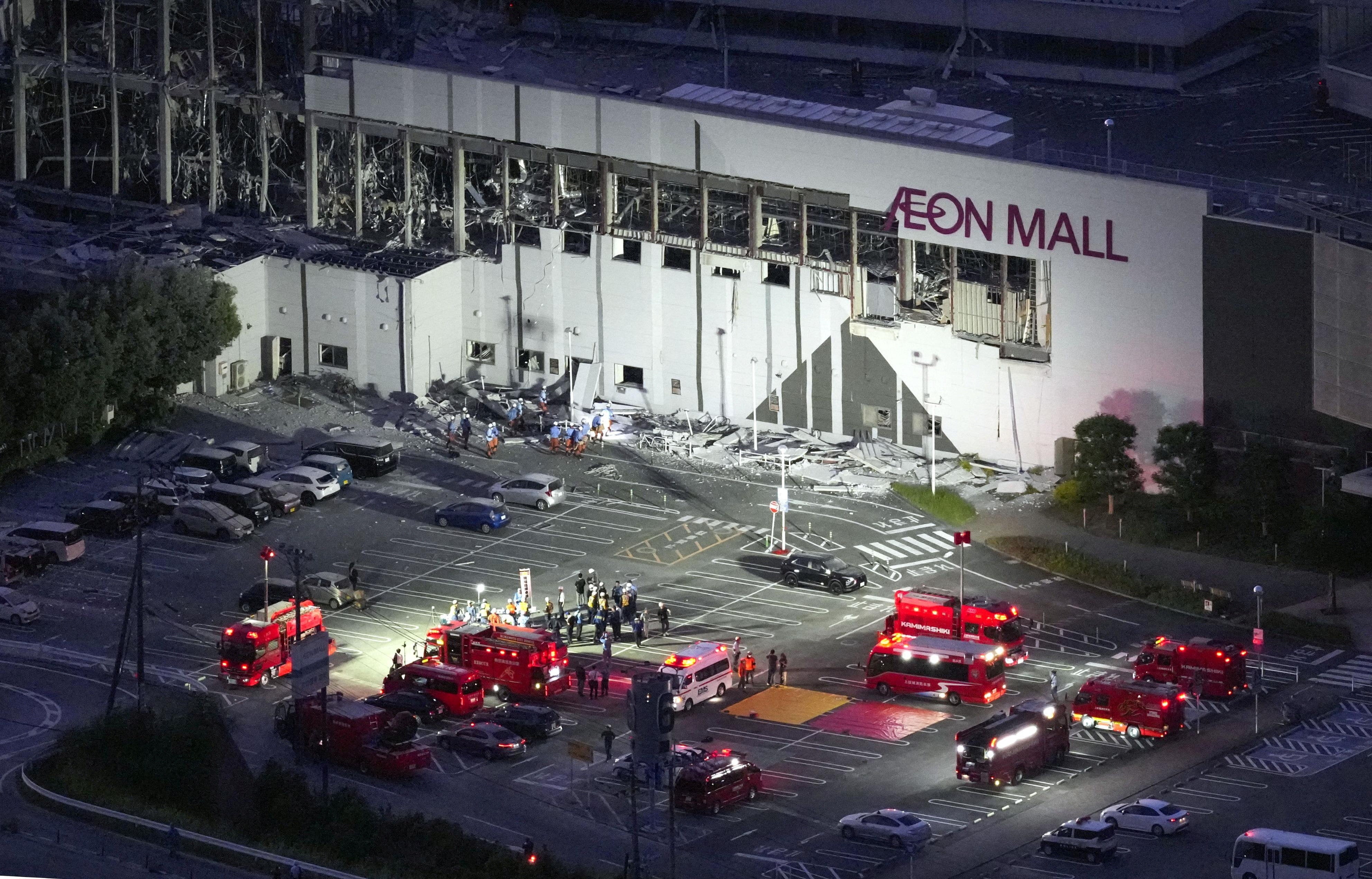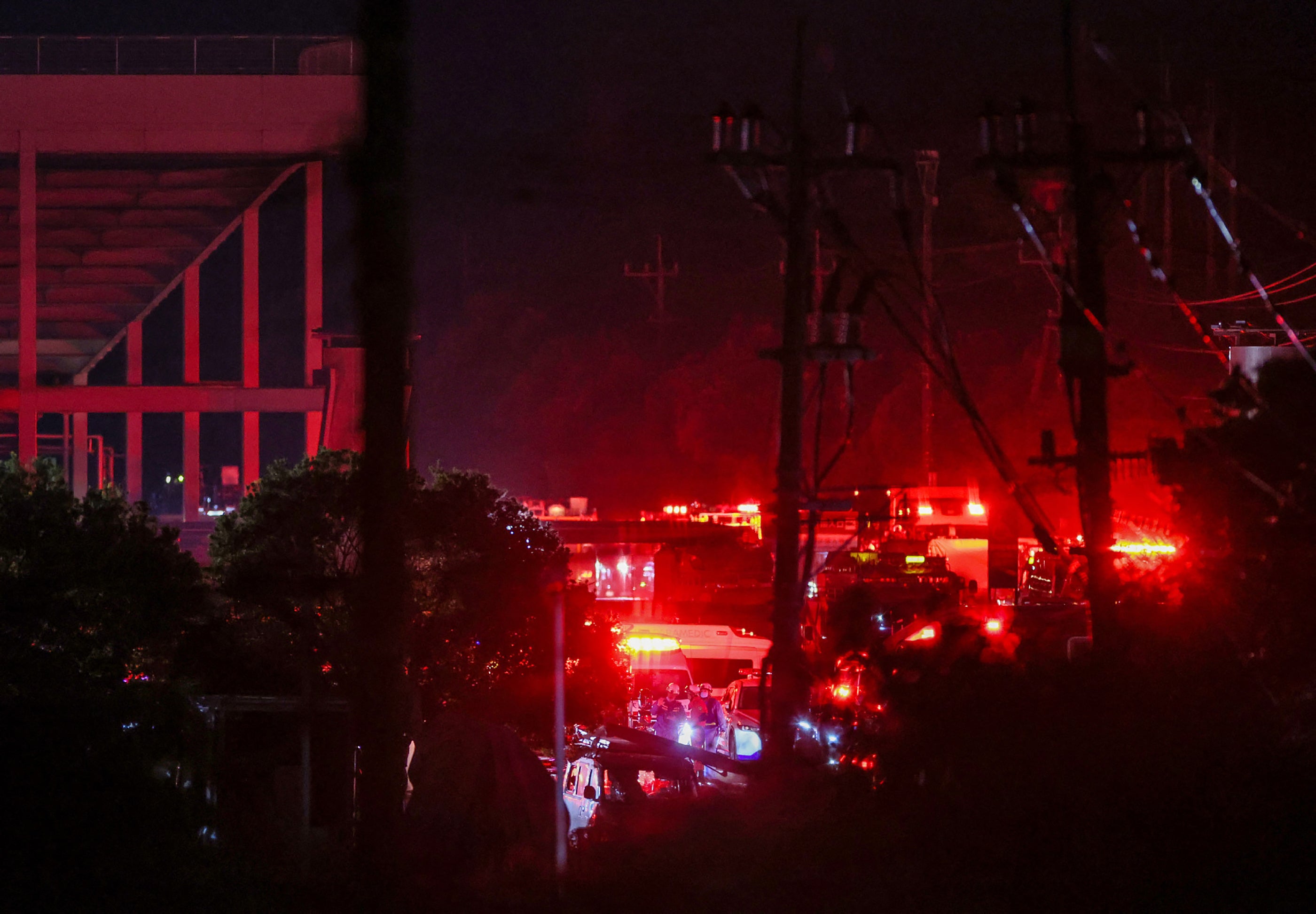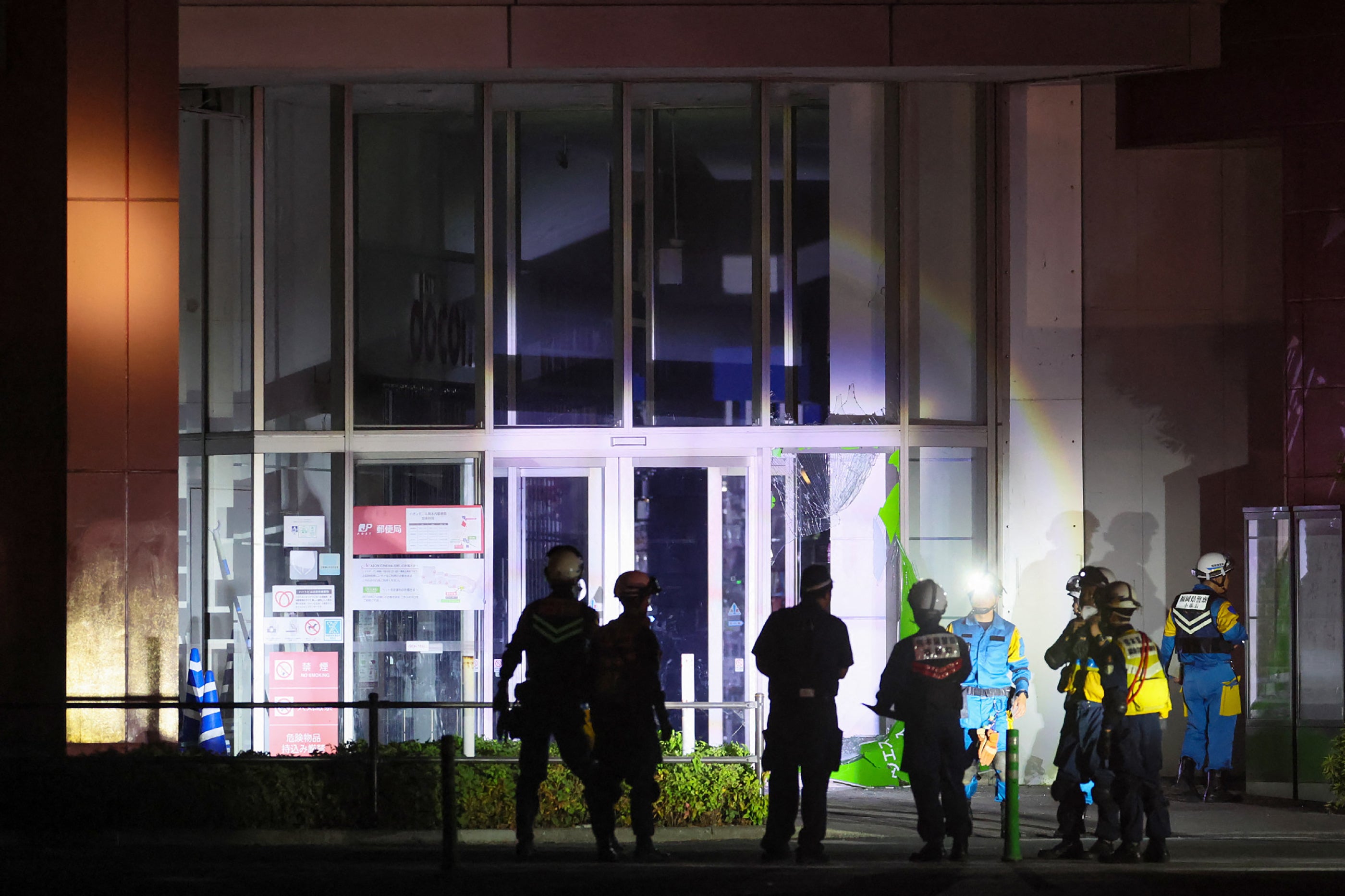


Multiple deaths are being reported after a shopping mall collapsed during today’s 6.8-magnitude earthquake in southern Japan’s Kumamoto Prefecture.
The second floor at the Aeon Mall shopping center in Kashima Town collapsed, trapping an unknown number of people as a result of the explosion.
Rescue operations were being carried out, the Fire and Disaster Management Agency said.
Mall operator Aeon said customers were being evacuated and it was still assessing the situation.
The earthquake caused powerful shaking and a tsunami warning was issued for Kyushu’s south-western coastlines, though it was later lifted.
The U.S. Geological Survey initially said the earthquake had a magnitude of 7.1, but revised it later to 6.8.
Prime minister Sanae Takaichi said people had been injured and that officials were evaluating reports of collapsed buildings, fires, damaged roads and bridges, and power outages. She urged residents to evacuate to safe locations and remain alert.
Public broadcaster NHK showed burning and collapsed buildings, large cracks in roads, including an elevated highway, and a derailed freight train.
Mobile phone services were also disrupted in some areas and around 40,000 homes lost electricity.
At least two dead following Aeon Mall explosion
The explosion at Aeon shopping centre has killed at least two people, according to local media.
Japanese broadcaster NHK reported that two women died, while five others were injured in the disaster.
This follows an earlier report from Kumamoto City’s Disaster Management Division, which said that 10 people were missing.
Harriette Boucher28 July 2026 22:28
Kumamoto urged to avoid tap water
Residents of Kumamoto has been told not to drink the tap water.
The government said cloudy water had been seen in parts of the city and it was inspecting water supply facilities.
Electricity was cut to about 48,300 households in Kumamoto Prefecture following the powerful earthquake, according to Kyushu Electric Power.
Harriette Boucher28 July 2026 22:07
A history of Japan’s largest quakes
Japan was rocked by a powerful 6.8 earthquake today, which is thought to have killed several people.
Residents in Kumamoto said the shake reminded them of the 2016 disaster that left 278 people dead across the prefecture and surrounding areas.
Around 20 per cent of the world’s earthquakes of magnitude 6 or greater take place in Japan and up to 2,000 quakes are felt by people each year.
These are some of the largest earthquakes that have struck Japan in the last 15 years:
- On March 16, 2022, a magnitude-7.4 earthquake jolted the coast off Fukushima again, leaving three dead, more than 200 injured and reviving memories of the quake and tsunami that crippled the Pacific coast region just over a decade earlier.
- On February 13, 2021, a 7.3-magnitude earthquake hit off the coast of Fukushima in eastern Japan, injuring dozens of people and triggering widespread power outages in Greater Tokyo.
- On September 6, 2018, a 6.7-magnitude earthquake paralysed Japan’s northern island of Hokkaido, killing more than 40 people, triggering landslides and knocking out power to its 5.3 million residents.
- On June 18, 2018, a magnitude-6.1 earthquake in Osaka, Japan’s second-biggest metropolis, killed four people, injured hundreds more and halted factory lines in an industrial area.
- On April 16, 2016, a 7.3-magnitude earthquake struck Kumamoto, the scene of Tuesday’s temblor, killing more than 270 people, including some caught in landslides and heavy rain in the aftermath.
- On March 11, 2011, a 9.0-magnitude earthquake and tsunami struck northeast Japan, killing nearly 20,000 people and causing a meltdown at the Fukushima nuclear power plant, leading to the world’s worst nuclear disaster since Chernobyl.
Harriette Boucher28 July 2026 22:00
Aeon Mall mall explosion thought to be triggered by gas leak
The explosion at Aeon Mall shopping centre is believed to have been triggered by a gas leak at the building, according to Japan’s NHK national television.
Tuesday’s earthquake collapsed the second floor of the Aeon Mall shopping centre and has trapped an unknown number of people there.
Emergency services have pulled four people out with injuries, while 10 others were unaccounted for, the Kumamoto prefectural emergency response team said.
It said the extent of the damage was still being investigated as the search and rescue effort continued.
Harriette Boucher28 July 2026 21:42
At least 200 being treated across southwestern Japan
At least 200 people are receiving treatment for injuries following the 6.8 magnitude earthquake that rocked southwestern Japan on Tuesday.
According to NHK, around 80 people were receiving treatment for injuries at Yatsushiro Northern Regional Medical Center in Hikawa, Kumamoto.
It reported that another 84 people were receiving treatment at a hospital in Kumamoto city.
Uki General Hospital in Uki City has admitted 40 injured people, the broadcaster said.
Another 10 people were also reportedly injured at a nursing home in Kumamoto.
Harriette Boucher28 July 2026 21:23
Watch: Moment 7.1 magnitude earthquake strikes Japan
Harriette Boucher28 July 2026 21:15
More than 60 aftershocks since 6.8 quake
There have been more than 60 aftershocks in Japan ranging from magnitude 1 to 4 on Tuesday, according to the country’s meteorological agency.
In Japan’s own seismic intensity scale, these aftershocks have ranged from 1 to 6.
The agency says a magnitude intensity of 1 means a slight shaking is felt by people indoors, while a magnitude intensity of 7 means furniture that is not fixed in place will move, fall over and may even be thrown by the force of the earthquake.
Harriette Boucher28 July 2026 20:30
Around 3,600 military personnel dispatched to Kumamoto
Around 3,600 military personnel have been sent to Kumamoto to help emergency service efforts, which will continue through the night.
It comes as workers urgently try to rescue the dozens of people who are feared trapped in the Aeon Mall shopping centre in Kashima Town.
Prime minister Sanae Takaichi said: “The government will work tirelessly through the night to swiftly assess the overall damage situation and carry out emergency disaster response measures, starting with the rescue and lifesaving of those affected.
“At the same time, we will ensure the reliable delivery of essential supplies such as food and water, as well as simple air conditioners and power vehicles for heatstroke prevention, utilising push-type support where appropriate, and strive to secure a safe and suitable evacuation environment.”
Harriette Boucher28 July 2026 19:45