

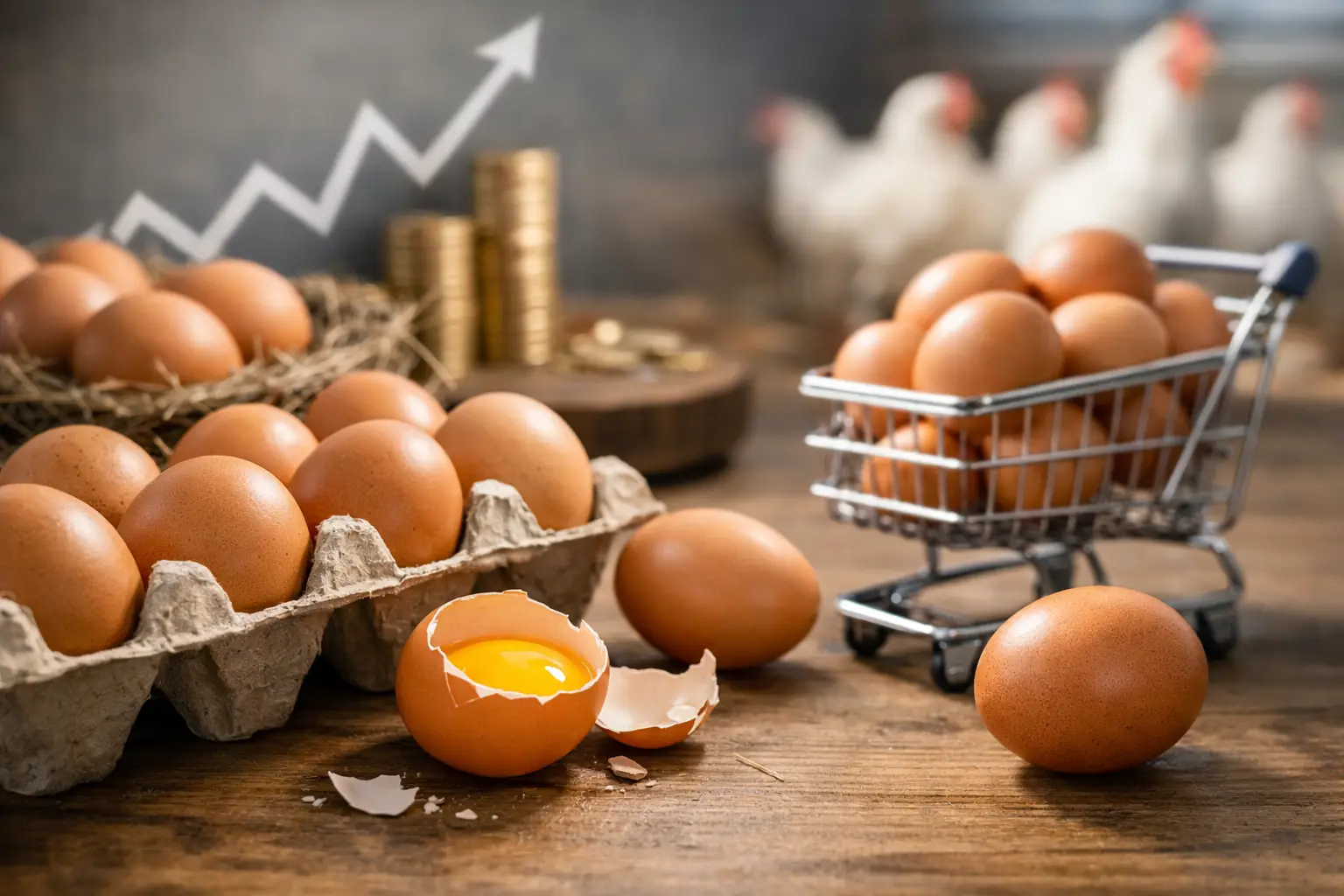
A dozen eggs used to be one of the easiest items to throw into the trolley without checking the price. Now, whether you are buying a basic box for weekday breakfasts or free-range eggs for baking, the total can feel noticeably higher. So, why are eggs so expensive? The short answer is that eggs sit at the centre of several pressure points at once: disease outbreaks, costly chicken feed, energy bills, farm labour and changing welfare standards.
For shoppers, the increase can seem sudden. For producers, it is usually the result of costs building up over months before they reach the supermarket shelf. And while prices can fall when supply improves, egg production is not something farms can switch on overnight.
Why are eggs so expensive in the UK?
The biggest reason is simple supply and demand. When fewer laying hens are producing eggs, but households, cafés, bakeries and food manufacturers still want roughly the same amount, prices rise. That is especially visible with free-range and organic eggs, where production rules can make it harder for farms to adapt quickly.
Eggs are also a relatively low-margin product. A modest rise in feed, heating, packaging or transport can make a meaningful difference to the price a producer needs to charge. Supermarkets may absorb some of that increase for a time, but not indefinitely.
The result is a price that reflects far more than the egg itself. It covers the care of the hen, the farm’s running costs, sorting and packing, delivery, retailer overheads and VAT-related pressures elsewhere in the supply chain.
Bird flu can cut supply quickly
Avian influenza, often called bird flu, has been one of the clearest drivers of egg price volatility. When an outbreak is confirmed, affected birds may have to be culled to stop the virus spreading. Restrictions can also keep free-range hens indoors for extended periods, disrupting normal routines and adding costs for farms.
Replacing a flock takes time. Pullets, the young hens raised to become layers, must mature before they begin producing at a commercial level. That means an outbreak today can affect supply well beyond the immediate news cycle.
Bird flu does not mean every carton in every shop will suddenly double in price. The impact depends on the size of outbreaks, the region affected, existing stocks and how much supply retailers have secured. But repeated outbreaks can create a longer-term shortage, particularly when they hit major egg-producing areas.
Feed is the largest everyday cost for many farms
A laying hen eats every day, and feed is one of the biggest expenses in egg production. That feed commonly includes grains and protein-rich ingredients such as soya. When harvests are poor, global commodity prices rise, fuel becomes dearer or international trade is disrupted, farmers pay more to keep their flocks fed.
The problem is not limited to one bad harvest or one country. Grain markets are global. Droughts, floods, conflict, shipping disruption and currency movements can all feed into the cost of British animal feed.
Farmers cannot simply reduce feed quality to save money without risking hen health and egg output. Better nutrition supports reliable laying, shell quality and animal welfare. In other words, the cost of a nutritious feed ration is closely tied to the number and quality of eggs reaching shops.
Energy, labour and packaging have all become pricier
Modern egg farms use energy for lighting, ventilation, heating and cooling, depending on the system and season. Packing centres also need electricity to grade, check, store and prepare eggs for distribution. When energy prices rise, the extra cost travels through the chain.
Labour matters too. Farms and packing facilities need people to care for birds, collect eggs, inspect quality, pack boxes and deliver stock. Wage increases are vital for workers, but they add to the overall cost of production. So do cardboard cartons, labels, cleaning supplies and fuel for lorries.
One cost increase alone may not move the shelf price much. Several at the same time can. That is why egg prices can remain elevated even after one headline issue, such as wholesale gas prices, begins to ease.
Free-range eggs come with different pressures
British shoppers increasingly look for free-range, organic and higher-welfare eggs. That demand has improved choice, but these systems can be more expensive to run than large-scale caged systems. Hens need more space, outdoor access where conditions allow and more complex farm management.
There is a clear trade-off. Many people are happy to pay more for welfare standards they support, but those standards leave less room to cut costs when feed or energy becomes expensive. During periods of avian flu restrictions, farmers may also face the awkward reality of maintaining free-range flocks indoors for biosecurity reasons while still covering the costs of that system.
Rules on housing and labelling are designed to protect animals and give shoppers meaningful information. They can also make the market less flexible in the short term. That is not necessarily a bad thing, but it helps explain why the cheapest eggs are not always the ones most affected by wider farm pressures.
Supermarkets do not all price eggs the same way
If one supermarket’s eggs seem far more expensive than another’s, it does not automatically mean one is overcharging. Retailers have different supplier contracts, promotional plans, own-brand ranges and approaches to absorbing cost increases. A larger shop may use eggs as a price-sensitive staple and hold prices down temporarily. Another may stock more premium, local or welfare-focused lines.
Size can also be misleading. Six large eggs, 10 medium eggs and 12 mixed-size eggs are difficult to compare at a glance. The clearest method is to check the price per egg, then consider size, farming method and whether you will actually use the full box before the best-before date.
Discount offers are worth watching, although multi-buy deals only save money if they prevent another shop rather than lead to waste. Eggs are versatile, but a bargain is less useful if half the box ends up forgotten at the back of the fridge.
Are egg prices likely to come down?
They can, but probably not in a straight line. Prices tend to stabilise when bird flu losses ease, feed becomes more affordable, energy costs settle and farms rebuild flock numbers. Seasonal demand can still affect what shoppers see. Baking-heavy periods, school holidays and festive food production can all tighten supply in particular categories.
It also depends on the type of egg. Standard barn eggs may respond differently to free-range, organic or speciality products because the farms, contracts and production costs behind them are different. A return to lower prices is possible, but it may not mean a return to the unusually cheap egg prices people remember from years ago.
For households feeling the squeeze, eggs can still offer good value compared with many other protein options. They work in omelettes, fried rice, traybakes, sandwiches and baking, and they can turn leftover vegetables into a proper meal. Buying the box size that suits your household, comparing price per egg and choosing a store brand when it meets your standards are practical ways to manage the cost.
The key point is that a higher price is rarely down to one villain. It reflects a food system balancing animal health, farmer viability, welfare expectations and the everyday costs of getting a fragile product safely from farm to fridge. Keeping an eye on value rather than just the headline price can make the next carton a little easier to justify.

