

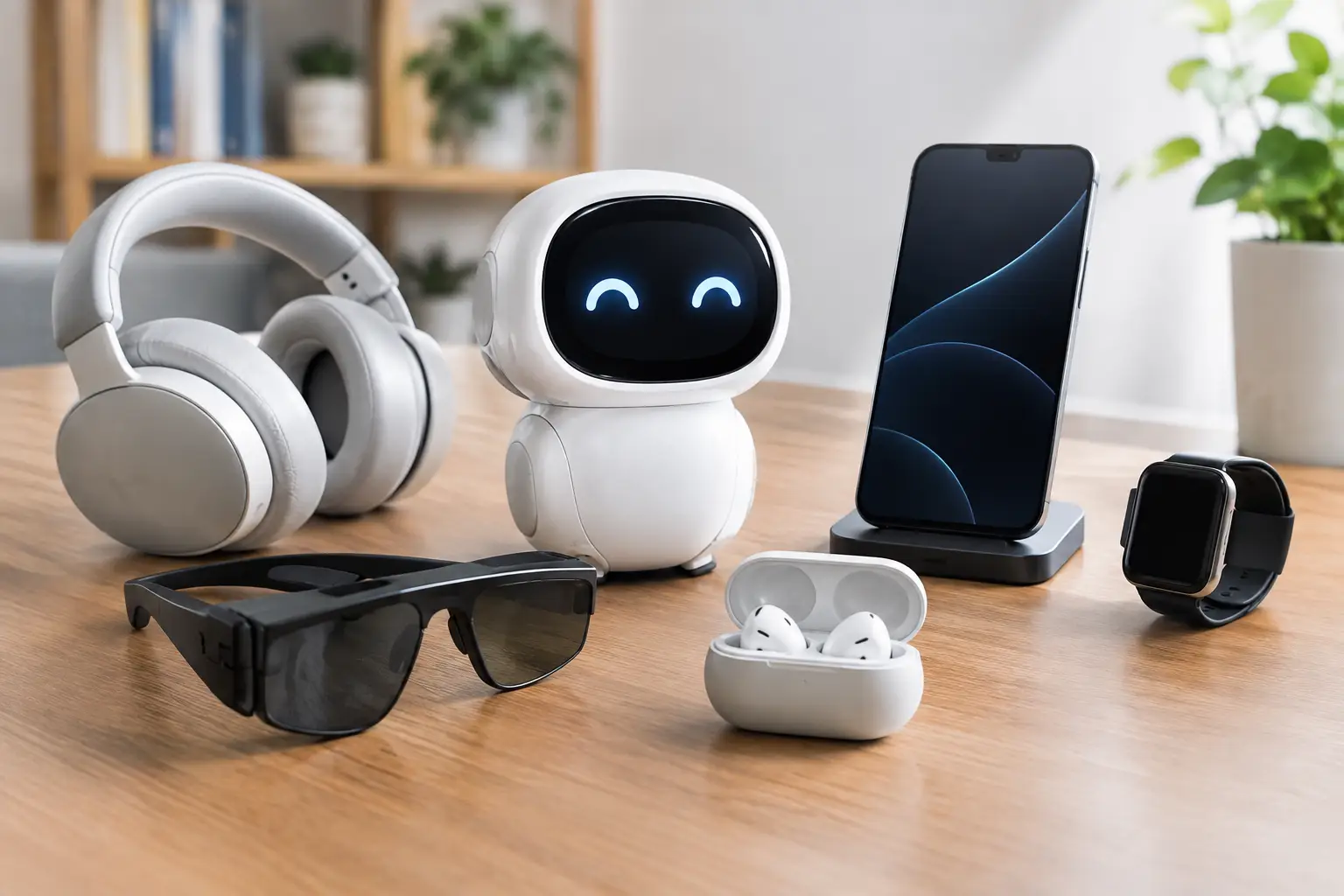
A gadget that promises to write your notes, coach your workout, translate a conversation and find your keys sounds like a shortcut to a smarter life. It can also become another device that needs charging, an app that wants personal data, and a subscription quietly leaving your bank account each month. That is the real test for AI gadgets in 2026: not whether they sound futuristic, but whether they save enough time or effort to deserve space in your routine.
The category has moved well beyond phone assistants. Artificial intelligence is now appearing in earbuds, smart glasses, watches, rings, cameras, home security kit, robot vacuums and compact voice recorders. Some of these products are genuinely useful. Others are still trying to solve problems most people did not know they had.
What makes a gadget genuinely AI-powered?
The label is being used generously. A device does not become clever simply because it has an app or responds to voice commands. The more useful AI gadgets tend to do one of three things: recognise patterns, interpret information, or take a limited action based on what they have learned.
A wearable might spot changes in your sleep or recovery patterns. Earbuds may translate speech or reduce background noise on a busy train. A robot vacuum can identify cables, pet mess and room boundaries rather than bouncing randomly around the floor. A note-taking device can turn a meeting recording into a searchable transcript and a short list of actions.
That last point matters. The best results are usually narrow and practical. AI is strongest when it helps with a repeat task: sorting photos, filtering spam calls, navigating around obstacles, creating captions or finding a detail buried in an hour-long recording. Be more cautious when a product claims it can act as your personal assistant for everything. General-purpose AI still gets things wrong, misses context and can state an answer with more confidence than accuracy.
The AI gadgets people are actually using
Smart glasses and camera wearables
Smart glasses are among the most visible new gadgets because they let people take photos, answer calls, hear audio and ask questions without reaching for a phone. Some models can identify what is in front of the wearer, translate signs or provide spoken answers through built-in speakers.
The appeal is obvious for travelling, walking, cooking or capturing a moment hands-free. But they make the most sense for people who will use the camera and audio features regularly. If you already avoid taking voice calls in public or feel awkward filming with a wearable camera, the novelty may wear off quickly.
There is a social trade-off too. A phone camera is visible. Glasses are more discreet, which can make other people unsure whether they are being recorded. Look for a clear recording light, and use it. Convenience should not come at the expense of basic courtesy.
AI earbuds
Earbuds are a more natural fit for AI because many people already wear them on commutes, walks and calls. Live translation, call summaries, voice assistance and adaptive noise control are the headline features. The most reliable benefit, though, is often simpler: better sound in changing environments.
Adaptive noise cancellation can respond to wind, traffic or office chatter, while voice isolation helps callers hear you more clearly. Translation tools can be useful for short exchanges abroad, but do not treat them as a replacement for a human interpreter in medical, legal or high-stakes situations. Accents, slang and poor mobile signal can quickly expose their limits.
Health rings, watches and fitness trackers
Wearables increasingly use algorithms to turn streams of data into prompts about sleep, stress, training load and recovery. For someone trying to build healthier habits, that can be motivating. It is easier to act on a message saying you have slept poorly for four nights than on a screen full of raw graphs.
Still, consumer wearables are not medical devices unless they are explicitly approved for a particular purpose. A readiness score can be a useful nudge to take a rest day, but it cannot diagnose illness. It is also worth asking whether you need a separate ring, watch and chest strap, or whether one device will cover the data you actually care about.
Smarter home helpers
Robot vacuums have become a clearer example of AI adding value. Better mapping, object recognition and room-specific cleaning schedules mean less rescuing the device when it wedges itself under a chair or tangles with a cable. The more complicated your home layout, the more those improvements matter.
Home cameras and video doorbells can also use AI to distinguish people, parcels, pets and vehicles, cutting down on pointless alerts. That sounds minor until your phone stops buzzing every time a tree branch moves. Yet these systems collect sensitive footage around your home, so check where video is stored, how long it is kept and whether useful features require a paid plan.
Recording and productivity devices
Small AI recorders and meeting tools are popular with students, freelancers and busy office workers. They can transcribe interviews, lectures and calls, then pull out themes, decisions and follow-up tasks. Used responsibly, they reduce the frantic scribbling that makes people miss half a conversation.
The catch is consent. In the UK, recording rules can vary by setting and purpose, while workplaces and schools may have their own policies. Tell people when you are recording, particularly in meetings, appointments and private conversations. Also review important transcripts yourself. Names, figures and technical terms are frequent weak spots.
How to choose AI gadgets without buying the hype
Before checking specifications, start with a blunt question: what irritating task will this device handle at least twice a week? “It looks clever” is not enough when the product also brings another charger, account, privacy policy and possible monthly fee into your life.
Think about whether the main feature works on the device or depends on a phone and cloud connection. On-device processing can be faster and more private, especially for voice commands or image recognition. Cloud-based tools may be more capable and improve over time, but they can fail when you are offline and may require your data to be sent elsewhere.
Battery life deserves more attention than flashy demonstrations. A pair of AI earbuds that needs charging halfway through a long journey is less helpful than ordinary earbuds that last. The same goes for smart glasses and compact recorders. Check real-world reviews for battery performance with the headline AI functions switched on, not just standby figures on the box.
Subscriptions are another deciding factor. Some manufacturers bundle advanced insights, storage or enhanced assistant features into a monthly plan. There is nothing inherently wrong with that, but calculate the first-year cost rather than focusing only on the launch price. A cheaper device can become the pricier choice once fees are included.
Finally, consider ecosystem lock-in. A gadget may work best with a particular phone brand, operating system or smart-home platform. That can be convenient if you are already committed, but frustrating if you switch devices later. Compatibility is not a boring detail – it often decides whether a product feels effortless or permanently fiddly.
Privacy is part of the purchase price
AI hardware often works by collecting more information than older gadgets: voices, locations, sleep patterns, room layouts, video clips and daily routines. The useful question is not whether data is collected at all, but whether the amount collected is proportionate to the benefit you receive.
Spend five minutes checking the privacy controls before you buy. Can recordings be deleted easily? Can you turn off personalised recommendations? Does the device offer local processing? Is it clear who can access shared household accounts? A vague answer is a warning sign, especially for cameras, microphones and health trackers.
Children and guests deserve extra thought. A clever home device may be convenient for you while creating a recording environment that others did not choose. Set boundaries early rather than trying to explain them after an uncomfortable moment.
The sensible way to start
You do not need an AI-filled home to get value from the technology. Start with the category closest to a habit you already have. Frequent travellers may get more from translation-capable earbuds. Regular runners may prefer a wearable that turns sleep and activity data into useful patterns. Anyone with pets, cluttered floors or a hectic schedule may find a smart robot vacuum more practical than a flashy voice-first device.
Give it a few weeks, then judge it on behaviour rather than excitement. Are you using it without being reminded? Has it saved time, reduced a nuisance or helped you make a better decision? If the answer is no, returning it or skipping the upgrade is not falling behind. The most worthwhile gadget is the one that quietly makes an ordinary Tuesday easier.

