

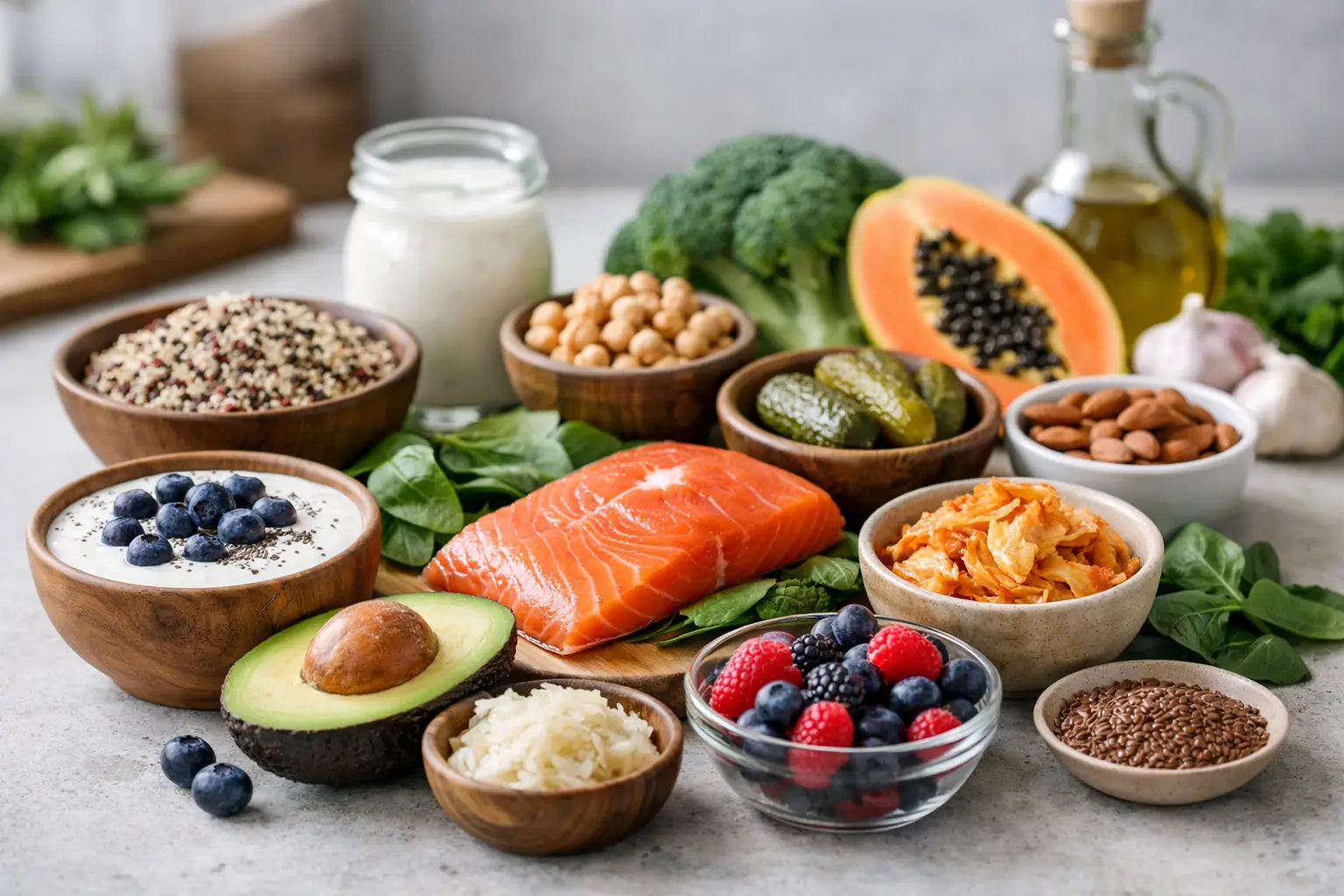
A gut-friendly shop does not need to begin with expensive powders or a fridge packed with niche wellness drinks. The best foods for gut health are mostly familiar supermarket staples: beans, oats, fruit, vegetables and a few fermented options. What matters most is eating a wider range of fibre-rich plant foods consistently, rather than expecting one ‘superfood’ to fix bloating or digestion overnight.
Your gut is home to trillions of microbes that help break down food, produce useful compounds and interact with the immune system. They tend to thrive on variety. That means the winning move is usually adding, not restricting: an extra vegetable at dinner, a handful of nuts, or a better breakfast several days a week.
What makes food good for your gut?
Three things tend to stand out. First is fibre, particularly the types that reach the large intestine and feed beneficial gut bacteria. Second is plant diversity, because different plants provide different fibres and natural compounds. Third is fermented food, which can introduce live microbes or the by-products of fermentation.
There is no single perfect menu. Someone with irritable bowel syndrome, inflammatory bowel disease, coeliac disease, or a medically prescribed diet may need more individual guidance. Even for everyone else, rapidly piling on fibre can cause wind, cramps or a bloated feeling. Start small, drink enough fluid and give your gut a chance to adjust.
The best foods for gut health, from breakfast to tea
1. Oats
A bowl of porridge is a practical place to start. Oats contain beta-glucan, a soluble fibre that helps form a gel-like texture in the gut and is also associated with heart-health benefits. Choose porridge oats, overnight oats or unsweetened muesli over heavily sugared cereal, then add fruit and seeds for more variety.
2. Beans, lentils and chickpeas
Pulses are among the most useful foods for gut bacteria because they provide fibre, resistant starch and plant protein in one affordable package. Add chickpeas to a traybake, lentils to a bolognese, or beans to soup and chilli. Tinned versions count, too – just rinse them if you want to reduce salt.
If beans make you uncomfortable, begin with a few spoonfuls rather than a giant serving. Lentils, especially tinned or well-cooked red lentils, are often an easier entry point for some people.
3. Live yoghurt
Live yoghurt can be an easy fermented addition, particularly plain yoghurt with no added sugar. Look for wording such as ‘live cultures’ on the pot. Have it with berries at breakfast, use it in a curry instead of cream, or mix it with herbs for a quick dip.
Not every yoghurt marketed as gut-friendly contains live cultures, and flavoured varieties can be more like dessert than a daily staple. Dairy-free live yoghurts are available, although it is worth checking the label for live cultures and added sugar.
4. Kefir
Kefir is a tangy fermented milk drink, with dairy-free alternatives also on shelves. It often contains a broader mix of cultures than standard yoghurt, although the exact types vary by brand. A small glass, smoothie addition or splash over fruit is plenty if you are new to it.
Fermented foods are not compulsory. If you dislike the taste or find them irritating, build your diet around fibre-rich plants instead. That remains the bigger picture.
5. Berries
Blueberries, raspberries, blackberries and strawberries bring fibre alongside colourful plant compounds called polyphenols. Your gut microbes can help process these compounds, which is one reason colourful fruit is worth rotating through the week.
Fresh berries are great when they are in season, but frozen bags are usually cheaper, last longer and work just as well stirred into oats or yoghurt. No need to chase exotic fruit when British staples are readily available.
6. Apples and pears
An apple or pear is a genuinely useful desk-drawer snack, especially when eaten with the skin on after washing. Both contain pectin, a soluble fibre that gut microbes can ferment. Pair one with a handful of nuts if you need something more filling between meals.
For people who are sensitive to certain fermentable carbohydrates, apples and pears can trigger symptoms. If that sounds familiar, do not force them – try berries, citrus fruit, kiwi or a banana instead.
7. Slightly green bananas
Bananas are convenient, inexpensive and easy to add to breakfast. Firmer, less ripe bananas contain more resistant starch, which passes through the small intestine and can become food for bacteria in the colon. As bananas ripen, that starch turns more into sugar, so a mix of ripeness levels is fine.
The goal is not to eat unripe fruit you hate. Simply use bananas as one dependable part of a varied fruit routine.
8. Onions, garlic and leeks
These everyday flavour-builders contain prebiotic fibres, including fructans, that can support beneficial microbes. A base of onion and garlic in soups, pasta sauces and stews is a low-effort way to make ordinary meals work harder for your gut.
They can also be major triggers for some people with IBS. Garlic-infused oil can offer flavour without the same fibre content, while the green parts of spring onions may be gentler for certain low-FODMAP plans.
9. Broccoli and other brassicas
Broccoli, cauliflower, cabbage, kale and Brussels sprouts offer fibre and a useful range of plant compounds. Roasting them until caramelised, shredding cabbage into a stir-fry, or adding broccoli to pasta can be more appealing than a plain pile of boiled veg.
These vegetables can create more gas, particularly when your current fibre intake is low. Smaller portions more often are usually a better strategy than avoiding them altogether.
10. Nuts and seeds
Almonds, walnuts, pistachios, chia seeds and linseeds provide fibre, healthy fats and texture that makes meals more satisfying. Stir ground linseed into porridge, scatter seeds over yoghurt, or keep unsalted nuts handy for an afternoon snack.
Ground linseed is easier to digest than whole linseed, and chia needs liquid to soften. A tablespoon is a sensible starting amount, especially if you are not used to high-fibre foods.
11. Wholegrains
Wholemeal bread, brown rice, barley, wholewheat pasta and rye are simple swaps that can steadily lift fibre intake. Barley is particularly useful in soups and stews, while rye toast makes a change from white bread at breakfast.
You do not have to replace every refined carbohydrate instantly. If wholemeal pasta is not your favourite, start with half wholewheat and half regular, or choose brown rice a couple of nights a week. Regular habits beat a short-lived health kick.
12. Cooked and cooled potatoes or rice
Cooling cooked potatoes, rice or pasta changes part of their starch into resistant starch. Reheating them later still leaves some of that effect, so a leftover potato salad, rice bowl or pasta lunch can be a gut-friendly option as well as a convenient one.
Food safety matters here: cool cooked rice quickly, refrigerate it promptly and reheat it until piping hot if you are serving it warm. Do not leave it sitting at room temperature for hours.
A realistic way to build a gut-friendly week
Rather than buying all 12 foods at once, aim to add one plant-based item to each meal. Porridge with berries and yoghurt, a jacket potato with beans at lunch, and a lentil-packed curry with brown rice at dinner would cover plenty of ground without feeling like a special diet.
A useful informal target is 30 different plant foods across a week. That includes herbs, spices, nuts, seeds, beans, wholegrains, vegetables and fruit, so it is less daunting than it sounds. A vegetable soup made with onion, garlic, carrots, celery, lentils and herbs can add several in one go.
Pay attention to your own response, too. More fibre is usually helpful, but the right pace varies. If ongoing pain, unexplained weight loss, blood in your stool, or a major change in bowel habits is part of the picture, speak to a GP rather than trying to solve it through diet alone.
The most gut-friendly food plan is the one that fits your budget, tastes good and keeps appearing on your plate. Start with one change this week, then let variety do the long-term work.

