

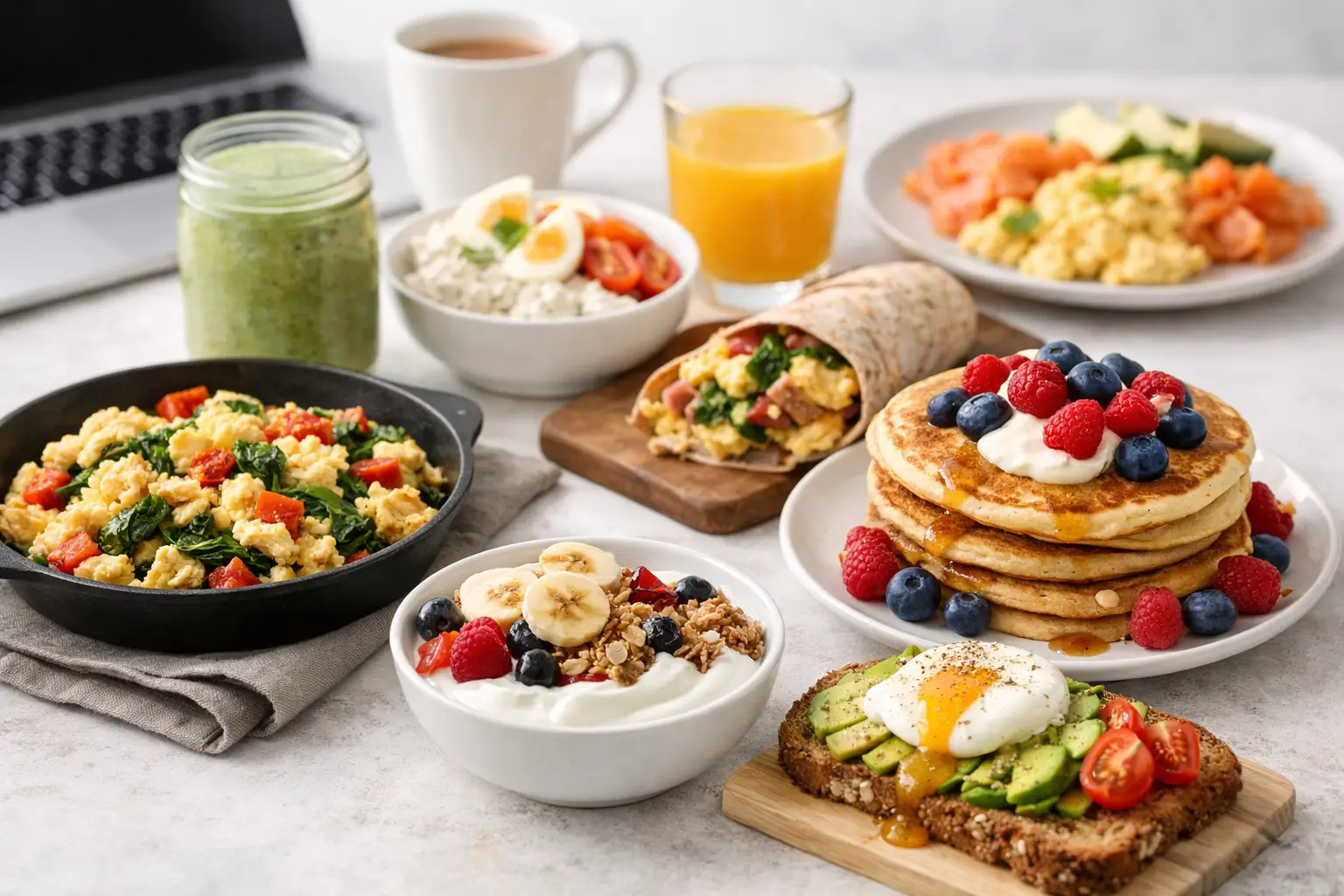
The 8.15am rush is rarely the moment for a complicated recipe, yet a sugary cereal bar can leave you hungry again before your first meeting. The best high protein breakfasts are the ones you will actually make: quick enough for weekdays, filling enough to last, and flexible enough to suit what is already in the fridge.
Protein is not a magic fix, but it can make breakfast more satisfying, particularly when paired with fibre-rich carbohydrates and some fruit or veg. Whether your goal is supporting a gym routine, avoiding the mid-morning biscuit run or simply starting the day with a proper meal, these easy options bring more substance to the table.
What makes a breakfast high in protein?
For many adults, a breakfast with roughly 20 to 30g of protein is a useful target, though the right amount depends on your appetite, body size, activity level and the rest of your diet. You do not need to weigh every spoonful. Think in practical building blocks: eggs, Greek yoghurt, cottage cheese, milk, beans, fish, lean meat, tofu and protein powder.
The bigger picture matters too. A fry-up with bacon can provide protein, but it is not automatically the best daily choice if it is light on fibre and heavy on salt. Meals built around wholegrains, fruit, vegetables and minimally processed protein sources tend to offer more lasting energy.
12 best high protein breakfasts to put on repeat
1. Greek yoghurt, berries and nut butter
A thick pot of Greek yoghurt is one of the fastest routes to a protein-rich breakfast. Add berries, a spoonful of nut butter and a handful of oats or low-sugar granola for texture. Full-fat yoghurt can be especially satisfying, while lower-fat versions may offer slightly more protein per calorie.
Choose plain yoghurt when possible, as flavoured pots can carry more added sugar than expected. If you prefer a sweeter bowl, a sliced banana or a little cinnamon does the job.
2. Eggs on wholemeal toast
Two or three eggs, scrambled, poached or made into an omelette, offer a reliable weekday base. Serve them on wholemeal toast with tomatoes, spinach or mushrooms and you have a breakfast that is quick, familiar and easy to adapt.
Eggs alone may not take everyone to a higher protein target, so add cottage cheese, smoked salmon or a side of baked beans when you need something more substantial. Beans also bring fibre, which is useful for keeping the meal filling.
3. Overnight protein oats
Overnight oats solve the problem of having no time in the morning. Mix oats with milk, Greek yoghurt and chia seeds in a jar, then leave it in the fridge. A scoop of protein powder can raise the protein content further, but it is optional rather than essential.
For a chocolate version, use cocoa powder, banana and peanut butter. For something fresher, try grated apple, cinnamon and walnuts. The texture is softer than porridge, which some people love and others do not, so test a small batch first.
4. Cottage cheese on toast
Cottage cheese has moved well beyond diet-food status. Spread it over wholemeal toast and top it with sliced tomatoes, black pepper and chilli flakes, or go sweet with pear, berries and a drizzle of honey.
It is mild rather than strongly cheesy, which makes it an easy canvas. If its texture is not for you, blend it into scrambled eggs or a smoothie instead.
5. A breakfast wrap with eggs and beans
A wholemeal wrap filled with scrambled egg, black beans, salsa and avocado is portable, colourful and far more satisfying than a pastry grabbed at the station. Make several fillings in advance and assemble them quickly through the week.
This is a good option for people who prefer savoury food early in the day. Watch portion sizes with cheese and sauces if you are aiming for a lighter breakfast, but do not strip out every fat source: avocado or a little cheese can make the wrap feel like a real meal.
6. Smoked salmon bagel or rye toast
Smoked salmon, cream cheese and rye toast or half a bagel delivers protein with very little cooking. Add cucumber, rocket, lemon and cracked black pepper to cut through the richness.
The trade-off is salt. Smoked salmon is a handy occasional choice, but rotating it with eggs, tinned fish or leftover roast chicken gives breakfast more variety and can help keep sodium intake in check.
7. Tofu scramble
Tofu scramble is a strong plant-based alternative to eggs. Crumble firm tofu into a pan with turmeric, garlic powder, pepper and a splash of soy sauce, then add spinach, peppers or mushrooms. Serve with toast, roasted potatoes or a wrap.
Tofu on its own can taste fairly neutral, so seasoning matters. Nutritional yeast adds a savoury note, while a spoonful of beans makes the plate even more filling.
8. A protein smoothie that eats like breakfast
A smoothie works when it has enough body to keep you going. Blend milk or a fortified plant drink with Greek yoghurt or protein powder, frozen berries, oats and nut butter. That combination brings protein, carbohydrates, fibre and fat rather than just a quick hit of fruit.
If you only blend juice and banana, you may be hungry soon afterwards. Smoothies are convenient, especially after an early workout, but drinking calories is not as satisfying for everyone. A piece of toast on the side can make all the difference.
9. Breakfast quesadilla
Fill a tortilla with eggs, grated cheese and leftover cooked chicken, turkey or black beans, then toast it in a dry frying pan until crisp. Serve with salsa or chopped tomatoes. It is a smart use for leftovers that might otherwise sit forgotten at the back of the fridge.
Use one tortilla folded in half rather than two stacked together for a manageable portion. The crisp exterior makes this feel like a weekend treat, but it takes barely longer than making toast.
10. Chia pudding with yoghurt
Chia seeds are not high-protein on their own, despite their health-food reputation. The protein comes from building the pudding with Greek yoghurt, milk and, if wanted, protein powder. Leave it overnight, then top with fruit and pumpkin seeds.
This breakfast suits meal-prep fans, though it has a gel-like texture that is not universally popular. If that puts you off, stir chia into overnight oats rather than making it the main event.
11. Savoury porridge with an egg
Porridge does not have to be sweet. Cook oats with water or milk, then add grated cheese, spring onions and a poached or fried egg. Spinach, mushrooms and a dash of hot sauce turn it into a comforting bowl for colder mornings.
Oats are mainly a carbohydrate source, so the egg, milk and cheese are doing the protein work here. It is a useful reminder that the best breakfasts often come from combining ordinary ingredients, not chasing one supposedly perfect food.
12. Make-ahead egg muffins
Whisk eggs with chopped peppers, spinach, cooked lean sausage or ham, and a little cheese, then bake the mixture in a muffin tin. Keep the cooled egg muffins in the fridge and reheat two or three when mornings get hectic.
They are particularly useful alongside fruit and toast, rather than as the entire breakfast. Batch cooking removes one decision from the morning, which is often more valuable than finding a new recipe every day.
How to make high-protein breakfasts easier
Start with two or three options you genuinely enjoy and repeat them. Stock long-lasting basics such as oats, eggs, tinned beans, nut butter and frozen berries, then add fresh items as needed. The goal is not an Instagram-perfect plate at 7am. It is a breakfast that fits your schedule and stops hunger from dictating the rest of the morning.
If you are training hard, vegetarian, pregnant, managing a medical condition or changing your diet for weight loss, your needs may be different. A registered dietitian can offer more personal guidance. For everyone else, tomorrow’s breakfast can be simple: pick one protein source, add fibre, and make it taste good enough to want again.

