

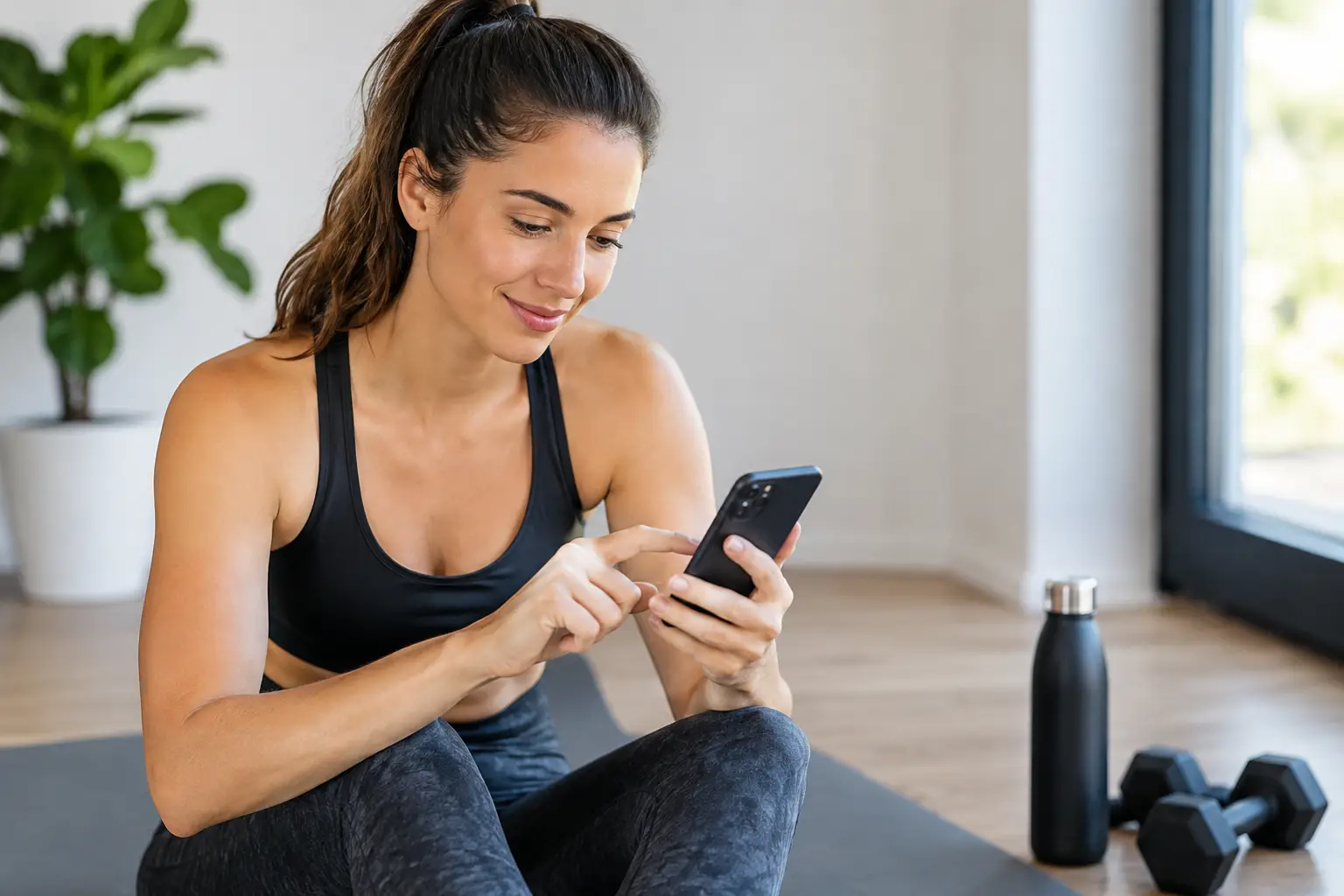
The hardest part of getting fitter is rarely finding a workout. It is fitting one into a Tuesday evening when work has run late, the weather is dreadful and the sofa looks like the better option. That is where fitness apps can help – not by supplying instant motivation, but by removing enough friction to make moving feel realistic.
The app market is crowded with polished videos, streak counters and seven-day transformations. Some are genuinely useful. Others are expensive reminders sitting between your banking app and your food delivery app. The best choice comes down to one question: will this make it easier for you to train consistently?
Why fitness apps work for some people
A good app gives a workout a starting point. Instead of spending 20 minutes deciding whether to run, lift weights or try a yoga class, you open it and press play. That small reduction in decision-making matters, especially for beginners or anyone returning after a long break.
They can also make exercise more flexible. A gym programme may be brilliant, but it is not much use when you are travelling, looking after children or only have a clear patch of floor and 15 minutes. Home workouts, walking plans and short strength sessions can turn an all-or-nothing routine into something more adaptable.
There is a social element too. Leaderboards, shared challenges and friend activity can provide a useful nudge. But this depends on personality. Some people thrive on seeing a colleague’s 10k pace; others find it draining or discouraging. A useful app should support your goals, not turn every session into a public scorecard.
Fitness apps: start with the goal, not the trend
The viral app of the week may be packed with celebrity trainers and dramatic before-and-after clips, but it may not match what you need. Before signing up, be clear about the result you are after over the next few months.
If your aim is to get stronger, look for progressive programmes that explain sets, reps, rest and form. For running, a plan that builds gradually is more valuable than one that pushes hard from day one. If you want to feel less stiff after hours at a desk, mobility sessions you can actually complete before breakfast may be the smarter choice.
Weight loss deserves particular caution. Exercise can support it, but apps that promise extreme results in a few weeks are selling a fantasy. A sustainable approach includes everyday movement, sleep, food choices and a routine you can maintain. If tracking calories or weigh-ins makes you anxious, choose an app centred on strength, walking or wellbeing rather than constant numbers.
Choose the format you will not avoid
Most apps fall into a few familiar camps: on-demand classes, structured training plans, activity tracking, running or cycling coaching, and meditation or recovery tools. None is automatically better.
People who enjoy variety may get more from a large class library with dance, Pilates, HIIT and strength options. Someone who wants to improve a pull-up or train for a half marathon will probably benefit more from a focused plan. The important detail is whether the sessions suit your real life. A brilliant 60-minute programme is less useful than a solid 20-minute one you complete three times a week.
Check the equipment requirements before committing. Some strength apps assume you own dumbbells, resistance bands, a bench and enough space to use them safely. Others are designed for bodyweight training. Neither approach is wrong, but surprise shopping costs can quickly make a low monthly subscription less of a bargain.
What to check before paying
Free trials are useful, but they are also designed to get you subscribed before you have properly tested the product. Treat the first few days like a trial run rather than a fresh-start performance. Try a workout at the time you normally exercise, using the kit and space you genuinely have.
Pay attention to how the app feels mid-session. Are the instructions clear? Can you hear the trainer? Does it offer beginner modifications and explain technique? Fast-paced workouts can be entertaining, but unclear demonstrations are a poor trade-off when you are learning squats, lunges or overhead movements.
Also check how easy it is to leave. Subscription terms, renewal dates and cancellation routes should be obvious. Annual plans can be cheaper, but only make sense after you have established a habit. Paying monthly at first may cost a little more, yet it gives you room to change course if the app loses its appeal.
A few checks are worth making before entering your card details:
- Whether the free version is genuinely usable or mainly a preview
- How much content is suitable for beginners, injuries or low-impact training
- If workouts can be downloaded for patchy mobile signal or travel
- Whether smartwatch and health-data connections are optional and transparent
- What happens to your personal data, location information and activity history
Privacy is not the most exciting part of choosing an exercise app, but it matters. Fitness data can reveal routines, locations and health-related patterns. Review permissions and only share what is necessary. You do not need to broadcast every walk to get the benefit of tracking it.
Do not mistake tracking for training
A ring closing, a streak growing or a graph moving upwards can feel satisfying. These features can help build awareness, particularly if you are trying to walk more or break up long periods of sitting. But they are not a complete picture of health.
If you miss a day because you are ill, exhausted or simply busy, the correct response is not to force a punishing session to protect a streak. Recovery is part of training. The same goes for wearable estimates of calories burned or sleep scores: use them as rough clues, not medical facts or personal verdicts.
For many people, the most useful metric is embarrassingly simple: how often did you show up this week? A two-session week can be a strong result if it is an improvement on none. Build from there.
Make the app fit your routine
Downloading an app is the easy bit. Turning it into a habit needs a small amount of planning. Pick two or three realistic windows in the week and decide in advance what session belongs in each one. This prevents the familiar cycle of opening an app, scrolling through hundreds of choices, then doing nothing.
Keep the starting point low. If you have been inactive, begin with 10 or 15 minutes. If you already train, use the app to solve a specific problem, such as adding mobility after lifting or following a more organised running schedule. You do not need to replace every activity you enjoy just because an app offers a new programme.
It also helps to make the next workout easy to begin. Put trainers by the door, charge your headphones, lay out a resistance band, or save the class beforehand. Tiny practical cues often beat a grand promise made on a Sunday night.
When an app is not enough
Fitness apps are convenient, but they cannot see your posture properly, adapt in the moment like a skilled coach, or diagnose pain. Stop and seek advice from a qualified healthcare professional if exercise causes chest pain, dizziness, severe shortness of breath or sharp, persistent pain. If you have an existing health condition, are recovering from injury or are pregnant, personalised guidance may be the safer route.
There is no failure in deciding that an app is not your best motivator. A local class, walking group, gym instructor, personal trainer or regular sport with friends may offer the accountability you need. The right tool is the one that gets you moving safely and leaves you feeling better, not guilty.
Pick one app, test it honestly for a fortnight, and keep only the parts that make exercise easier to return to. A routine that survives ordinary life will always beat a perfect plan that never leaves your phone.

