


A light aircraft that crashed into Beijing’s tallest skyscraper last week also came very close to a Hainan Airlines passenger jet and forced at least two commercial flights to abort their landings, new tracking data revealed.
The incident raised fresh questions about how a single-engine plane was able to penetrate some of the world’s most tightly controlled airspace.
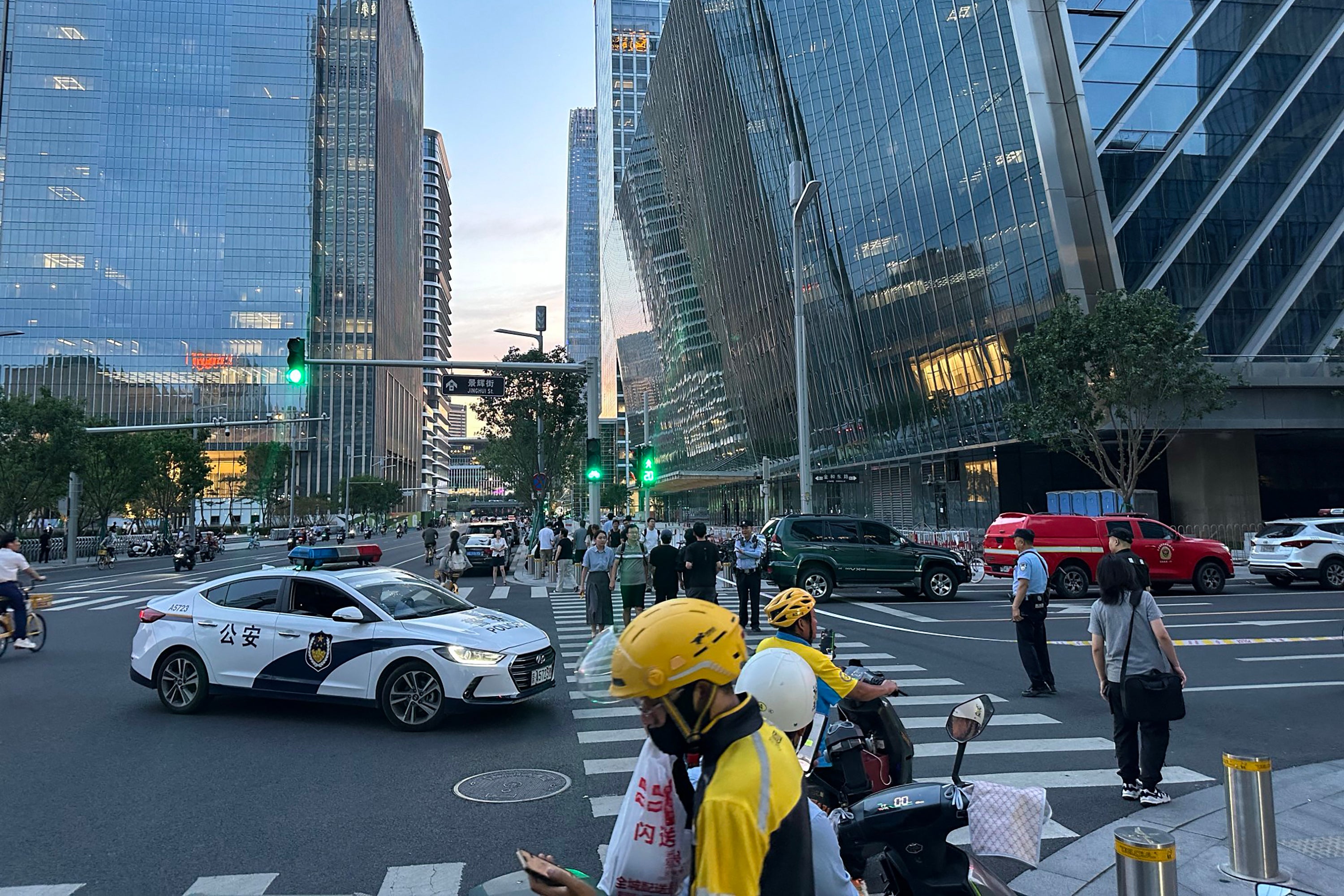
The two-seat Sunward SA 60L Aurora sport aircraft struck the 109-story CITIC Tower, also known as China Zun, at around 5.55pm local time on 26 June, plunging huge chunks of debris and aircraft parts onto the streets below during the evening rush hour. The pilot, flying solo, was killed. Thirteen people were injured.
Tracking data from Flightradar24, first reported by Bloomberg, showed the rogue plane heading directly into the path of a Hainan Airlines Airbus A330 flying from Urumqi to the Beijing Capital international airport, one of China’s busiest, with take-offs or landings occurring about every 30 seconds.
The passenger jet aborted its descent, and climbed sharply from about 990m to 2,790m over a span of six minutes, deviating from its flight path. The two aircraft came within 457m of each other, well below the standard separation of 305m vertically required for aircraft on approach.
It was not immediately clear whether the Hainan Airlines crew were instructed to abort the approach by air traffic control or whether the aircraft’s collision-avoidance system triggered a warning.
The Independent has contacted the airline for comment.
At least two aircraft were forced to abort landings and several flights were disrupted as air traffic controllers directed planes to switch their landing approaches from south to north.
The crashed aircraft, a domestically manufactured Sunward SA 60L Aurora owned by a local general aviation company, took off from Beijing’s Shifosi airport and followed a severely deviated flight path before striking the building.
Under Chinese regulations, all flights, including general aviation, must be approved in advance, with operators required to submit detailed flight plans by 3pm the day before take-off. Flying over urban areas is generally prohibited.
Beijing enacted sweeping regulations last month to effectively ban casual recreational flying and the use of consumer drones.
The CITIC Tower is home to the state-owned conglomerate CITIC Group and the tech giant Alibaba. It sits in a prime location in the capital city, with embassies, including the UK’s, located nearby, as well as the World Bank and IFC’s China offices.
“Without knowing a lot of details, the incident exposes a gap in the ability of aviation and defence authorities to prevent such an incident whether intentional or otherwise,” Keith Tonkin, managing director of Australian consultancy Aviation Projects, told Reuters.
Discussion of the crash on Chinese social media was actively scrubbed.
Bystanders who photographed or filmed the scene were told by police to delete the footage from their phones.
National media outlets including Xinhua and China Central Television had not reported on the incident as of Tuesday. The Chaoyang district government confirmed the crash in a brief statement on WeChat on Saturday, describing it as a “single-engine, two-seat light sport aircraft” collision with a “high-rise building” without naming either the building or the pilot.
China had temporarily halted light plane flights as it investigated the crash, Bloomberg reported.
The ban quickly rippled through the country’s nascent low-altitude aviation sector. Beijing Capital Helicopter told Reuters there had been “a nationwide suspension because of the security incident in Beijing”, adding it did not know when services would resume. Qingdao Hengyi General Aviation also suspended services citing the control measures.
The crash comes as China actively promotes its “low-altitude economy”, encompassing manned and unmanned services at low elevations, as a strategic national growth industry, with the Civil Aviation Administration projecting it to expand into a 3.5 trillion yuan (£370bn) market by 2035.
Mr Tonkin said that the incident would “no doubt result in even more careful consideration of how to realise the value of the low-altitude economy while managing the low but real risk of an aircraft either intentionally or accidentally flying into a building or other high-value infrastructure”.

