

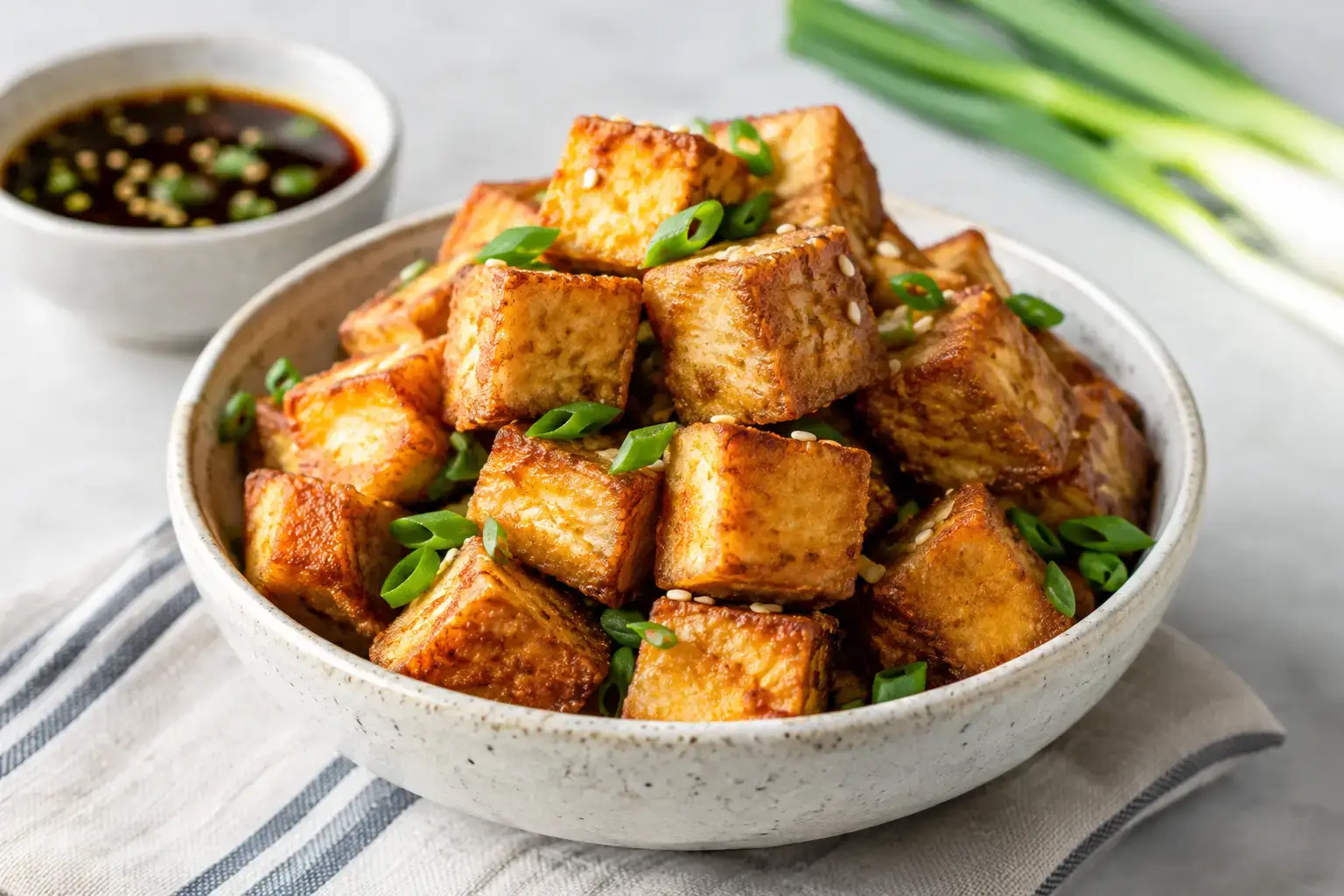
The difference between forgettable tofu and the kind everyone reaches for first is usually five minutes of prep. If you want to know how to cook crispy tofu, the big rule is simple: get rid of excess moisture before it reaches the heat. Do that, use enough oil or airflow, and a plain block of tofu turns golden, crunchy and ready for everything from noodle bowls to quick weekday wraps.
Crispy tofu is not about disguising it. The best version has a crackly outside, a soft centre and enough seasoning to stand up against punchy sauces. Here is how to get there without ending up with pale cubes that stick to the pan.
Start with the right tofu
For frying, baking and air-frying, choose extra-firm or firm tofu. It has less water than silken tofu and is much more likely to hold its shape when moved around. Silken tofu has its own place in soups, sauces and desserts, but it will not deliver the crisp cubes most people expect.
Check the packet rather than relying on the name alone. Some tofu labelled “firm” is still quite wet, while an extra-firm block may be packed in very little liquid. The drier it feels after draining, the easier your job will be.
Pressing helps, especially with water-packed tofu. Remove it from the pack, wrap it in a clean tea towel or several sheets of kitchen paper, then place it on a plate with a heavy pan or a few tins on top. Leave it for 20 to 30 minutes. There is no need to crush it flat – gentle, even weight is enough.
Short on time? Pat the block thoroughly dry, then leave it uncovered on a plate while you prepare the rest of dinner. It will not be quite as crisp, but it is still a major improvement on cooking it straight from the packet.
How to cook crispy tofu: the coating trick
Once pressed, cut the tofu into 2cm cubes, triangles or thick slabs. Cubes give you the most crunchy edges, while slabs work brilliantly in sandwiches and grain bowls. Keep the pieces roughly the same size so they cook at the same speed.
Toss the tofu with a little oil, then add cornflour, salt and black pepper. Cornflour is the fastest route to a thin, crisp shell because it absorbs surface moisture and turns lightly crunchy in the heat. For one standard 280g block, use roughly one tablespoon of oil and one to two tablespoons of cornflour.
This is also the moment to add dry flavourings. Garlic granules, smoked paprika, chilli flakes, Chinese five-spice or curry powder all work well. Avoid pouring on soy sauce before cooking unless you use only a small amount and toss quickly. Too much liquid makes the coating clump and steams the tofu instead of crisping it.
If you want a bold, saucy finish, cook the tofu until crisp first. Then add it to the sauce right before serving. That one change keeps the texture lively rather than soggy.
The frying-pan method for the crunchiest finish
Pan-frying delivers the deepest colour and the most restaurant-style crust. Use a wide non-stick or well-seasoned frying pan, preferably one that gives the cubes room to sit in a single layer. Crowding is the quickest way to trap steam.
Heat a generous slick of neutral oil over medium-high heat. Rapeseed, sunflower or groundnut oil are good choices. When the oil looks fluid and shimmery, add the coated tofu. It should sizzle straight away, but it should not smoke aggressively.
Leave the tofu alone for three to four minutes. This is the patience test. If you stir constantly, the coating cannot set and the pieces may tear. Once the underside is golden, turn the cubes and repeat until several sides are crisp. Expect the full process to take around 10 to 15 minutes.
Transfer the tofu to a plate lined with kitchen paper only briefly, then serve. Letting it sit covered, or piling it into a small bowl, softens the crust through trapped steam.
When pan-frying goes wrong
If tofu sticks, the pan was probably not hot enough, there was not enough oil, or you tried to turn it before a crust formed. Give it another minute before nudging it with a thin spatula.
If it is brown but not crunchy, the pieces may have been too wet or the pan too crowded. Next time, press longer and cook in two batches. A smaller batch is slightly slower, but the texture is worth it.
Oven-baked tofu for easy batch cooking
The oven is the low-fuss option when you are cooking for several people or prepping lunches. Heat the oven to 220C, or 200C fan. Line a large baking tray with baking paper, then spread the oil-and-cornflour-coated tofu out with space between every piece.
Bake for 25 to 35 minutes, turning the pieces after about 20 minutes. The exact timing depends on the moisture level of the tofu and how hot your oven runs. Look for firm edges and a rich golden colour rather than following the clock blindly.
Oven tofu is slightly drier and less blistered than pan-fried tofu, but it is a smart choice for sheet-pan dinners. Add peppers, red onion or broccoli to a separate side of the tray, remembering that vegetables release moisture. Keeping the tofu apart helps it stay crisp.
For an extra-crisp baked finish, preheat the empty tray with the oven, then carefully add the tofu to the hot surface. It starts sizzling immediately, which gives the underside a useful head start.
Air-fryer tofu in under 20 minutes
An air fryer is ideal when you want crunchy tofu without much oil. Preheat it to 200C if your model recommends preheating. Arrange the coated cubes in the basket in one layer, with a little space for hot air to circulate.
Cook for 12 to 16 minutes, shaking the basket halfway through. Smaller cubes cook faster, while larger chunks need more time. A light spray of oil improves browning, but do not drench the basket.
Air-fryer tofu can go from golden to overly dry if it is left too long, so check it near the end. It is at its best when served promptly, especially if it is heading into a fresh salad, rice bowl or wrap.
Sauce it without losing the crunch
A sticky glaze is tempting, but timing matters. Warm sauces such as teriyaki, sweet chilli, gochujang or a maple-soy mixture in a separate pan. Toss the crisp tofu through just before it hits the plate, using only enough sauce to coat rather than drown it.
Alternatively, serve sauce on the side. This is the best choice for meal prep, as it lets the tofu retain more texture in the fridge. Reheat leftover tofu in an air fryer or hot oven, not the microwave, which will make the coating soft.
For a speedy dinner, pair crispy tofu with microwave rice, shredded cabbage, cucumber and a spoonful of chilli crisp. For something more substantial, fold it into a curry at the last minute or layer it into a toasted wrap with salad and a sharp yoghurt dressing.
The real secret is not a complicated marinade or specialist equipment. Dry tofu, hot heat and a little breathing room do most of the work. Make one batch, taste a cube straight from the pan, and you will quickly know why this small kitchen habit is worth repeating.

