

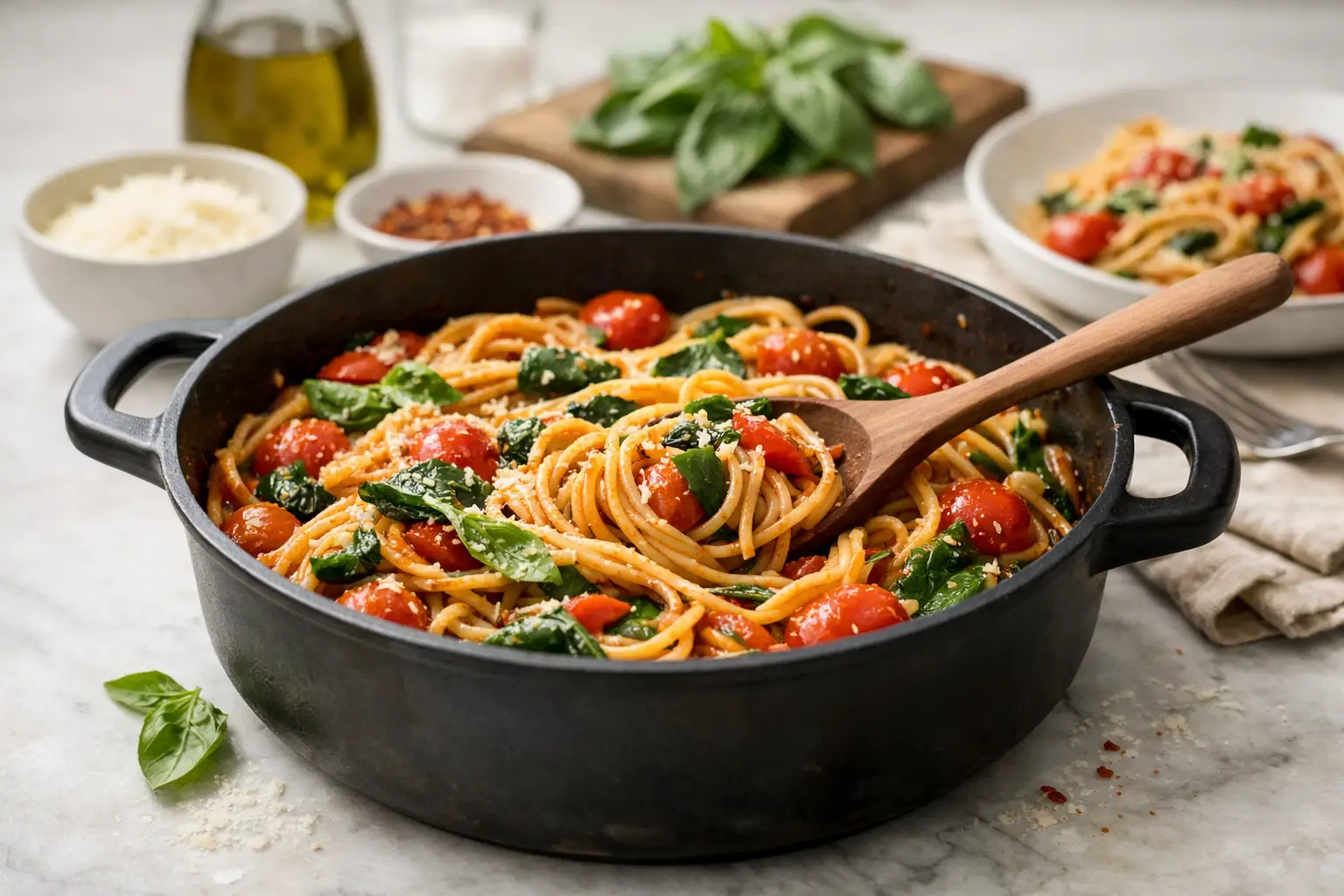
The appeal of how to make one pot pasta is obvious on a busy weeknight: one pan, minimal washing-up and dinner on the table before anyone starts hunting for crisps. The trick is not simply throwing pasta into a saucepan with sauce. Get the liquid ratio and cooking order right, and the pasta absorbs flavour as it cooks, creating a glossy sauce without a separate pan.
It is fast, flexible and especially useful when the fridge contains a few vegetables, half a packet of pasta and no appetite for a complicated recipe. But one-pot pasta does have rules. Too much liquid leaves a thin, soupy result; too little catches on the bottom before the pasta is tender. This is the reliable method, plus the small adjustments that make it work with what you have.
How to make one pot pasta without a watery sauce
A wide, deep frying pan or a large sauté pan is the best choice. The pasta should sit in a fairly even layer, rather than being piled high in a narrow saucepan. That gives it enough contact with the liquid to cook evenly and lets excess moisture reduce at the end.
For most dried short pasta, use roughly 750ml of stock or water for 250g pasta, plus tinned tomatoes or other wet ingredients. It is a starting point, not a fixed law. Different shapes absorb liquid differently, and hob heat varies. Keep a mug of hot water or stock nearby so you can loosen the pan if it starts looking dry before the pasta is cooked.
The method works because starch escapes from the pasta directly into the cooking liquid. As the liquid reduces, that starch helps thicken it into a sauce. Stirring matters more than it would with a conventional pasta pot: it prevents sticking and encourages that silky finish.
The core ingredients
This version makes two generous portions or three lighter servings:
- 250g dried penne, fusilli, rigatoni or other short pasta
- 1 tablespoon olive oil
- 1 small onion, finely chopped
- 2 garlic cloves, finely chopped or grated
- 1 x 400g tin chopped tomatoes
- 500ml vegetable or chicken stock, plus extra if needed
- 1 teaspoon dried oregano or Italian-style dried herbs
- 1 pinch chilli flakes, optional
- 100g spinach, kale or peas
- 40g finely grated Parmesan or a vegetarian hard cheese
- Salt, black pepper and a squeeze of lemon, to taste
Cherry tomatoes, a spoonful of tomato purée, roasted peppers or a handful of mushrooms can all join the pan. The key is to avoid adding too many dry ingredients at once, as they compete with the pasta for liquid.
The step-by-step one-pot method
Start by warming the olive oil over a medium heat. Cook the onion with a small pinch of salt for five to seven minutes, until softened and sweet rather than browned. Add the garlic, dried herbs and chilli flakes, then cook for about 30 seconds. This brief base-building stage makes a noticeable difference, especially in a simple tomato version.
Add the pasta, chopped tomatoes and stock. Stir thoroughly, making sure the pasta is mostly covered. Bring the pan to a lively simmer, then reduce the heat slightly so it bubbles steadily rather than boiling aggressively.
Cook for around 10 to 14 minutes, depending on the pasta shape and packet instructions. Stir every minute or two, paying extra attention around the edges and base of the pan. The liquid should gradually turn from brothy to saucy. If the pan looks dry while the pasta is still firm, add a splash of hot stock or water. If it looks too loose near the end, leave it uncovered for another minute or two while stirring.
When the pasta is just tender with a little bite, fold in spinach or peas. Spinach wilts in moments; frozen peas usually need two to three minutes. Take the pan off the heat, add most of the cheese and a good grind of black pepper, then leave it for one minute. That short rest lets the sauce settle and cling to the pasta.
Finish with lemon if the sauce tastes heavy, plus more cheese at the table. The result should be saucy, not swimming in liquid. Think of it as a loose risotto texture that thickens slightly as it sits.
Timing is the difference between great and gluey
One-pot pasta is forgiving, but it is not a meal to abandon while you answer emails. Short pasta is the safest option because it cooks evenly in a shallow pan. Spaghetti can work, but it needs a wide pan and a little patience as it softens into the liquid. Break it only if you are happy with a less traditional look.
Add delicate ingredients late. Spinach, basil, cooked chicken, cooked prawns, soft cheese and leftover roasted vegetables need warming through, not a long boil. If they go in at the beginning, they can overcook or dilute the sauce.
Harder vegetables need a head start. Fry diced courgette, peppers, mushrooms or finely chopped carrots with the onion. For broccoli, add small florets halfway through cooking. Raw chicken should be browned first, then cooked through fully in the sauce. If you are using sausage, remove it from its casing and fry the meat until well browned before adding liquid.
Do not chase perfect al dente pasta by draining it early. There is no separate draining stage here. Instead, test a piece when there is still a little liquid in the pan. It should be nearly ready before you reduce the sauce to its final consistency.
Easy flavour routes when the cupboard is bare
Tomato and Parmesan is the dependable choice, but the one-pot approach is ideal for changing direction based on what needs using up. A creamy version can be made with stock, peas, lemon zest and a spoonful of crème fraîche stirred in off the heat. Add smoked salmon at the end, if you have it, rather than cooking it from the start.
For a punchier cupboard dinner, use sun-dried tomatoes, olives, capers and chilli flakes with a little less salt in the stock. Feta works well here, crumbled over at the end. For a green version, cook pasta in vegetable stock with leeks and peas, then stir through pesto and grated cheese after the heat is off. Pesto added too early can lose its fresh flavour and split in the bubbling liquid.
You can also make it more filling with beans. Cannellini beans, chickpeas or butter beans are best added for the final five minutes, once the pasta has had time to absorb most of the stock. They bring protein and make a meat-free dinner feel more substantial, though they may need an extra splash of liquid.
The common one-pot pasta fixes
If the pasta sticks, the heat is usually too high, the pan is too narrow or it has not been stirred often enough. Scrape the base gently and add a splash of hot water. A little sticking is recoverable; a burnt base is not worth stirring into the sauce.
If the sauce is watery, keep the pan uncovered over medium heat and stir for a few more minutes. Grated cheese can help thicken it, but do not use it as the only fix or the dish may become overly salty. A small knob of butter stirred through off the heat also adds body.
If the pasta is soft but there is still too much liquid, remove some with a ladle before adding cheese. If it is undercooked and dry, add stock in small amounts, not a large pour. The aim is to give the pasta enough moisture to finish without turning the sauce back into soup.
Finally, taste before serving. Stock cubes, tinned tomatoes and cheese all bring salt, so seasoning at the beginning should be restrained. Often what a flat sauce really needs is black pepper, lemon, chilli or a handful of fresh herbs rather than more salt.
One-pot pasta is not meant to replace every slow-simmered ragù or carefully layered baked pasta. It is the smart answer when time is short and you still want a proper bowl of food. Keep the pan moving, trust the starch and finish with something bright, and an ordinary midweek dinner can feel far more considered than its washing-up suggests.

