

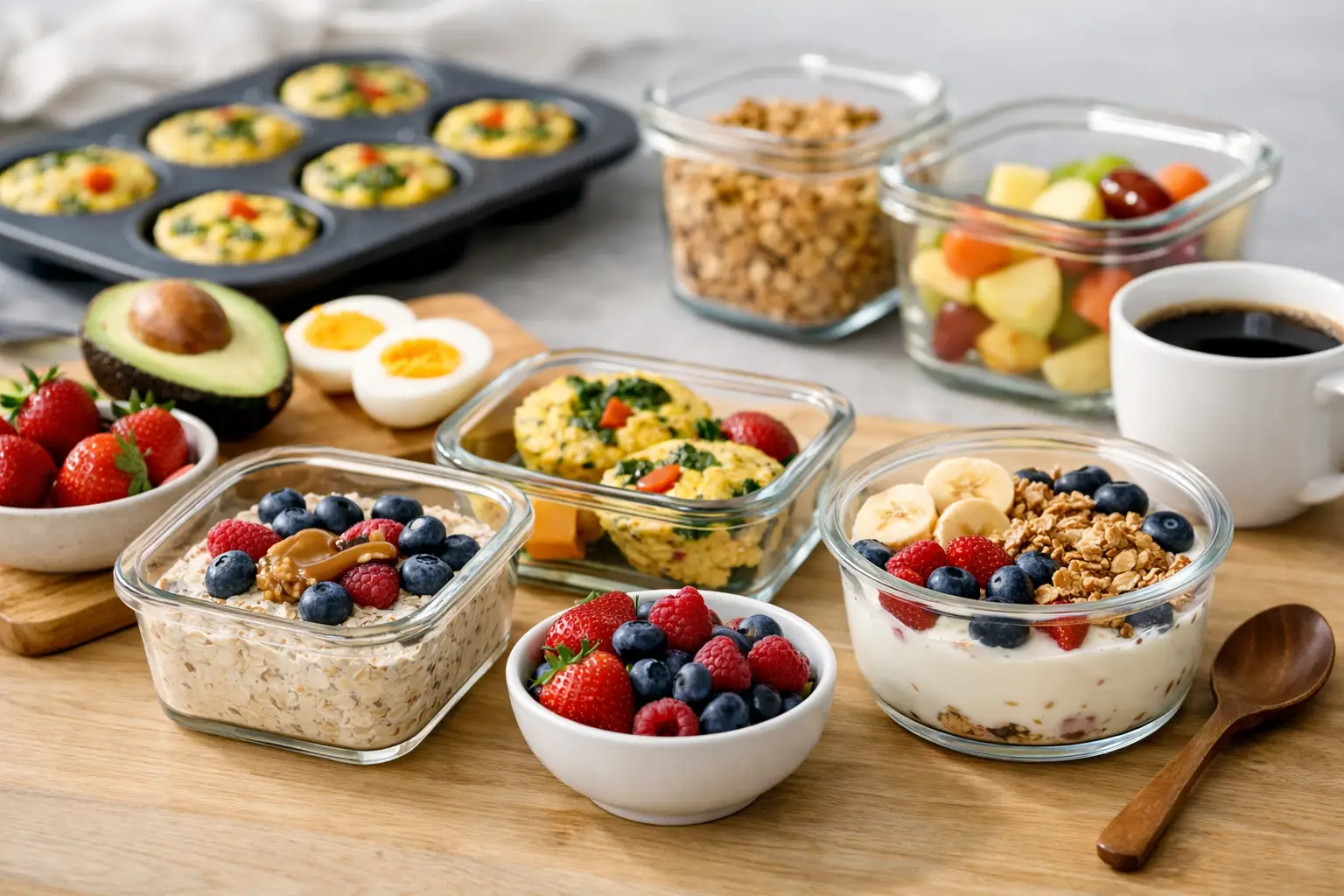
Mornings tend to fall apart in the same way. You snooze once too often, realise there is nothing ready to eat, and suddenly breakfast becomes a coffee and whatever you can grab on the way out. If you have been wondering how to meal prep breakfasts without turning your fridge into a graveyard of forgotten containers, the trick is to make it practical rather than perfect.
Breakfast prep works best when it matches the kind of week you actually have. A packed office week needs different options from work-from-home mornings, and a gym-heavy routine will not look the same as a slow Sunday reset. The goal is not to cook seven identical meals in one go. It is to make your first meal of the day easier, cheaper and a lot less stressful.
How to meal prep breakfasts without getting bored
The biggest reason breakfast prep fails is repetition. A full week of the same overnight oats may sound efficient on Sunday, but by Wednesday it can feel like punishment. A better approach is to prep in categories rather than identical portions.
Think of your breakfasts in three lanes. One lane is grab-and-go, like yoghurt pots, egg muffins or baked oats. Another is heat-and-eat, such as breakfast burritos or porridge portions stored in the fridge. The third is mix-and-match, where you prep ingredients rather than complete meals, like chopped fruit, hard-boiled eggs, toast toppings or smoothie freezer bags.
This gives you variety without creating extra work. You are still making breakfast easier, but you are not locking yourself into the same texture and flavour every morning. That matters more than people think. Convenience gets you started, but variety is what keeps the habit going.
Start with a realistic breakfast plan
Before you buy containers or batch-cook anything, check what you genuinely like eating at 7 am. Plenty of people prep beautifully balanced breakfasts they would happily eat at brunch, but not first thing on a Tuesday. If you do not fancy savoury food in the morning, a tray of egg muffins is not going to save you.
It helps to ask a few basic questions. Do you want something cold or hot? Sweet or savoury? Do you eat at home, at your desk or on the train? How much time do you have to reheat something? Your answers should shape the prep.
If you leave the house early, portable breakfasts matter most. If you work from home, you may only need a halfway prepped option that takes two minutes to finish. If your appetite changes day to day, it makes sense to prep a mix of lighter and more filling choices. This is where meal prep gets more useful than trendy. It starts solving actual problems.
The best breakfasts to prep for busy weeks
Some breakfasts hold up brilliantly in the fridge or freezer. Others sound good online and turn soggy by day three. Choosing the right recipes makes a huge difference.
Overnight oats are popular for a reason. They are cheap, flexible and easy to flavour in different ways. You can make a few jars at once and switch them up with banana, berries, cocoa, cinnamon or nut butter. They are ideal if you want something cold and filling, though not everyone enjoys the texture. That is one of those it-depends moments worth admitting.
Egg-based breakfasts are great if you prefer savoury food. Mini frittatas, egg muffins and breakfast wraps can all be made ahead and stored well. The trade-off is that eggs can dry out if overcooked, so it is worth underbaking them slightly if you know you will reheat them later.
Yoghurt pots work well for quick mornings. Layer Greek yoghurt with fruit, seeds and a bit of granola, but keep the crunchy toppings separate until you are ready to eat. That small step stops them going soft.
Baked oats have become a staple because they feel a bit more substantial than overnight oats and can be eaten warm or cold. They also travel well, which makes them a solid option for office commutes.
If you want freezer-friendly choices, breakfast burritos and sandwiches are hard to beat. Wrap them well, freeze them flat, and reheat as needed. They take a bit more effort upfront, but they save serious time later.
How to meal prep breakfasts in under an hour
You do not need a full Sunday marathon to make this work. In most cases, 45 to 60 minutes is enough for a week of better mornings.
Start by picking two main breakfast types and one backup. For example, you might make three overnight oats, six egg muffins and keep fruit, toast and peanut butter ready as a fallback. That is enough structure to carry the week without making your fridge feel overcrowded.
Use overlap wherever possible. If the oven is on for baked oats, put egg muffins in at the same time. While those cook, portion yoghurt, wash berries, or prep smoothie bags for the freezer. Meal prep gets faster when each step supports the next.
Storage matters more than people expect. Clear containers help because you can actually see what is ready. Label anything going in the freezer, especially if multiple wraps or bakes look similar. It sounds obvious, but mystery breakfast is rarely appealing before 8 am.
Another useful habit is to prep for five days, not seven. Fresh breakfasts usually taste better within that window, and it leaves room for a weekend brunch, leftovers or a spontaneous bakery stop without guilt.
Storage tips that keep breakfast worth eating
A lot of prep problems come down to texture. Food safety matters, of course, but so does whether your breakfast still feels appetising after a few days in the fridge.
Keep wet and dry ingredients separate where possible. Granola, nuts and toasted seeds should be added just before eating. Fruit with a high water content can make oats or yoghurt watery, so sturdier options like blueberries tend to hold up better than sliced melon.
Use the freezer for anything bread-based that you will not eat within three days. Breakfast sandwiches and wraps often taste better frozen and reheated than left to go stale in the fridge. For porridge, it helps to loosen portions with a splash of milk before reheating so they do not turn gluey.
If you are batch-cooking eggs, do not stack hot portions straight into sealed containers. Let them cool first. That reduces condensation, which helps the texture and keeps storage safer.
Budget-friendly breakfast prep that still feels good
Learning how to meal prep breakfasts can cut spending quickly, especially if your usual routine involves meal deals, coffee shop pastries or last-minute supermarket stops. But cheap does not have to mean joyless.
Oats, eggs, bananas, yoghurt and frozen berries give you a lot of mileage for not much money. Peanut butter, cinnamon and honey are useful staples because they make simple breakfasts feel more finished. You do not need expensive powders, special jars or social-media-ready toppings to make breakfast prep worthwhile.
That said, there is no harm in spending a little more on one thing that makes the habit easier. If better containers help you keep portions organised, or if a decent flask means you actually take your smoothie with you, that can be money well spent. The best meal prep setup is the one you will keep using.
Common mistakes that make breakfast prep harder
One common mistake is prepping too much food at once. It sounds efficient, but if you make seven large breakfasts and your plans change, waste creeps in fast. Another is choosing recipes that look impressive but take far too long for a normal week.
There is also the issue of overcorrecting. If your current breakfast is toast, do not jump straight to a highly structured, protein-heavy routine unless you genuinely want it. For many people, the smartest upgrade is simply having a few better options on hand.
The final trap is ignoring your schedule. A leisurely breakfast bowl may be fine on a remote-work day, but not when you have a train to catch. Prep should fit your life as it is, not the fantasy version where every morning starts calmly and on time.
A simple breakfast prep routine to try this week
If you want an easy starting point, keep it basic. Make two jars of overnight oats, bake a batch of egg muffins, boil a few eggs, and wash enough fruit for quick portions. That gives you sweet, savoury and emergency options without much effort.
Next week, adjust based on what you actually ate. If the oats were untouched but the egg muffins disappeared by Wednesday, that tells you something useful. The best breakfast prep routine is built through small edits, not one perfect plan.
A good breakfast does not need to be photogenic or complicated. It just needs to be ready when your morning is moving faster than you are.

