


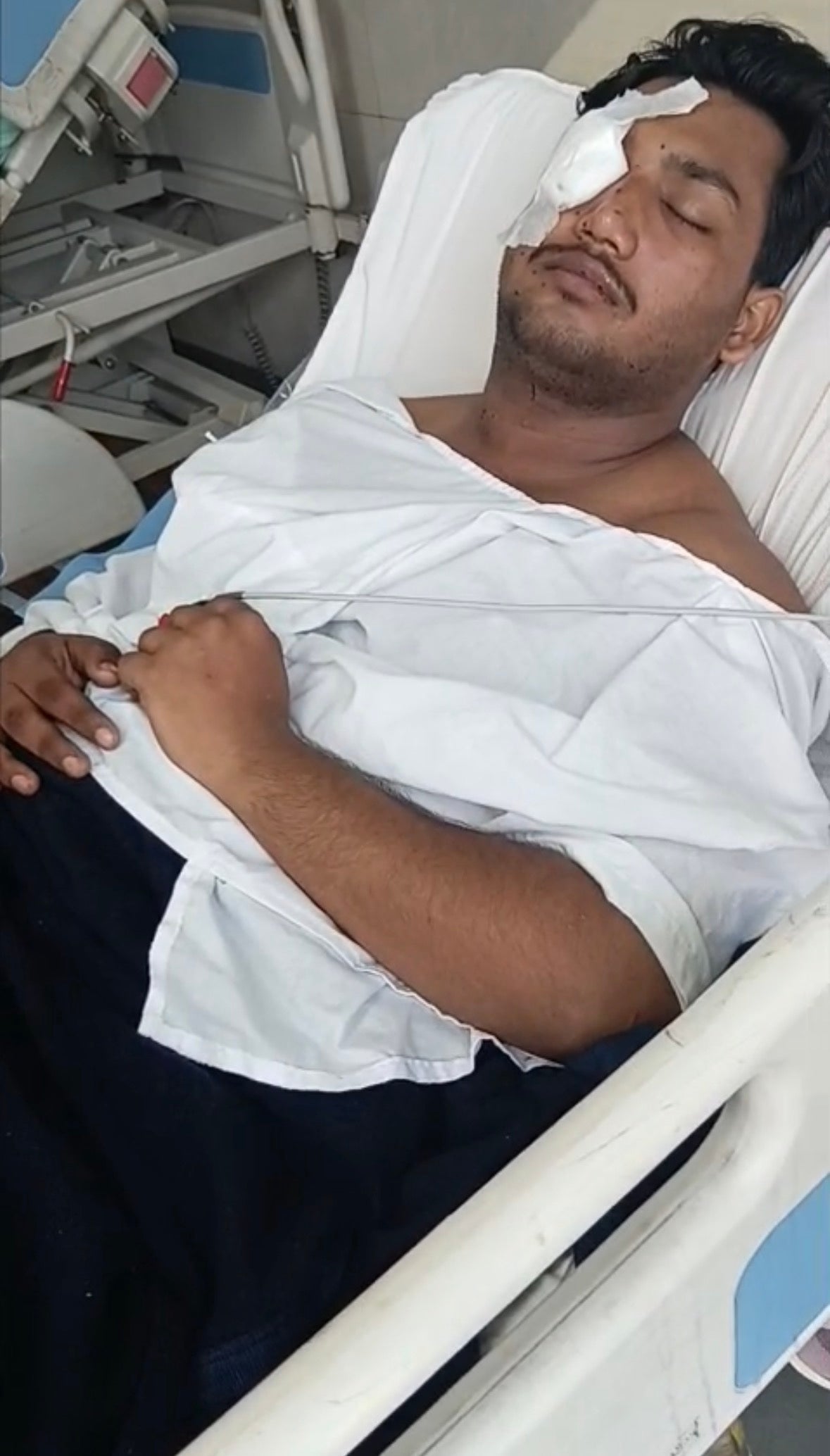
It happened within seconds. Scores of pellets shredded Shaikh Irshad Mansoori’s face, neck, and shoulder as Gen Z protesters took to the streets of Delhi demanding reform of India‘s education system, only to face police batons, teargas and, in some cases, pellet guns.
One of the pellets is still inside Mansoori’s body. It’s lodged too close to a critical blood vessel near his neck to be safely removed, doctors have told him, and he may have to live with it for the rest of his life.
Mansoori, 25, was marching alongside thousands of protesters to India’s parliament on 20 July when he says he was fired at from close range with a pellet gun, a controversial weapon capable of discharging hundreds of tiny balls of lead in a single shot.
He’s one of four people believed to have suffered pellet injuries during a brutal police crackdown that has drawn international criticism and failed to deter a youth-led movement that represents a major challenge to the authority of prime minister Narendra Modi.
The Delhi police have denied using pellet guns during the crackdown and issued a “fake news alert” on the claim, while another branch of the security forces has said it is investigating the reports.
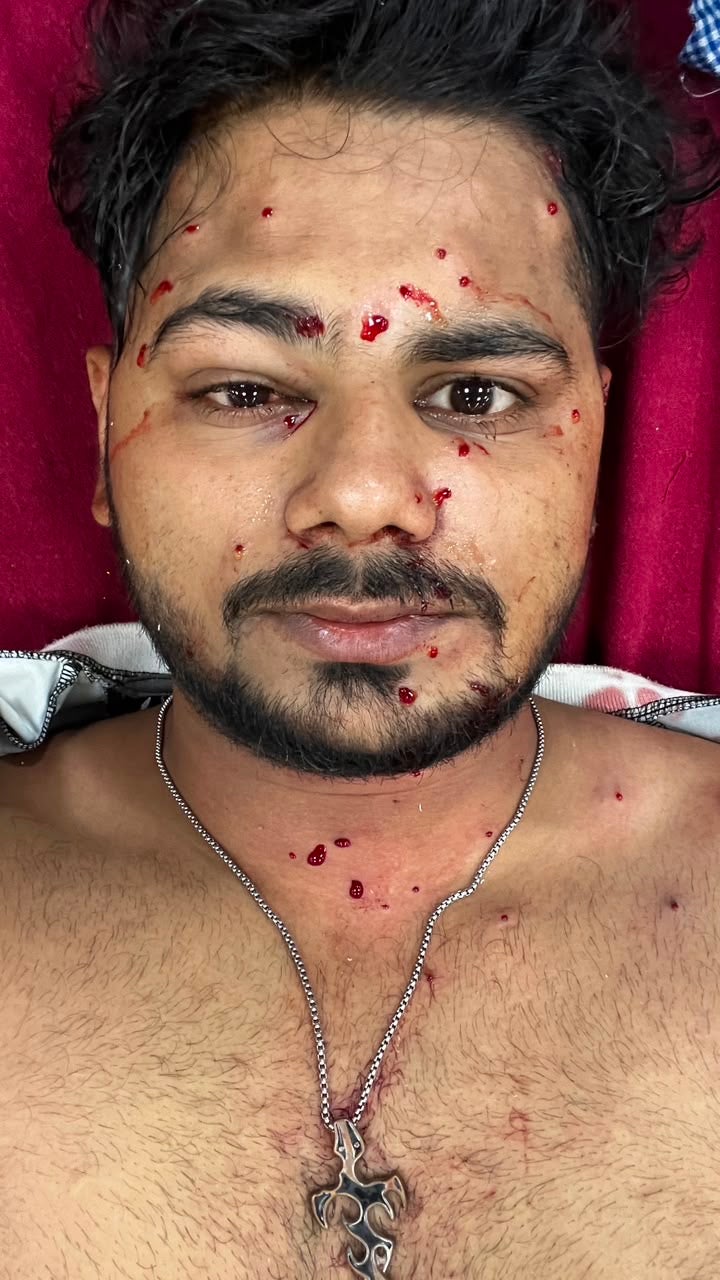
Mansoori, who works at a multinational company in Gurugram near Delhi, said he had travelled about 45km to the national capital that day for visa-related work and decided to briefly join the march on his way.
The march was called by the Cockroach Janata Party, a youth-led movement that had been protesting since for more than a month to demand the resignation of education minister Dharmendra Pradhan to fix responsibility for an exam paper leak that affected over two million students and reportedly caused at least 21 of them to take their lives.
As the protesters defied restrictions and marched towards the parliament, police and paramilitary forces used teargas and batons. The clashes left more than 60 protesters and 118 police personnel injured, according to local media.
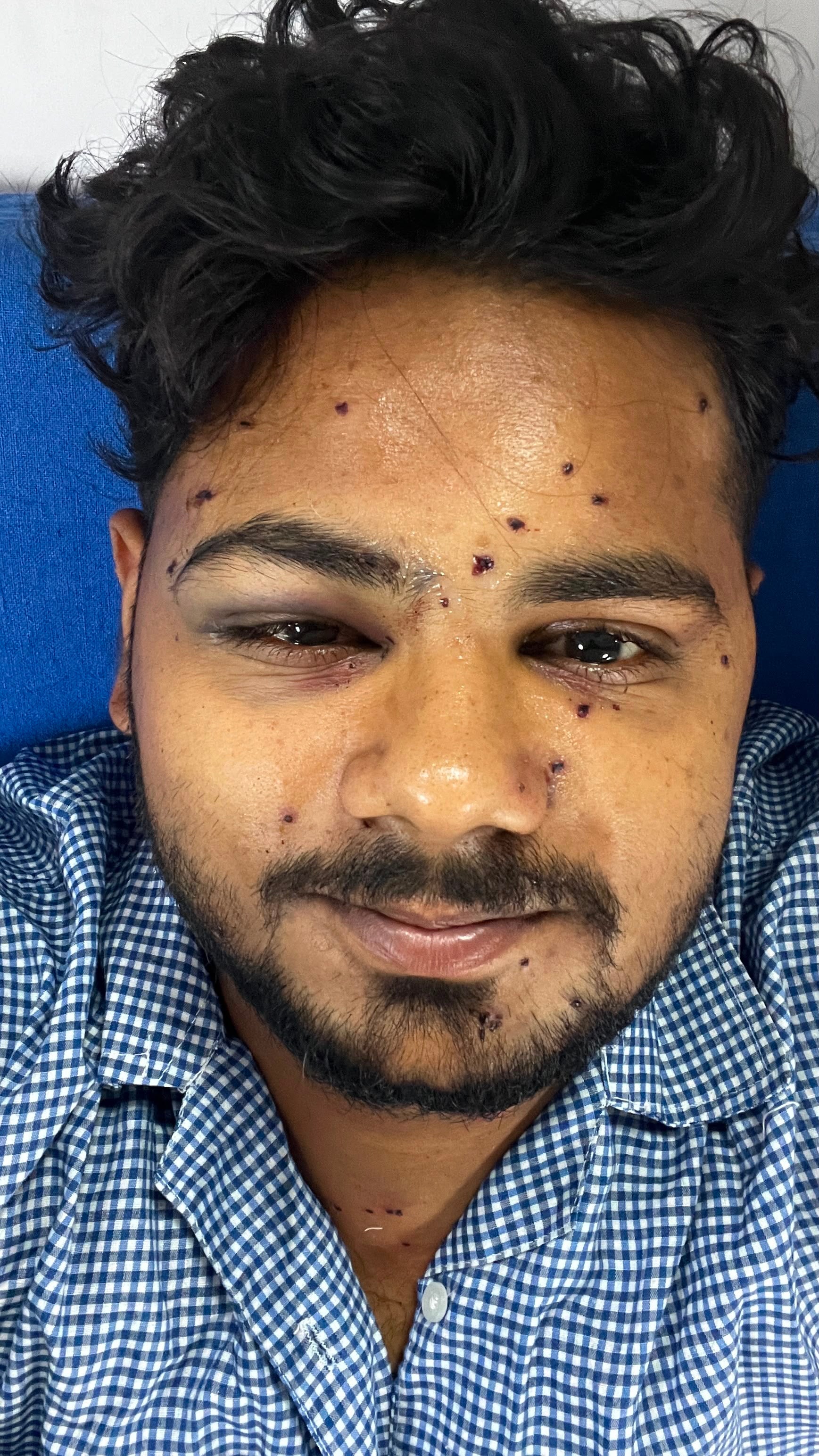
Mansoori’s friend, who asked not to be named, described how the incident unfolded as Mansoori was still finding it difficult to speak at length following surgery to remove pellets from his body.
The friend told The Independent that Mansoori was with a group of marchers near Jantar Mantar, the main protest site, when police fired teargas and charged them with batons.
“Everyone was walking peacefully when police began firing teargas. People started feeling the smoke in their throats and eyes,” he said. “Irshad went ahead to plead with the security personnel not to hit them, saying they were only students, when a force member in blue pointed a gun at him.”
He said a member of the Rapid Action Force, a federal paramilitary, fired at Mansoori within seconds.
“Multiple pellets struck me and I felt a stinging sensation near my eyes,” Mansoori said. “Pellets pierced through my right eye and down onto my cheek and nose. I could taste blood, and I began bleeding from everywhere.”
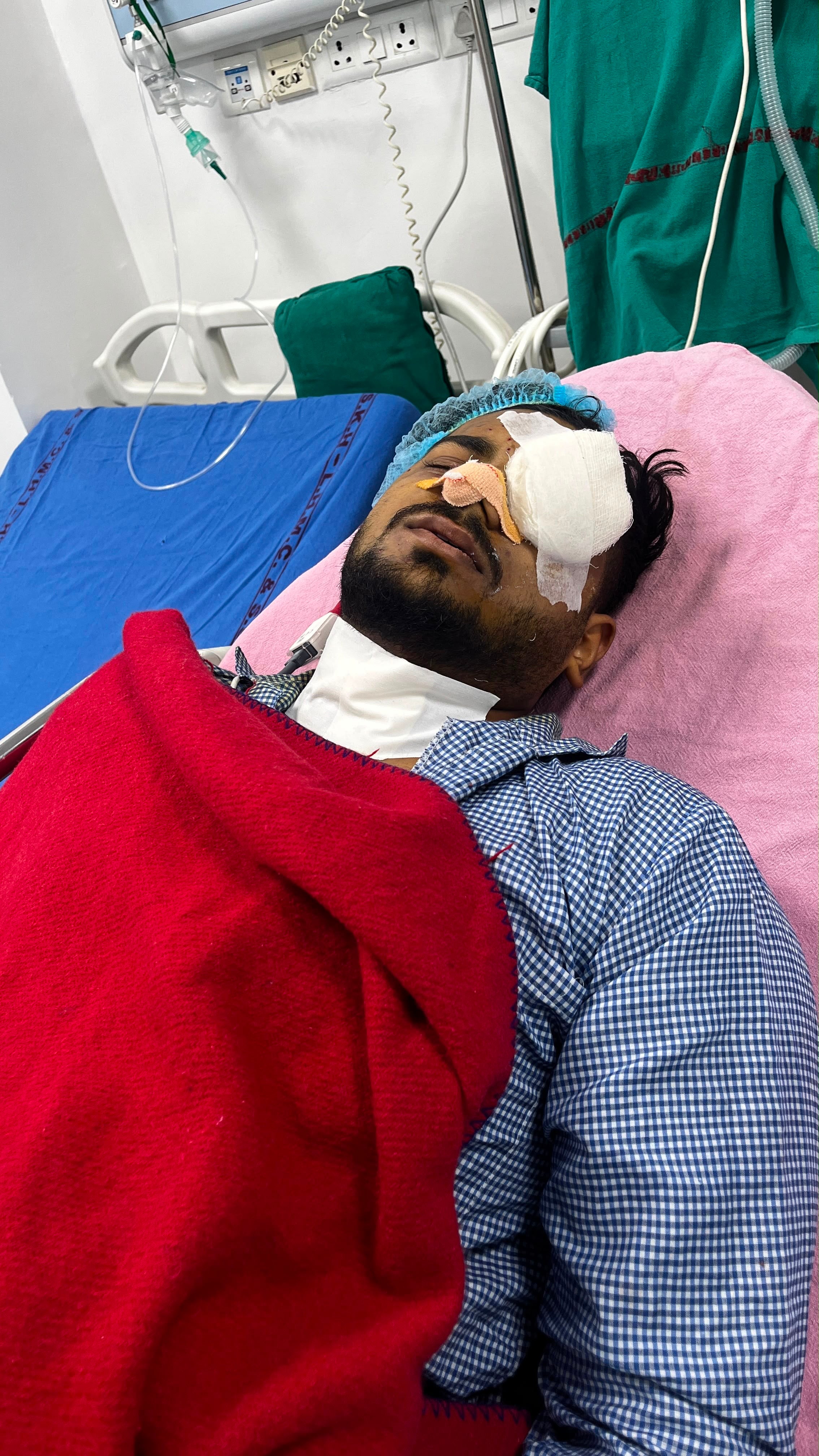
Mansoori, who is from the central state of Madhya Pradesh and lives alone in Gurugram, was taken to hospital by fellow protesters.
He asked his family not to travel to Delhi, saying he was being looked after by friends. “He had three or four pellets that penetrated deep into his body. One was close to his eye, another deep in his neck, and one near his nose. Another hit his scalp, but that one didn’t cause much damage,” his friend said.
“Initially, the doctors said he would need three or four separate surgeries but the teams worked together and removed almost all the pellets in a single operation. Only one pellet, near his neck, remains, because it’s next to a critical blood vessel. They said they won’t touch it.”
Mansoori fears living with the pellet lodged in his body forever. “We asked what would happen to that pellet. The doctors said it would stay there for the rest of his life. We asked if they could guarantee nothing would happen because of it, but they said they could not make any guarantees, only that it would remain there permanently,” his friend said.
Pellet-firing shotguns were first used in the restive Himalayan region of Kashmir in 2010 to suppress anti-India protests, with authorities describing it as a “non-lethal” crowd-control weapon. In 2018, the government acknowledged in the parliament that 17 people had been killed by pellet guns in Kashmir during the previous two years.
More recently, Indian forces were accused of using pellet guns during the 2024 protests by farmers, though the police denied the allegations.
Not far from where Mansoori was shot at, Sahil Lohchab was leading a group of protesters with the Indian flag in his hand when he was similarly injured. The 20-year-old Delhi University student is most likely to turn “completely blind in his right eye” from pellet injuries, his friend Shivam Reddy tells The Independent.
Lohchab wanted to join police himself and sat for an entrance exam earlier this year. It’s an irony not lost on his family friends and given a permanent visual or hearing impairment can disqualify a person from ever joining the service.
Reddy said that Lohchab was leading a group of about 500 protesters when he was injured at around 3.30pm.
“He ran towards police and RAF to tell them to not attack them as they were protesting peacefully, but police likely perceived him as a threat and directly targeted him,” he said. “He was shot with a pellet gun. The pellets dispersed and hit him multiple times across his body and face.”
“There is only one per cent chance his eye could be saved, the doctors have told us,” Reddy said, adding that a doctor also confirmed his injuries were from a pellet gun.
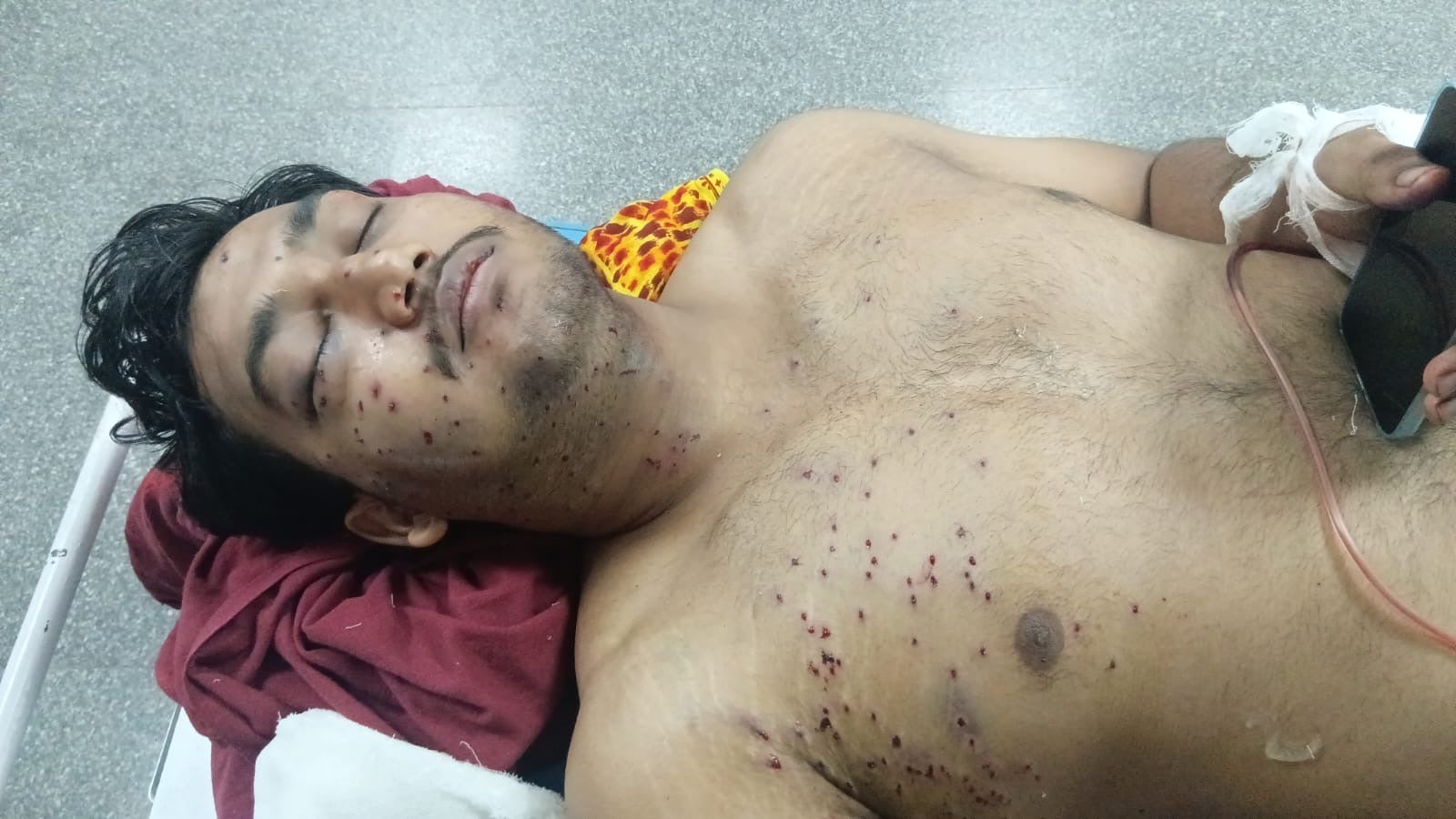
Lohchab was moved from the Lady Hardinge Medical College hospital to the Safdarjung Hospital and even a private hospital but he couldn’t be treated due to his condition, Reddy said. “We then took him to AIIMS where he was admitted and he underwent surgery to have the pellets removed, including from his eye,” he said.
Lohchab’s friends expressed dissatisfaction with the Cockroach Janta Party – the group leading the protests – for not helping them or even reaching out to them.
“We went out for our country, but the Cockroach Janta Party should have at least tried to ask about the wellbeing of Sahil, who is going through so much pain and could have life-altering injuries,” Reddy said.
They have launched a fundraiser to pay for Lohchab’s treatment and rehabilitation. “We seek support from the people, the government and campaigners for Sahil,” he said.
The Independent has reached out to the Rapid Action Force for comment by email. Attempts to reach its office by phone were unsuccessful.
The Rapid Action Force is the riot-control wing of the Central Reserve Police Force, the country’s largest paramilitary.
The Central Reserve Police Force said they had initiated an inquiry to ascertain the exact sequence of events following reports of pellet injuries to students.
“We are comprehensively enquiring into the whole gamut of events. It will be premature to comment now,” a spokesperson told the Indian Express on Friday.
The Delhi police denied that its personnel forces had used pellet guns against the protesters, saying such claims were “completely false and misleading”.
“Delhi police neither possess pellet guns nor do they use them in the ongoing protest. The public is requested not to share or circulate any unverified or misleading information,” they said in an X post.
The two other people who reportedly suffered pellet injuries during the march have chosen to remain anonymous. One was said to be a reporter from Outlook magazine who was hit in the back and an arm.
He said he saw a security personnel raise a gun towards the crowd and turned his back. “I saw it aimed at me and immediately ran,” he told his magazine.
“Something struck my backpack and my arm. If I hadn’t turned, it could have hit my chest or my face.”
“The people were pelting stones and the police were lobbing teargas cans,” he later told Scroll. “Then I saw them deploying pellet guns. I saw one personnel pointing a pellet gun at me. I turned around and started running and was hit in my back and hand.”
His prescription from a government hospital mentions “26 small round wounds” that are “consistent with pellets striking” the right side of his body “at an oblique angle”, according to Scroll.
“The defects cover an area of 32cm x 12cm with inverted margins and circumferential abrasion collars surrounding the individual perforations with patchy bluish coloured contusions surrounding the perforations suggestive of pellet entrance wounds,” it notes.
The fourth victim, who is seen in videos showing his injuries, was yet to be publicly identified. According to Alt News and The Wire, he sustained minor injuries.
The alleged use of pellets against student protesters has sparked widespread condemnation.
“The use of pellet guns against protesters began in Kashmir, and now those guns are being deployed in the nation’s capital,” Amitav Ghosh, an award winning writer, said.
“One clear lesson of recent US and Indian history is that tactics that originate in the ‘periphery’ will eventually be used in the centre as well.”
Harsh Mander, author and activist, questioned who put pellet guns in the hands of the Rapid Action Force. “Does no one in the security establishment have a conscience?” he asked.

