

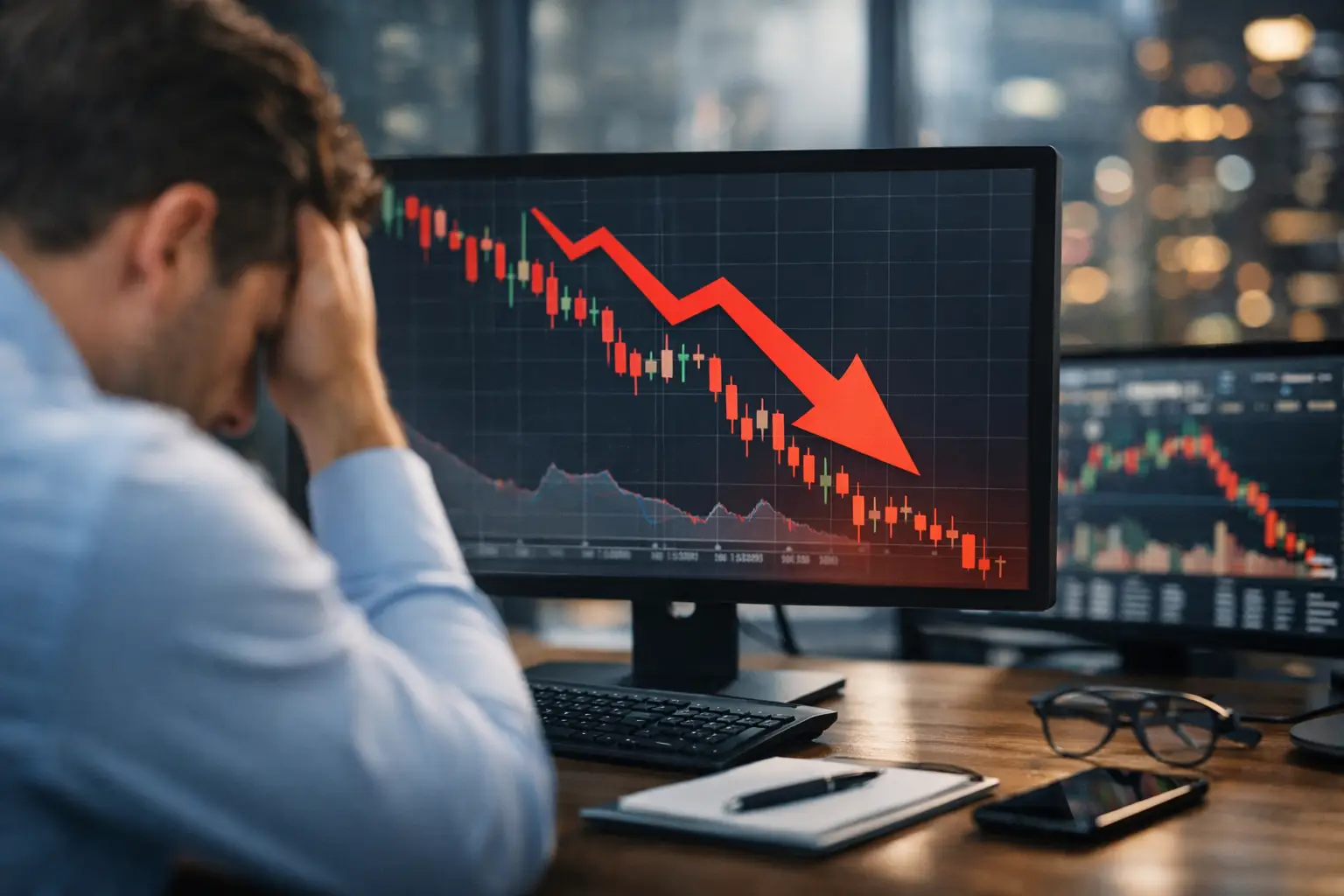
A market sell-off can feel sudden, but it rarely appears out of nowhere. If you are asking why is the stock market down, the short answer is that investors are repricing risk – and that can happen quickly when fresh data, company results, central bank signals or global shocks change the mood.
For casual readers, that phrase can sound more complicated than it needs to be. What it really means is simple: people are deciding that shares are worth a bit less than they were yesterday, either because future profits look weaker, borrowing costs look higher, or uncertainty has jumped. Sometimes one headline does it. More often, several pressures build at once.
Why is the stock market down right now?
The stock market goes down when more investors want to sell than buy at current prices. That imbalance can be triggered by economic news, interest rate expectations, political tension, weak earnings or plain old nerves. Markets are forward-looking, so they react not just to what has happened, but to what traders think might happen next.
That is why shares can fall even when the economy still looks decent on the surface. If investors believe growth will slow in six months, or that company margins will be squeezed, markets may drop well before the pain shows up in everyday life.
The biggest reasons shares fall
Interest rates and central banks
This is often the first place to look. When central banks keep rates high, or hint they could stay high for longer, markets tend to wobble. Higher rates make borrowing more expensive for businesses and consumers. That can slow spending, hiring and expansion.
There is also a valuation effect. Investors compare shares with safer assets such as government bonds. If bond yields rise, some money moves out of equities because the lower-risk option suddenly looks more attractive. Growth stocks, especially in tech, are often hit harder because so much of their value depends on future earnings.
Inflation surprises
Inflation still matters because it shapes rate decisions and company costs. If inflation comes in hotter than expected, investors worry that central banks will stay tougher for longer. At the same time, companies may face higher wage, energy and transport bills, which can eat into profits.
Not every inflation reading sparks a sell-off, but markets dislike surprises. A small miss can be shrugged off. A bigger one can change expectations in minutes.
Weak company earnings
Sometimes the answer to why is the stock market down is not macroeconomics at all. It is earnings season. If large firms miss profit targets, cut forecasts or warn about softer demand, the damage can spread beyond one stock.
That is especially true when the companies involved are major names with big weightings in an index. A poor update from one banking giant, chipmaker or consumer brand can pull the wider market lower and dent confidence across the board.
Recession fears
Markets do not wait for an official recession label. They move on signs. Slowing retail sales, weaker manufacturing data, rising unemployment or falling business confidence can all raise concerns that growth is fading.
The tricky part is that recession fears do not always lead to a straight line down. If investors think a slowdown will push central banks to cut rates, markets can rally on bad news. That is why sell-offs can look inconsistent from the outside. The market is always trying to price the next chapter, not the current one.
Geopolitical tension
Wars, trade disputes, elections, sanctions and major diplomatic rows can all hit markets. Investors hate uncertainty, and geopolitical tension can disrupt supply chains, energy prices and business confidence very quickly.
The reaction depends on the scale of the event. A local issue may hit only specific sectors. A broader global shock can trigger a wider retreat from risk, with shares falling while gold, the dollar or government bonds attract demand.
Market sentiment and momentum
Sometimes prices fall simply because they have started falling. That sounds flimsy, but it matters. Markets are driven partly by fundamentals and partly by behaviour. If a sell-off gathers pace, stop-loss orders, algorithmic trading and margin calls can amplify the move.
This is one reason a modest decline can turn into a rough afternoon. Fear can travel faster than logic, especially when traders are positioned the same way and all try to head for the exit at once.
Why do good news stories sometimes fail to lift markets?
This catches a lot of people out. You see decent jobs data or a strong earnings report and expect shares to rise, yet the market still drops. Usually that happens because expectations were already high, or because investors are focused on a bigger worry.
For example, strong economic data can be taken as bad news if traders think it means rates will stay higher. Likewise, a company can post solid profits but still fall if it warns that next quarter looks weaker. Markets are not marking homework. They are pricing future probability.
Which sectors usually get hit first?
There is no fixed rule, but some parts of the market are more sensitive than others. Technology stocks often react sharply to rate moves. Banks can come under pressure if recession fears rise or if bond market stress flares up. Consumer-facing firms may struggle when spending looks likely to weaken.
Defensive sectors such as utilities, healthcare and consumer staples sometimes hold up better because people still need power, medicine and groceries in a downturn. But even these are not immune. In a broad risk-off move, almost everything can get dragged lower for a while.
What a falling market actually means for ordinary investors
A red market day is not the same thing as a financial crisis. That distinction matters. Shares fall all the time, and many declines are short-lived. A correction can be uncomfortable without becoming a long-term disaster.
For everyday investors, the key question is not whether the market is down today, but why it is down and how that fits your time horizon. Someone trading daily will care about sentiment, volatility and headlines. Someone investing for retirement may be more focused on whether the businesses they own can keep growing over years, not hours.
That does not mean people should ignore drops. Sharp falls can signal genuine stress in the economy or financial system. But they can also reflect exaggerated short-term fear. The hard part is telling the difference in real time, which even professionals get wrong.
Should you sell when the stock market is down?
It depends on why you invested in the first place. If your money is needed soon, a market slide can be a reminder that shares are not ideal for short-term goals. If you are investing over the long run, selling during panic often locks in losses that might have recovered later.
That said, staying invested is not a magic rule. If your portfolio is too risky for your comfort level, a downturn can expose a mismatch that was easy to ignore during the good times. In that case, the better lesson may be to rebalance rather than react emotionally.
For newer investors, one useful habit is to separate the market headline from the personal decision. “The market is down” is a news event. “I should sell everything” is a choice. Those are not the same thing.
Why is the stock market down if the economy seems fine?
Because the stock market is not the economy. It reflects listed companies, investor expectations and future profits, not just current conditions on the high street. The economy can look stable while markets fall on worries about next year. The reverse is true as well. Markets can rise even when people still feel financially squeezed.
This gap is one reason stock market coverage can feel detached from everyday life. A rally does not always mean households are thriving, and a sell-off does not always mean a recession has already arrived.
What to watch next
If markets are sliding, keep an eye on three things: inflation and rate expectations, earnings guidance from major companies, and whether the decline is concentrated in one sector or spreading more broadly. That usually tells you whether the move is a narrow wobble or something with bigger implications.
Volume matters too. Heavy selling suggests conviction. A weaker drift lower on thin trading can be less meaningful. And if bond yields, oil prices and currency markets are all moving sharply at the same time, that often points to a bigger macro story behind the drop.
When markets turn rough, the smartest move is usually the least exciting one: slow down, look at what is actually driving prices, and avoid treating every down day like a historic event. Headlines move fast. Good decisions usually do not.

