

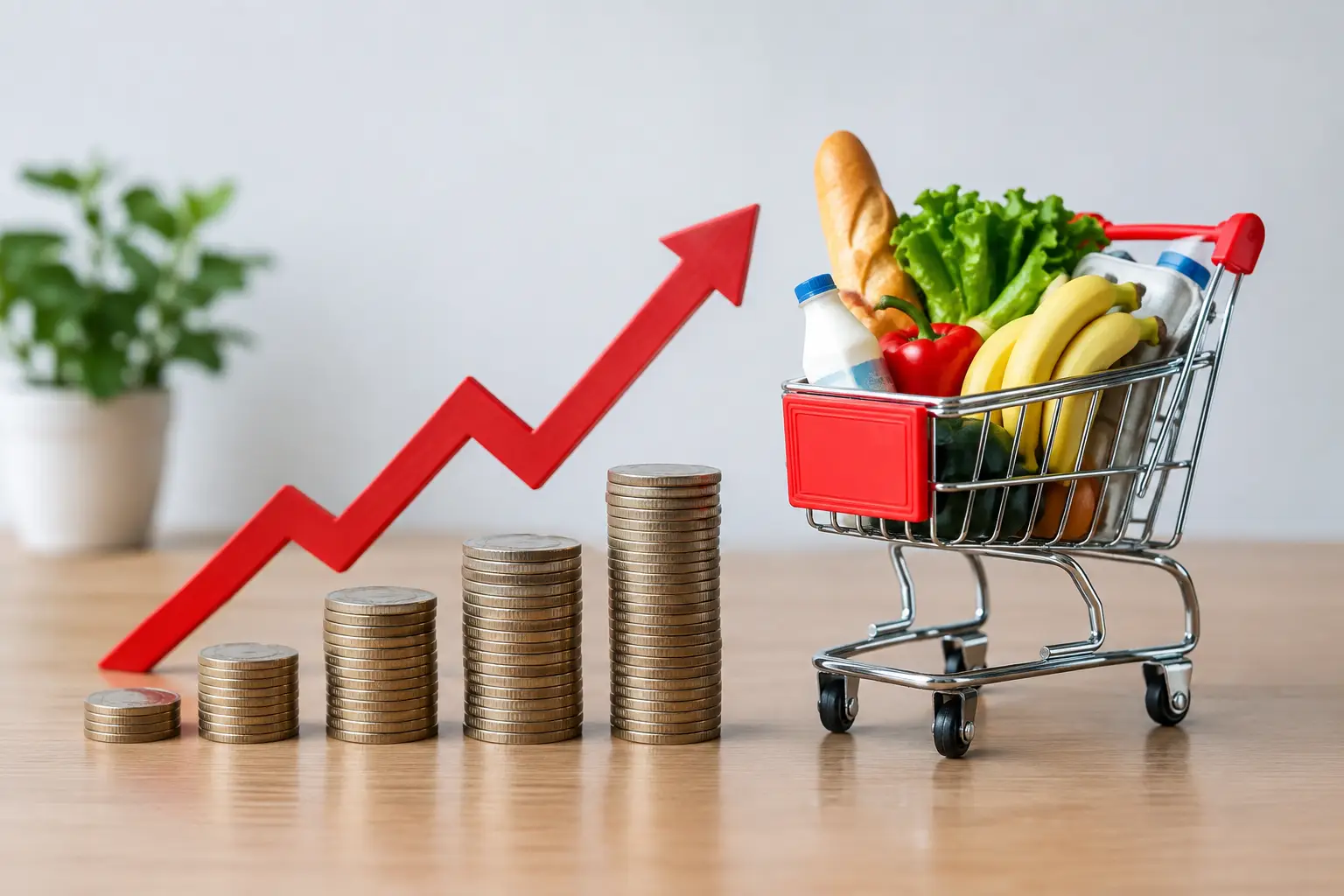
A £10 note does not physically shrink in your wallet. But if it once covered a meal deal, a bus fare and a few essentials, then later only covers the meal deal, its buying power has fallen. That is the inflation meaning in simple terms: prices rise over time, so each pound buys less than it used to.
Inflation is not just an economic term for news bulletins and Bank of England announcements. It shows up in the weekly food shop, energy direct debits, rent, rail tickets and the cost of a pint. Some price rises are barely noticeable on their own. Together, they can quickly reshape a household budget.
Inflation meaning in simple terms: prices rising
Inflation measures how quickly the overall cost of goods and services is increasing. It is usually shown as a percentage over a year.
If inflation is 3%, something that cost £100 a year ago would cost roughly £103 now, on average. That does not mean every item rises by exactly 3%. Coffee might jump by more, while clothes or electronics could stay flat or even become cheaper. The figure is designed to capture the broad direction of prices across everyday spending.
In the UK, one of the main measures is the Consumer Prices Index, or CPI. It tracks a large basket of items and services that represent how people spend money. The basket includes food, housing costs, transport, clothing, leisure and more. It is updated so it does not become stuck in the past – for example, new technology or changing shopping habits can affect what goes into it.
The key point is simple: inflation is about the change in prices, not whether prices are already high. If inflation falls from 6% to 2%, prices are still rising. They are simply rising more slowly. For prices to actually fall overall, the economy would need deflation.
Why do prices go up?
There is no single cause. Inflation often comes from several pressures arriving at once.
One common cause is higher business costs. If a supermarket pays more for electricity, transport, ingredients or staff wages, it may pass some of those costs on through higher shelf prices. A rise in oil or gas prices can ripple through the economy because fuel and energy affect so many businesses.
Another cause is demand. When lots of people want to buy the same goods or services, but there is not enough supply, sellers can raise prices. Think of popular concert tickets, a packed holiday destination during school breaks, or a sudden surge in demand for used cars when new-car supplies are limited.
Supply problems can have the same result. Bad weather can damage crops. Factory delays can hold up products. Global events can disrupt shipping routes or make raw materials harder to get. Fewer available goods, combined with steady demand, usually means higher prices.
Wage growth can also play a role, although the picture is more complicated than headlines sometimes suggest. Higher pay helps workers keep up with living costs. But if firms face sharply higher payroll costs and cannot absorb them, some may raise prices. Whether that happens depends on the industry, competition and productivity.
What inflation does to your money
The biggest everyday effect is reduced purchasing power. If your pay, pension or savings income stays the same while prices rise, your money does less work.
Imagine your monthly essentials cost £1,500. With 5% inflation, that same mix of spending could cost about £1,575 a year later. That extra £75 each month may have to come from savings, spending cuts or additional income. The effect is especially tough when essentials such as food, rent and energy rise faster than the overall inflation rate.
Savings are affected too. A savings account paying 3% interest may sound useful, but if inflation is 4%, the money’s real buying power is still falling over time. This does not automatically mean saving is pointless. Cash savings remain valuable for emergencies and short-term goals. It means the headline interest rate is only part of the story.
Borrowers can see a mixed impact. Inflation can reduce the real value of a fixed debt over time because repayments are made with money that has less buying power. However, higher inflation can lead to higher interest rates, which makes variable-rate mortgages, credit cards and some loans more expensive. Fixed-rate borrowers may be protected temporarily, but could face a jump when their deal ends.
Is all inflation bad?
Not necessarily. A low, predictable level of inflation is generally seen as normal in a growing economy. It can encourage people and businesses to spend and invest rather than delay every purchase in the hope that prices will fall.
The trouble starts when inflation is high, unpredictable or running ahead of wages. Families find it harder to plan. Businesses struggle to set prices. Workers may feel pressure to ask for larger pay rises just to stand still. Central banks may then raise interest rates to cool spending and bring inflation down, but higher rates can also slow the economy and increase mortgage costs.
There is a trade-off here. Cutting inflation quickly can be painful for people with debts or mortgages. Leaving it high for too long can be painful for almost everyone, particularly those on fixed incomes. That is why inflation figures are watched so closely.
Inflation, interest rates and your mortgage
When inflation stays above target, the Bank of England may increase its base rate. The aim is to make borrowing more expensive and saving more attractive, which can reduce demand across the economy. Less demand can take pressure off prices.
For households, the impact depends on the financial product. Someone on a tracker mortgage may see repayments change quickly. A tenant may not pay the base rate directly, but landlords’ borrowing costs and local demand can still feed into rents. A person with a fixed mortgage has more certainty until the fixed period ends.
Interest rates do not fix every source of inflation. They cannot instantly grow more food, reopen a disrupted shipping route or reduce a global energy shock. What they can do is limit the risk of temporary price jumps becoming built into wider spending and wage expectations.
How to cope when costs keep rising
You do not need to track every economic release to make sensible decisions. Start with the bills that have the largest effect on your month: housing, energy, food, transport and debt repayments. A small saving on a rarely used streaming service is welcome, but it will not offset a major rise in a mortgage or rent bill.
Check renewals before they happen, particularly for insurance, mobile contracts and broadband. Compare supermarket staples by unit price rather than just the headline price. If you carry expensive credit-card debt, reducing it can matter more than chasing a slightly better savings rate, because interest charges can erase progress fast.
It also helps to keep a realistic emergency buffer where possible. Inflation creates surprises: a higher-than-expected utility bill, a costly repair, or a food shop that stretches further than planned. Even a modest cash cushion can prevent a short-term shock turning into high-cost borrowing.
Avoid making every money decision based on a single inflation number. Your personal inflation rate may be higher or lower than the official figure depending on what you buy. A commuter, a parent with young children and a retired homeowner can feel the same national rate very differently.
The number to watch is the one in your own budget
Inflation can sound distant until you compare receipts, bills and bank statements from a year ago. The useful response is not panic or perfection. It is noticing where your spending has changed, protecting the essentials first and reviewing the choices you can control. A clearer view of your own costs makes the next price rise less likely to catch you off guard.

