

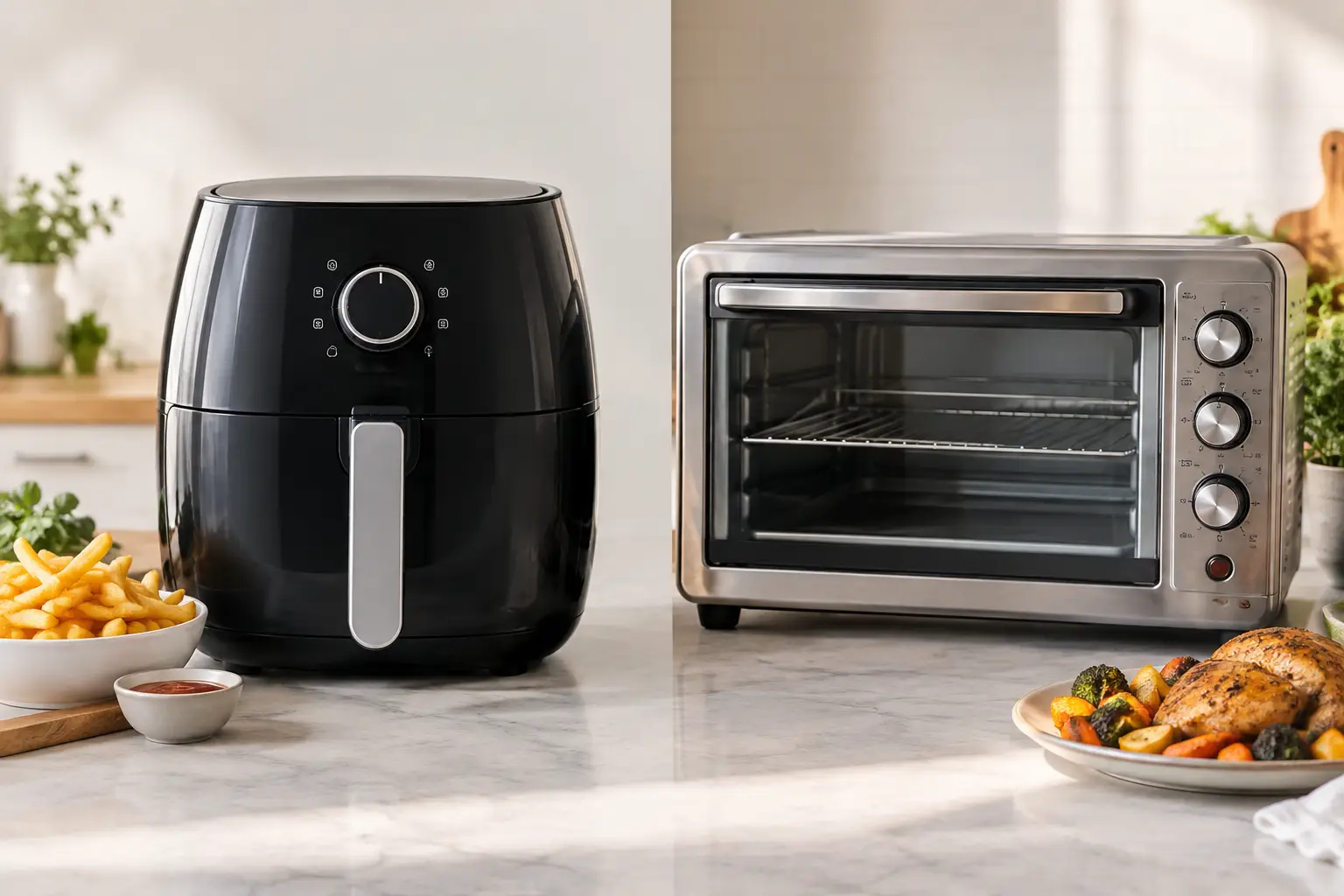
The real air fryers vs ovens question tends to arrive at 6pm, when dinner needs to happen quickly and there is a pack of chips, chicken thighs or vegetables waiting in the fridge. Both appliances can produce crisp, browned food with less oil than traditional deep frying, but they are built for different jobs. The best choice depends less on hype and more on what you cook, how many people you feed and how much worktop space you can spare.
Air fryers vs ovens: the key difference
An air fryer is, in simple terms, a compact, powerful convection oven. A heating element and fan push hot air rapidly around food held in a basket or tray. Because the cooking area is small and close to the heat source, it heats up fast and can brown the outside of food particularly well.
A conventional oven heats a far larger cavity. Many modern fan ovens also circulate hot air, so the fundamental cooking method is not radically different. The difference is scale. An oven gives you room for a roast, several trays of food or a family-sized bake. An air fryer concentrates its heat on a smaller portion and usually finishes the job faster.
That distinction matters when comparing claims about energy use and cooking quality. An air fryer is not automatically better at every meal, and an oven is not automatically wasteful. The winning appliance is usually the one that lets you cook the right amount of food without heating a lot of empty space.
Speed is where an air fryer usually wins
For small and medium portions, air fryers are often the quicker option. Most need little or no preheating, while an oven can take 10 to 15 minutes to reach temperature. Chips, fish fingers, sausages, chicken goujons and roasted vegetables can all be ready sooner in an air fryer, especially on busy weeknights.
Cooking times still need attention. Recipes written for a conventional oven cannot simply be copied over. Air fryer temperatures are often set around 10 to 20C lower, and food may be done several minutes earlier. Check food partway through cooking, shake a basket of chips or vegetables, and turn larger pieces when needed.
Ovens are less speedy at getting started, but they offer an advantage when several things need cooking at once. If you are making a traybake, garlic bread and a dessert for four people, one properly planned oven session can be simpler than cooking in batches. Repeated air-fryer batches can erase the time savings surprisingly quickly.
Crispness and browning
Air fryers have earned their reputation for crunchy food. The intense circulating air works well with foods that benefit from a dry, golden exterior: frozen chips, wedges, breaded fish, chicken wings, halloumi and leftover pizza. A light coating of oil can improve colour and texture, but you usually need much less than you would for shallow frying.
An oven can achieve excellent crispness too, particularly when it is fully preheated and food has room on a hot tray. It is often better for dishes that need gentler, more even cooking through the middle, such as lasagne, sponge cakes and slow-roasted meat. Crowding is the main enemy in either appliance. If food is piled up, it steams rather than crisps.
Energy costs depend on portion size
Air fryers are frequently promoted as cheaper to run, and for a single person or couple cooking a small meal, that can be true. Their smaller capacity means they typically use less electricity over a short cooking time, particularly because there is no lengthy preheat.
But electricity use is not a fixed rule. A large dual-drawer air fryer, running for multiple batches, may not deliver a dramatic saving compared with a modern fan oven cooking a full meal in one go. Likewise, using an oven for one jacket potato can feel inefficient, while filling it with a Sunday roast, vegetables and pudding makes far better use of the heat.
The most practical way to lower costs is to match the appliance to the task. Use an air fryer for a quick lunch, a side dish or a modest evening meal. Use the oven when capacity matters, when cooking several components together or when a recipe needs a large dish. Keeping the door or drawer shut while cooking also helps retain heat.
Capacity can make or break the purchase
This is the point many shoppers underestimate. A compact air fryer may be perfect for two salmon fillets and a handful of tenderstem broccoli, but it can become frustrating for a household of four. Food needs airflow around it, so filling a basket to the brim will not give the results shown in glossy adverts.
Basket-style models are excellent for snacks and crisp foods, but their usable space is often limited. Dual-drawer models make it easier to cook a main and a side at different temperatures. Oven-style air fryers offer racks and more space, although they can take up a serious amount of worktop room and may not cook quite as evenly as a basket model.
A conventional oven remains the clear choice for big households, entertaining, batch cooking and baking. It can handle a whole chicken, a large casserole, several trays of biscuits or a full roast dinner without the juggling act. If your air fryer would mainly sit beside an oven that already meets your needs, consider whether it will genuinely be used enough to justify the space.
What each appliance does best
An air fryer is at its best when convenience is the priority. It handles freezer staples brilliantly, revives leftovers with more crunch than a microwave and makes small portions of roasted veg feel quick rather than like a production. It can also be useful in a hot spell, when turning on a large oven makes the kitchen uncomfortable.
Ovens are more versatile across the full range of home cooking. They bake, roast, grill and cook larger dishes without constant monitoring. They are also more forgiving with delicate baking, where stable temperature and room for tins are important. You can make cakes and bread in some air fryers, but basket shape, intense fan action and limited headroom can restrict what works well.
For moist dishes, such as a pasta bake or a crumble, an oven is usually more straightforward. Air fryers can cook them in a suitable dish, but size restrictions may mean awkward shopping for accessories. The same applies to gravy-heavy meals, where a basket is clearly the wrong tool.
Cleaning, noise and kitchen reality
Most air-fryer baskets and drawers have non-stick coatings and are easy to wash after everyday cooking. Let them cool first, then clean away grease promptly to prevent smoke and lingering smells. Check whether parts are dishwasher-safe, but remember that frequent dishwasher use can shorten the life of some non-stick finishes.
Ovens take more effort to clean, especially after roasting fatty food or a bubbling cheese dish. On the other hand, you do not need to wash an oven after every use, while an air fryer basket generally needs attention each time. Air fryers can also be noticeably noisy because of their fans, although the sound is usually no worse than a cooker hood.
Worktop space is another practical trade-off. A small kitchen may not have room for a bulky appliance that needs ventilation around it. Measure the space, including the clearance required when the drawer is pulled out. Never place either appliance close to flammable materials, and avoid overloading extension leads.
So, should you buy an air fryer?
An air fryer makes sense if you regularly cook for one or two people, want faster weeknight meals or rely on frozen foods and leftovers. It is particularly useful for renters, students and anyone who wants crispy results without heating the whole kitchen.
If you cook for a family, enjoy baking or make large one-pot meals, an oven is still the kitchen heavyweight. It is not a case of one appliance replacing the other for every household. Plenty of people get the best results by using an air fryer as a quick everyday helper while keeping the oven for bigger jobs.
Before buying, think about the meals you actually make in an average week rather than the recipes you hope to start making. The appliance that earns its place is the one that turns a rushed dinner into something you are happy to eat, without creating more cost, clutter or washing-up than it saves.

