

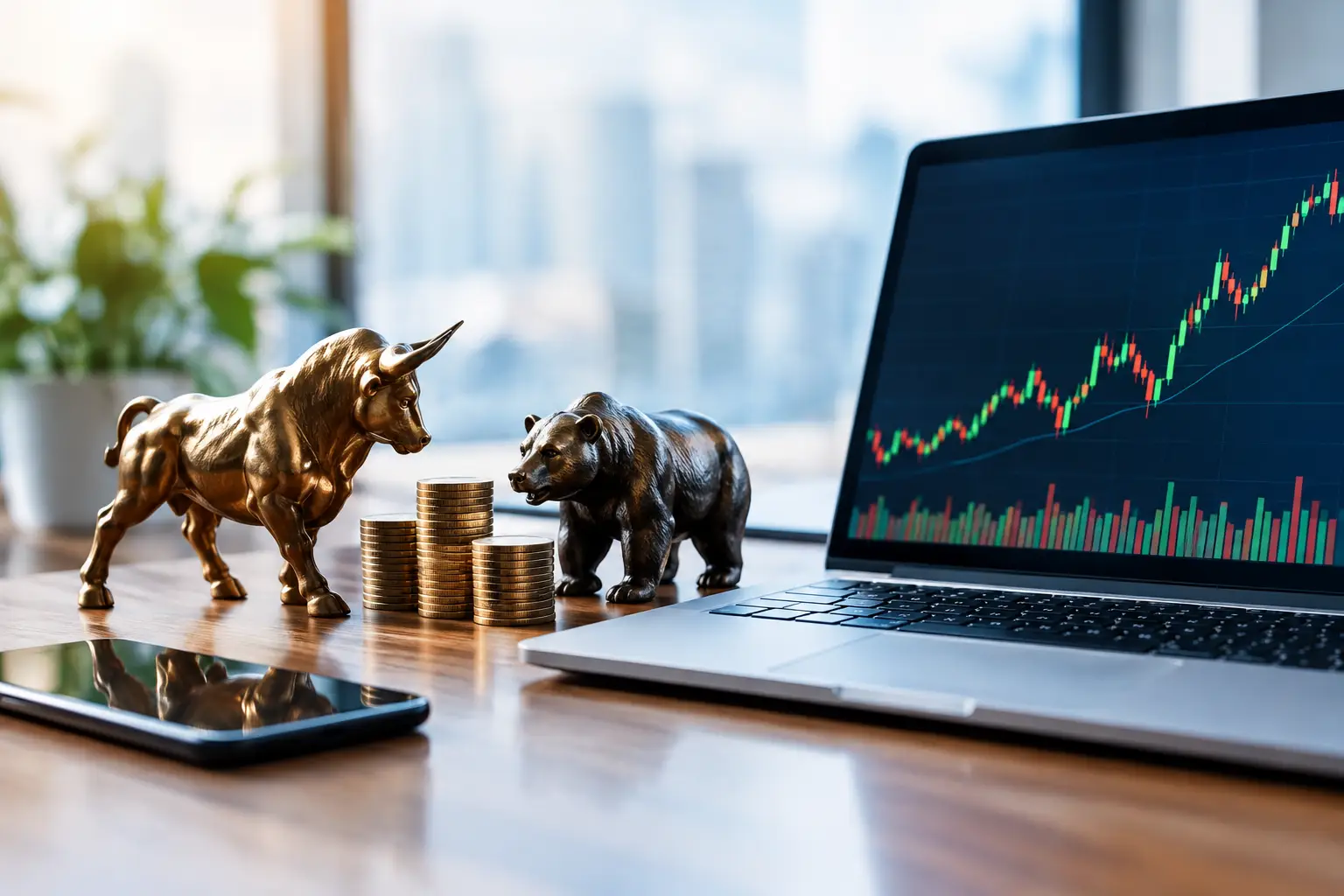
A company can report healthy profits at 7am, only for its share price to fall by 9am. That is the stock market in miniature: a place where investors are not simply reacting to what has happened, but trying to price in what comes next.
For many people, the stock market is something glimpsed in a breaking-news banner when the FTSE falls or Wall Street rallies. Yet its movements can reach far beyond trading screens. They affect pension pots, workplace savings, mortgage confidence, company hiring plans and the mood around the wider economy.
What the stock market actually does
At its simplest, the stock market is where shares in publicly listed companies are bought and sold. A share represents a small ownership stake in a business. If you own shares in a retailer, bank, technology firm or energy giant, your investment rises or falls with the value that other investors place on that company.
Companies list shares to raise money. That capital may fund new shops, research, acquisitions, debt repayment or expansion into new markets. Investors buy because they expect the business to grow, pay dividends, or both. Sellers may be taking profits, needing cash, or deciding the future looks less attractive than it once did.
In the UK, the FTSE 100 is the headline index most people recognise. It tracks 100 large companies listed on the London Stock Exchange. But it is not a neat measure of every British business or household. Many FTSE 100 firms make much of their money overseas, and the index is heavily influenced by sectors such as banking, energy, mining and pharmaceuticals.
That is why a rising FTSE does not automatically mean every corner of the UK economy is thriving. Equally, a falling index does not mean a recession is guaranteed. It is one market signal, not the whole picture.
Why stock market prices move so quickly
Share prices are driven by supply and demand, but that phrase can make a complicated process sound simpler than it is. Every price reflects competing views about future earnings, interest rates, consumer spending, political risk and the economy.
Company results matter. If a business beats expectations for sales or profit, investors may bid its shares higher. If it warns that costs are climbing, customers are spending less or targets will be missed, the price can drop sharply. The key word is expectations. A company can deliver a strong result and still fall if traders had expected something even better.
Interest rates are another major force. Higher rates can make borrowing more expensive for companies and households, which can put pressure on future growth. They can also make cash savings and bonds look more appealing compared with riskier shares. When rate-cut expectations build, markets often respond before the Bank of England or the US Federal Reserve actually changes policy.
Then there is sentiment. Markets dislike uncertainty, whether it comes from elections, conflict, sudden policy announcements, supply disruptions or a surprise shift in economic data. Sentiment can turn fast, particularly when automated trading and global news cycles amplify a move that begins in one market and spreads to another.
The stock market is not the same as the economy
This is one of the most useful distinctions for casual readers. The economy is about jobs, wages, prices, output and household spending. The stock market is a forward-looking marketplace, often focused on the prospects of listed companies months or years ahead.
That means the two can move in different directions. Shares may rise while families are still feeling squeezed by high food bills or mortgage costs, because investors believe conditions will improve later. Markets may also fall during a period when current economic figures appear solid, because traders fear a slowdown is coming.
Global exposure adds another twist. A stronger pound can reduce the value of overseas earnings when they are converted back into sterling, putting pressure on some large UK-listed firms. Meanwhile, an investor in a global fund may see the value of US holdings shaped by both American share prices and currency movements.
What a market sell-off means for ordinary savers
A sharp fall can sound alarming, especially if it arrives with headlines about billions being wiped off markets. Those figures describe changes in the market value of companies, not cash physically disappearing from a vault overnight. But the impact can still be real for anyone selling investments during the downturn.
For people with a workplace pension, market declines may show up as a lower account value. That can be uncomfortable, but pensions are usually built for a long time frame. Someone decades from retirement has more time for markets to recover than someone planning to draw on their pot next year.
Timing matters. A person nearing retirement may want to consider how much risk they are taking and whether their pension is designed to reduce exposure to shares as retirement approaches. The right answer depends on planned retirement age, other income, how flexible spending can be and whether money will stay invested after retirement. For personal decisions, regulated financial advice can be worthwhile.
A sensible way to start investing
New investors often meet the stock market through a stocks and shares ISA, a pension or an investing app. The ease of opening an account should not be mistaken for a reason to rush. Shares can rise dramatically, but they can also fall hard and remain volatile for long periods.
For many beginners, a diversified fund is easier to understand than trying to pick the next winning company. A broad global index fund spreads money across hundreds or thousands of businesses, reducing the damage if one firm performs badly. It does not remove risk, and it will still fall when markets broadly fall, but it avoids putting everything on a single headline or sector.
Before investing, it helps to have an emergency cash buffer and to deal with expensive debt. Money needed for a deposit, a wedding, a holiday or an urgent repair in the next few years is usually not money that should be exposed to stock market swings.
Regular contributions can also make the experience less dramatic. Investing a set amount monthly means buying more units when prices are lower and fewer when they are higher. It does not guarantee a profit, but it can reduce the temptation to guess the perfect day to invest.
The traps behind the biggest headlines
A soaring share price can create fear of missing out. A market crash can create panic. Neither is a great basis for a financial decision.
Be wary of treating a popular brand as a guaranteed investment, confusing a high share price with an expensive company, or assuming a low share price is a bargain. Valuation depends on earnings, debt, growth prospects and the number of shares in issue, among other factors. A £5 share is not automatically cheaper than one priced at £500.
Social media adds speed but not always context. A viral post about a so-called hot stock may leave out risks, conflicts of interest or the fact that the original poster has already sold. If a claim sounds like easy money, that is a reason to slow down rather than act faster.
What to watch without becoming obsessed
Following markets can be useful, but checking every hourly move rarely improves long-term decisions. Watch the larger forces instead: inflation data, interest-rate decisions, company earnings, employment figures and major geopolitical developments. These are the stories that can change expectations across whole sectors.
For personal investors, the more useful questions are closer to home. How long can the money stay invested? Is the portfolio diversified? Are fees reasonable? Has your financial position changed? Those answers matter more than whether a market index is up or down on a single Tuesday afternoon.
The stock market rewards patience less because patience is glamorous and more because it gives businesses, dividends and compounding time to do their work. Keep the headlines in view, but let your goals set the pace.

