

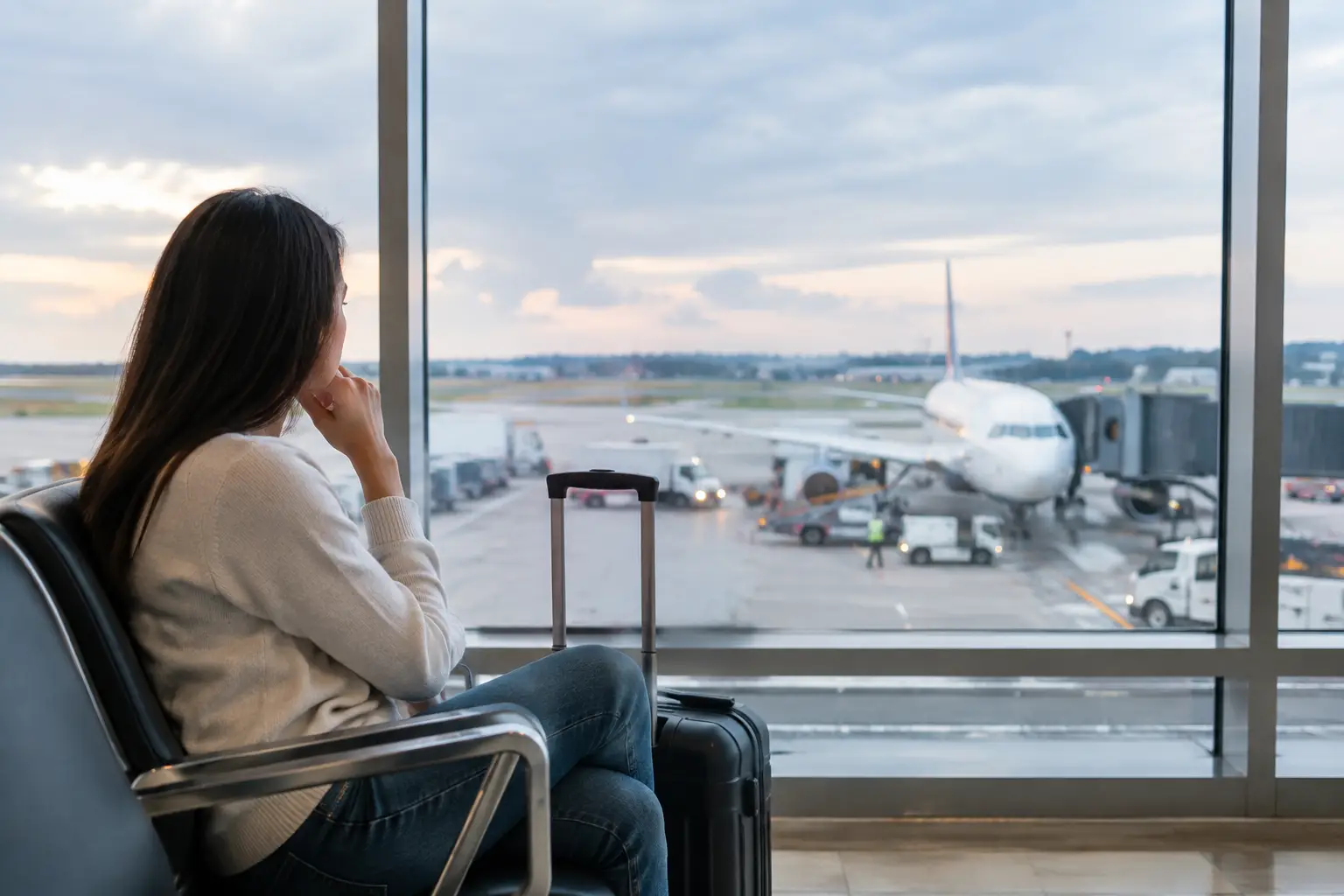
A departure board can look perfectly normal at breakfast and turn into a wall of amber warnings by lunchtime. When a gate time starts creeping later, the first thing many passengers search is “why flights delayed” – and the frustrating answer is rarely just one thing.
A delay may begin with weather, a busy runway or an aircraft arriving late from its previous stop. Then it can spread through the rest of the day’s schedule. That is why a short hold-up can sometimes turn into hours of waiting, even when the sky above your airport looks clear.
Why are flights delayed? It is usually a chain reaction
Commercial aviation runs on tightly timed rotations. An aircraft might operate several flights in one day, with crews, baggage teams, catering staff, gates and runway slots all working to a timetable. If one part falls behind, the knock-on effects can be felt hundreds of miles away.
The most common example is a late-arriving aircraft. Your plane may be perfectly serviceable and your destination may have good weather, but if the aircraft is delayed at its previous airport, it cannot appear at your gate on time. Airlines sometimes swap aircraft or adjust schedules to limit disruption, but there is not always a spare plane and crew waiting nearby.
That can feel like a vague explanation, but it is often the honest one. A flight delay is less like a late train with one vehicle and more like a moving network in which each journey affects the next.
Weather can disrupt flights far beyond the forecast
Storms, strong winds, fog, snow and low cloud are obvious culprits. Yet weather does not need to close an airport completely to cause significant delays. High winds may mean wider spacing between aircraft on approach. Low visibility can slow runway movements. A thunderstorm near an airport can force air traffic controllers to alter routes or pause ground activity for safety.
The weather at your departure airport is only part of the picture. Conditions at the destination, at the airport where the aircraft began its day, or along the route can all matter. A sunny afternoon at Manchester does not help much if your incoming aircraft is stuck in a storm queue near Amsterdam.
Winter brings its own complications. De-icing an aircraft takes time and must be done properly. Heavy snow can restrict taxiways and limit the number of aircraft an airport can process. In summer, heat can also create issues, particularly at busy European hubs where thunderstorms are common and airspace is already under pressure.
Air traffic control is not just about planes in the sky
Air traffic control delays are among the least visible reasons for a late flight. They can happen when an airport or a section of airspace is managing more traffic than it can safely handle at that moment. Rather than allowing every aircraft to depart at once and create congestion later, flights are given allocated departure times, often called slots.
These restrictions can be caused by bad weather, runway works, a temporary reduction in staffing, military airspace activity or unusually high demand. During school holidays and major events, popular routes can become especially busy.
A flight held at the gate may therefore be waiting for permission to push back, even though boarding has finished. It is irritating, but it is designed to prevent aircraft spending even longer burning fuel in a queue on the taxiway or circling before landing.
Crews have strict legal limits on working hours
Pilots and cabin crew cannot simply keep working indefinitely when a schedule runs late. Aviation has strict rules on duty periods and rest requirements, intended to protect passengers and staff alike.
If an earlier delay pushes a crew close to its permitted working limit, the airline may need to find replacements. That is easier at a large base airport than at a smaller overseas station, particularly late at night. A new crew may need to travel in from another airport, or the flight may be retimed until a rested crew is available.
This is one area where airlines have limited room to improvise. No passenger wants a cancellation, but nobody should want exhausted crew operating a flight either.
Technical checks are inconvenient for a good reason
Aircraft are built with multiple backup systems and are inspected constantly, but even minor faults can require engineering checks before departure. A warning light, a damaged seat component, a tyre issue, a problem with a door sensor or a concern identified during the walk-around can all delay boarding or push-back.
Not every technical issue means a flight is unsafe. In fact, a delay often means the safety process is working as intended: engineers are investigating, completing paperwork or replacing a part before the aircraft leaves. The trade-off is time, especially if the right spare part or specialist engineer is not immediately available.
Airlines are usually cautious about sharing too much technical detail at the gate, partly because early information can change. Still, passengers are entitled to a clear, plain-English update as the delay develops.
Airport operations can create the final hold-up
Sometimes the aircraft and crew are ready, but the airport is not. A gate may still be occupied by another aircraft. Ground handlers may be loading bags, cargo or mobility equipment. Catering, fuelling, cleaning and water services all need to be completed within a short turnaround window.
Security incidents, baggage system faults and problems getting passengers through the terminal can add further pressure. At some airports, a shortage of ground staff can make recovery slower after an earlier disruption.
This is why boarding on time does not guarantee an on-time take-off. You might be seated and ready to go, but still waiting for baggage loading, fuel paperwork, a gate tug or clearance from air traffic control.
What to do when your flight is delayed
Start with the airline app and the airport departure board, but do not rely on one update alone. Gate announcements can lag behind operational changes, while an app may show a new departure time before staff have full detail on the reason.
Ask the airline or handling agent what has caused the delay and whether the estimated time is likely to move again. If you may miss a connection, raise it early. The airline may be able to rebook you, protect your onward journey or explain what happens to checked baggage.
Keep receipts for reasonable food, drink, transport or accommodation costs if the disruption leaves you waiting for a long time or overnight. For flights covered by UK or EU passenger-rights rules, airlines can have a duty of care during substantial delays, though what applies depends on the route, airline and circumstances.
Compensation is separate from care. A long arrival delay can sometimes lead to compensation, but not where the cause is considered an extraordinary circumstance outside the airline’s control, such as certain severe weather or air traffic control restrictions. Technical and staffing issues may be treated differently. The key point is to keep your booking confirmation, boarding pass, delay notifications and receipts.
Travel insurance can also help, but policies vary widely. Check the excess, minimum delay period and exclusions before assuming every expense will be covered.
The delay time is only an estimate
The most useful mindset is to treat the first delay announcement as provisional. Airlines may initially expect a 30-minute delay, then discover that an incoming aircraft has missed its air traffic control slot or that a replacement crew is needed. Equally, a problem can be resolved faster than expected.
That uncertainty is particularly difficult when you have a concert, a cruise departure, a job interview or a time-sensitive connection ahead. If the journey really cannot tolerate a delay, build more buffer into the itinerary than seems necessary, especially during peak holiday periods or when connecting through a busy airport.
A delayed flight is rarely good news, but the reason is often more practical than mysterious: aviation is a carefully controlled system, and safety takes priority when one part of it slips. Keep your documents, get clear updates, and give yourself room to adapt – it is the best way to make an unwelcome wait feel a little more manageable.

