

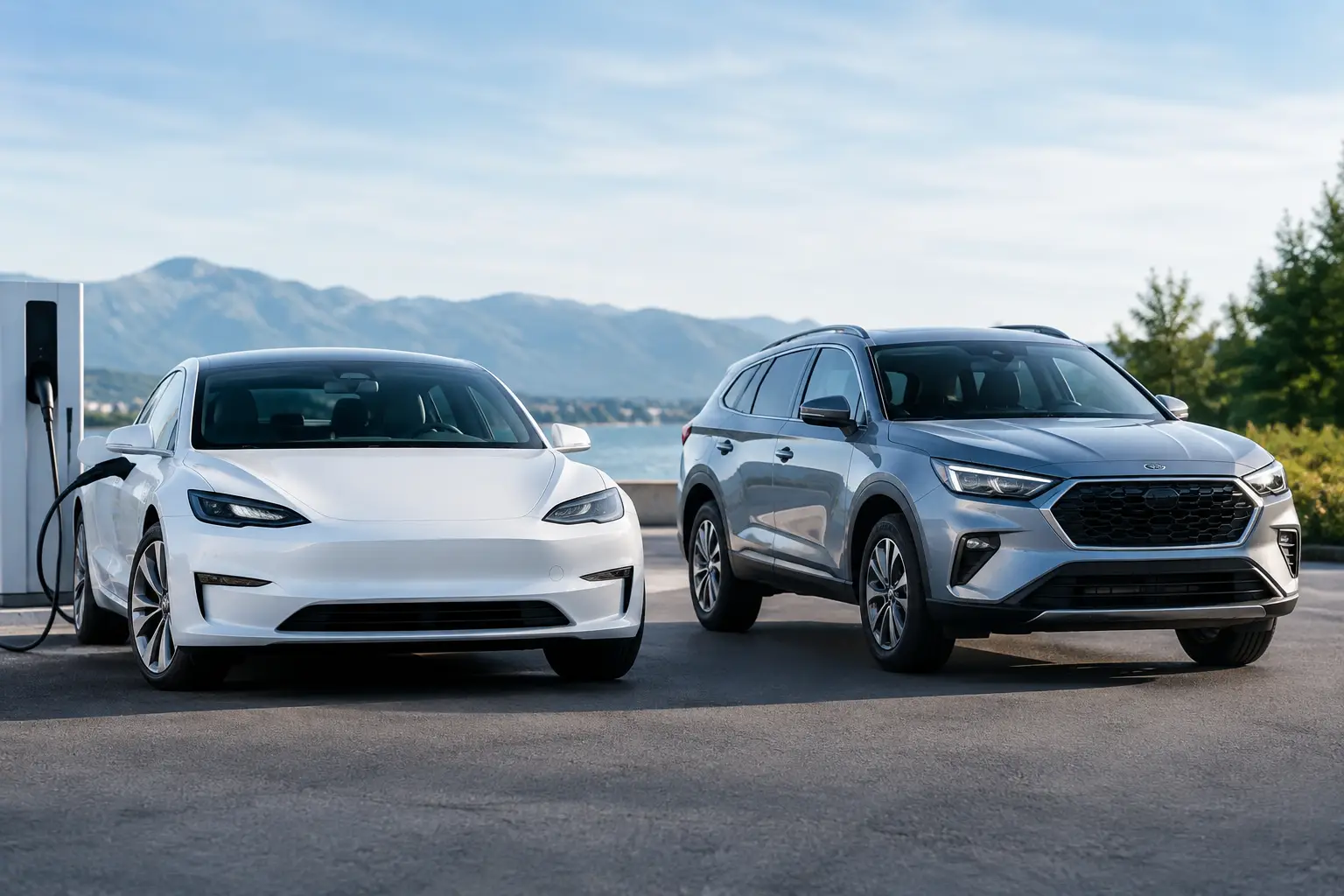
A new car can look like a bargain until you factor in the driveway, the commute and how often you actually take long motorway trips. That is why the electric cars vs hybrids question is less about picking a ‘winner’ and more about choosing the powertrain that fits real life. For some drivers, going fully electric is the obvious next move. For others, a hybrid remains the lower-stress and more affordable route.
The headline difference is simple. An electric vehicle, or EV, runs solely on a battery and electric motor. A hybrid uses a petrol engine alongside an electric motor and a small battery. Plug-in hybrids sit between the two: they can be charged and driven on electric power for a limited distance, but retain an engine for longer journeys.
Electric cars vs hybrids: the everyday difference
An EV has no tailpipe emissions while driving, a quieter cabin and fewer moving parts than a petrol-powered car. It can be exceptionally cheap to run if you charge at home overnight, particularly on an off-peak electricity tariff. The trade-off is planning. You need dependable access to charging, and longer trips may involve route planning around rapid chargers.
A standard hybrid does not need to be plugged in. It charges its small battery through braking and the petrol engine, then uses electric assistance to cut fuel use, especially in stop-start town driving. It feels familiar because filling up takes minutes, and there is no need to think about public charging reliability. But it is still a petrol car, meaning fuel costs and exhaust emissions remain part of the picture.
Plug-in hybrids promise a bit of both. Their batteries are larger than those in regular hybrids, often offering enough electric-only range for short local trips. Yet their appeal depends heavily on behaviour. Charge one regularly and it can reduce petrol use on the school run or commute. Never plug it in and you are hauling around a heavy battery and engine, which can make real-world economy disappointing.
Start with where you can charge
Home charging is the biggest dividing line. If you have off-street parking and can install a home charger, an EV becomes far easier to live with. You come home, plug in, and usually wake up with enough range for the next day. There is no weekly visit to a petrol station, and day-to-day charging can be significantly cheaper than buying petrol.
For drivers in flats, homes without driveways or areas with limited public charge points, the calculation is different. Public charging networks are growing, and rapid chargers are useful on longer journeys, but relying on them every week can cost more and take more effort. Availability also varies sharply by postcode, car park and motorway route.
A hybrid removes that concern. It works wherever petrol is sold, making it a sensible option for renters, frequent travellers or anyone who does not want charging to become another job on the to-do list. That convenience should not be dismissed simply because EVs are the more future-facing technology.
Running costs can swing either way
Electric cars tend to cost less per mile when charged at home. Electricity is generally cheaper than petrol for the same distance, and EVs avoid routine jobs such as oil changes, spark plugs and exhaust repairs. Brake wear can also be lower because regenerative braking slows the car while recovering energy.
However, the purchase price can still be higher for many new EVs, even as more lower-priced models arrive. Insurance, tyre replacement and public rapid charging can also take some of the shine off the savings. Battery warranties are usually long, but a battery is a major component, so buyers of older used EVs should check its condition and remaining warranty carefully.
Hybrids are often cheaper to buy than comparable EVs and can be very economical in urban traffic. Their servicing needs are usually lower than a conventional petrol car’s, but they still have an engine and all the associated maintenance. On repeated motorway runs, where the electric motor has less opportunity to help, the fuel-saving advantage over an efficient petrol car may narrow.
Tax and motoring rules are another moving target. Vehicle Excise Duty, workplace charging, company-car tax and local clean-air-zone rules can all affect the numbers. Before buying, check the current rules rather than relying on a deal or tax break you saw advertised last year.
Range matters, but not in the way many people think
Range anxiety has not vanished, but it is often overstated for drivers whose mileage is predictable. A modern EV with a realistic range that comfortably covers a week of normal driving can be easy to own when home charging is available. Cold weather, high speeds, heavy loads and heating do reduce range, so the official figure should be treated as a useful comparison rather than a guarantee.
The challenge comes on the occasional 250-mile family trip, a holiday involving rural roads, or work that sends you to unfamiliar places at short notice. Many EVs can make these journeys without drama, but charging stops require more thought and may take longer at busy periods. Some drivers barely notice the difference because they welcome a proper break. Others find it irritating after years of quick petrol stops.
Hybrids are more forgiving here. Their range is effectively tied to petrol stations, so an unplanned diversion does not require a search for a charger. For people who cover high mileage across the country, that flexibility can be worth more than the lower running cost of an EV.
The environmental answer is not one-size-fits-all
EVs produce no exhaust emissions when driven, which is particularly valuable in busy towns and cities where air quality affects everyone. Their wider carbon footprint depends on how electricity is generated and how the car is made, including battery production. Even so, using the UK’s increasingly lower-carbon electricity grid generally gives EVs a clear lifetime emissions advantage over petrol cars.
A hybrid reduces fuel use compared with many conventional petrol models, especially when used in town. But it still burns petrol. A plug-in hybrid can look very clean on paper, yet its real impact depends on regular charging and mostly short journeys. It is a useful bridge technology for the right household, not a guaranteed green shortcut.
Keeping a reliable older car for longer can sometimes be the most sensible financial and environmental choice, particularly if you drive very little. Buying a new vehicle solely for the badge on the boot is rarely the whole story.
Who should choose an electric car?
An EV is likely to suit you if you have home charging, mainly make predictable journeys, and want the lowest possible day-to-day energy costs. It is also a strong fit for city drivers who value quiet running and zero tailpipe emissions. Families can make EV ownership work well too, provided they are comfortable planning charging stops for the longer trips that happen a few times a year.
Do not assume you need the largest battery or the longest official range. A more modest model that meets your normal needs may cost less to buy, insure and charge. The best choice is the one that covers your real diary, not an imagined cross-country emergency every weekend.
When a hybrid makes more sense
A conventional hybrid is a practical answer for drivers who cannot charge at home, live in a flat, or want lower fuel consumption without changing their routine. It is particularly effective for frequent town and suburban journeys, where braking and low-speed driving give the electric system more chances to work.
A plug-in hybrid makes sense only when charging is easy and routine. If your regular journeys sit within its electric range, but you also make occasional long trips where charging would be awkward, it can be a useful compromise. If you will not plug in most days, a standard hybrid is usually the more honest choice.
The smartest test is not a spec-sheet comparison. Look at the last month of your driving: where you parked, how far you travelled, whether you could have charged, and how often you genuinely needed a full tank’s worth of range. That small reality check will tell you far more than the newest advert – and help you buy a car that makes everyday life easier rather than more complicated.

