

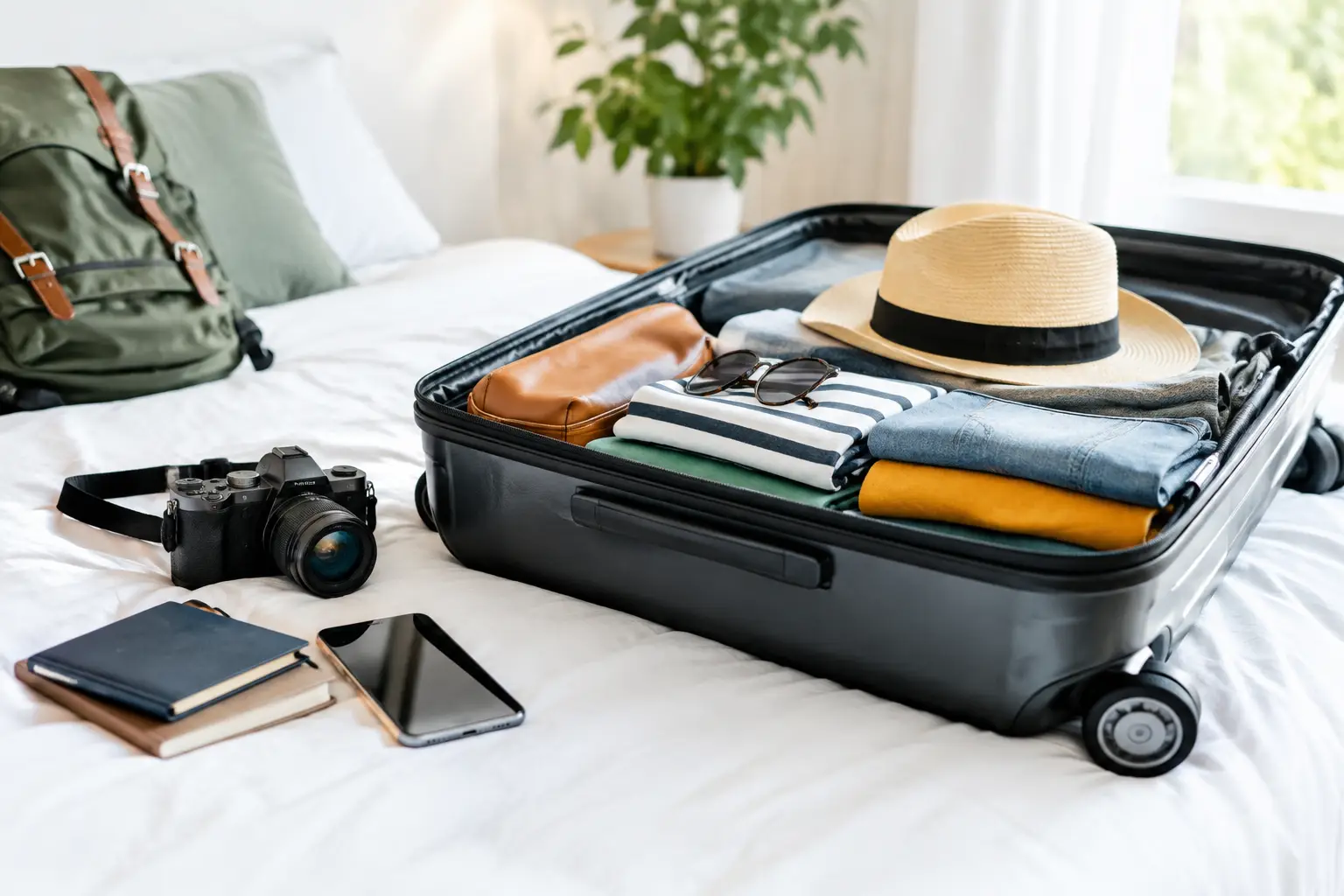
The suitcase zip is the least stressful part of a trip. The real challenge is realising, halfway to the airport, that your prescription, plug adaptor or one pair of comfortable shoes is still sitting at home. A smart travel packing checklist cuts through that panic. It helps you pack for the journey you are actually taking, rather than stuffing a case for every possible version of it.
The aim is not to travel with the fewest things possible. It is to bring the right things, keep the important items close, and leave enough room for the unexpected souvenir, weather change or delayed bag. Start a few days before departure if you can. Packing in a rush is how four nearly identical tops and no sleepwear end up in your case.
Build your travel packing checklist around the trip
Before choosing clothes, write down five basics: destination, dates, forecast, planned activities and baggage allowance. A long weekend in Edinburgh needs a very different approach from a fortnight at an all-inclusive resort, even if both look warm on the weather app today.
Your accommodation matters too. A hotel may provide a hairdryer and toiletries. A self-catering flat may have a washing machine, which means you can take fewer outfits. If you are visiting friends, ask before packing bulky extras such as towels, beach gear or a travel cot.
Think about the travel day separately. The outfit that works for a beach lunch may be miserable on a six-hour flight, train journey or overnight coach. Wear your bulkiest trainers and layers in transit where possible, but do not make yourself uncomfortable just to save a little suitcase space.
The essentials that should stay with you
If you are flying, anything that would derail the first 24 hours of your holiday belongs in your personal item, not the hold bag. Airlines lose, delay and occasionally damage luggage. It is uncommon, but having the basics to hand turns a disruption into an inconvenience.
Keep these together in a small pouch or easy-to-reach pocket:
- Passport or other required travel document, tickets, travel insurance details and accommodation confirmation
- Mobile phone, charging cable, power bank and plug adaptor suitable for your destination
- Bank card, a small amount of local currency where useful, and emergency contact details
- Prescription medication, plus a copy of the prescription if it is needed for security or replacement
- Headphones, water bottle, snacks and one change of underwear or a light top for longer journeys
Check passport validity well before booking time turns into packing time. Some destinations require more than a passport that is valid on the day you arrive. Rules for visas, medicines and entry documents can also change, so do not rely on a friend’s holiday from two years ago as your guide.
Liquids, batteries and other airport catches
Airport rules can make a perfectly sensible wash bag a problem at security. Put liquids in the required clear bag if you are travelling with hand luggage, and check your departure airport’s current rules rather than assuming every scanner operates the same way. A full-size sunscreen bottle may need to go in checked luggage, while a solid deodorant or shampoo bar can be a useful alternative.
Power banks and spare lithium batteries are generally meant for cabin baggage, not the hold. Keep them protected from loose keys or coins, and check your airline’s capacity limits if you use a larger model. These small details are dull until they hold up a security queue or force you to surrender something you wanted for the trip.
Pack clothes as outfits, not possibilities
The most common packing mistake is choosing individual items that look good, but do not work together. Instead, plan a small set of repeatable outfits around two or three colours. One pair of trousers or shorts should work with several tops. A light layer should suit evenings, air-conditioned restaurants and an unexpected shower.
For a week away, many travellers can manage with roughly five or six tops, two or three bottoms, sleepwear, underwear, socks, one smarter option and footwear for their actual plans. That is a starting point, not a rule. A hiking holiday needs more technical layers; a wedding weekend may need formalwear; travelling with young children often means spare clothes are not optional.
Choose fabrics honestly. Linen looks great in hot weather but creases quickly. Denim is versatile but slow to dry and heavy in a small case. Quick-drying items make a big difference if you expect to wash clothes in the sink or move between destinations. If rain is likely, a compact waterproof jacket is usually more useful than an umbrella taking up half a day bag.
Shoes deserve a stricter limit. They are heavy, awkwardly shaped and frequently overpacked. Wear one reliable pair, take one pair for the main activity and add a smarter or beach option only if you will genuinely use it. New shoes are a gamble, especially when your itinerary involves walking tours, cobbled streets or a festival field.
Toiletries: take what is hard to replace
It is tempting to pack the whole bathroom cabinet. Most standard toiletries can be bought at the destination, sometimes more cheaply than they can be squeezed into a tiny liquids bag. Focus on products your skin or hair genuinely depends on, contact lens supplies, medication and sun protection if you know you will need a particular type.
Decant products into small, clearly labelled containers and put anything likely to leak in a sealed bag. A simple rule helps: if you have not used it at home in the last month, it probably does not need to come away with you.
There are exceptions. Remote trips, sensitive skin, travelling with a baby and places where familiar brands may be difficult to find all justify a more thorough wash bag. The best travel packing checklist is flexible enough to account for real needs, not a minimalist contest.
Make room for the destination, not just the flight
A city break might call for a cross-body bag, a reusable water bottle and a portable charger. A beach trip adds swimwear, sunglasses, a hat and a light cover-up. For a hiking break, prioritise socks, layers, blister plasters and a refillable bottle over dressier extras.
If you will be moving around frequently, use packing cubes or separate bags to keep categories together. They do not create extra luggage allowance, but they stop the whole case becoming a pile after the first night. Roll softer clothing if it suits your case and fold structured items to prevent deep creases. Put shoes in bags and fill their centres with socks or chargers.
Leave a little empty space from the start. A tightly packed outbound case gives you no options when you buy gifts, need an extra layer, or discover that damp swimwear has to come home with you. If you expect to shop, bring a lightweight foldable tote for the return journey, provided it fits your airline’s cabin rules.
Final checks the night before
The evening before you leave, charge your phone and power bank, download boarding passes and offline maps, and check the route to the airport or station. Confirm baggage weight with scales if you have them. Guessing is how a cheap flight suddenly comes with an expensive gate fee.
Lay out your travel clothes, put documents in the bag you will carry, and take a quick photo of your passport and luggage contents for reference. Do not leave all packing until the morning. Last-minute changes happen, from a forecast turning wet to a message saying the hotel pool is closed for repairs.
A good holiday starts when you stop worrying about what is missing. Use this checklist as a working base, then adjust it to your plans, the season and the people travelling with you. The best-packed case is not the prettiest one on social media – it is the one that lets you get on with the trip.

